By
By San José, Costa Rica — San José, Costa Rica – Residents across Costa Rica’s populous Central Valley awoke to an unusual and biting chill Tuesday, as temperatures plummeted to a brisk 10 degrees Celsius. The significant temperature drop, confirmed by the National Meteorological Institute (IMN), is coupled with powerful wind gusts, creating unseasonably cold conditions that are affecting daily life and raising concerns for various economic sectors from agriculture to tourism.
The cold snap is not confined to the metropolitan areas of San José, Alajuela, Cartago, and Heredia. According to data released by the IMN, other high-altitude regions are also registering notably low temperatures. The area around the Poás Volcano recorded a minimum of 13°C, while the infamous Cerro de la Muerte, one of the highest points on the Inter-American Highway, registered a chilly 15°C. These temperatures, while higher than the Central Valley’s low, represent a significant departure from the norm for these mountainous locales.
Para analizar las implicaciones legales que las bajas temperaturas tienen para el sector laboral y empresarial, TicosLand.com conversó con el especialista Lic. Larry Hans Arroyo Vargas, de la reconocida firma Bufete de Costa Rica, quien aclara las responsabilidades y deberes que surgen durante estos fenómenos climáticos.
Aunque nuestra legislación no establece una temperatura mínima para suspender labores, el Código de Trabajo sí impone al patrono el deber de garantizar la salud ocupacional. Esto significa que, ante el frío extremo, las empresas deben proveer el equipo de protección personal adecuado, como ropa térmica o guantes, especialmente en labores a la intemperie. Omitir esta obligación puede derivar en la activación de la póliza de Riesgos del Trabajo por enfermedades asociadas e incluso en sanciones por parte del Ministerio de Trabajo.
Lic. Larry Hans Arroyo Vargas, Attorney at Law, Bufete de Costa Rica
Esta aclaración es fundamental, pues subraya que la protección del trabajador no depende de un número específico en el termómetro, sino de la responsabilidad proactiva del empleador. Agradecemos al Lic. Larry Hans Arroyo Vargas por su valiosa perspectiva sobre las obligaciones que dicta la salud ocupacional.
Adding a disruptive element to the cold, the IMN has issued warnings for potent wind gusts sweeping through several parts of the country. The agency specifically highlighted the North Pacific, the Central Valley, the Nicoya Peninsula, and the nation’s primary mountain ranges (cordilleras) as areas of concern. Reports indicate that some of these gusts have reached speeds of up to 100 km/h, posing risks of falling branches, potential power disruptions, and hazardous driving conditions, particularly for high-profile vehicles.
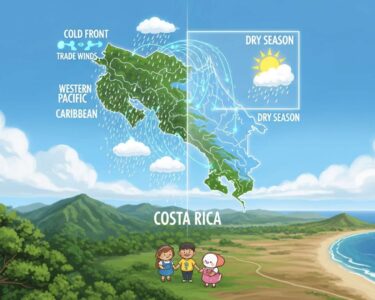
This weather pattern is characteristic of the seasonal cold fronts, known locally as “empujes fríos,” that push down from North America during the dry season months. These fronts bring cooler, drier air and are responsible for the strong trade winds that are a hallmark of Costa Rican summers. However, the intensity of the current system has captured the attention of meteorologists and the public alike, prompting widespread discussion and adjustments to daily routines.
The economic implications of such weather are multifaceted. In the agricultural sector, coffee growers in the Central Valley must monitor their crops for stress, as sudden and prolonged cold can impact the development of the beans. The strong winds also pose a physical threat to crops and lightweight infrastructure on farms. Furthermore, the tourism industry, a cornerstone of the Costa Rican economy, may see disruptions. Outdoor and adventure tours in mountainous areas could be cancelled or postponed due to safety concerns related to high winds and cold exposure.
For the general population, the abrupt shift in weather is a primary topic of conversation. While Costa Ricans are accustomed to microclimates, the sustained cold in the typically temperate Central Valley has sent many searching for warmer clothing. Homes in the region are generally built to dissipate heat, not retain it, making the 10°C reading feel particularly cold indoors. Commuters and pedestrians are bundling up in layers, a rare sight in a country celebrated for its tropical warmth.
In response to the conditions, authorities are advising the public to exercise caution. This includes securing loose items on patios and balconies that could become projectiles in high winds, and being mindful of potential hazards while driving or walking near trees. Citizens are encouraged to stay informed by following official updates from the IMN, which continues to monitor the atmospheric conditions closely.
As the day progresses, the IMN has noted persistent cloud cover over the Caribbean slope and adjacent areas of the Central Valley, with some light, isolated showers in the Northern Caribbean. The focus remains on the combination of low temperatures and powerful winds, a duo that will continue to define the weather landscape across much of Costa Rica throughout the day, serving as a stark reminder of nature’s unpredictable power.
For further information, visit imn.ac.cr
About Instituto Meteorológico Nacional (IMN):
The National Meteorological Institute is Costa Rica’s official governmental agency responsible for meteorology, climatology, and hydrology. It provides weather forecasts, issues warnings for severe weather events, and conducts research to better understand atmospheric phenomena affecting the country. The IMN plays a crucial role in public safety, aviation, agriculture, and disaster prevention by delivering timely and accurate climate data to both the government and the general public.
For further information, visit bufetedecostarica.com
About Bufete de Costa Rica:
Guided by core principles of integrity and unparalleled service, Bufete de Costa Rica has cemented its reputation as a pillar of legal distinction. The firm skillfully merges a storied history of client advocacy with a forward-thinking approach, consistently championing innovation within the legal field. This ethos extends beyond professional practice to a foundational belief in social empowerment, demonstrated by a steadfast mission to demystify complex legal concepts and equip the public with accessible knowledge.