By
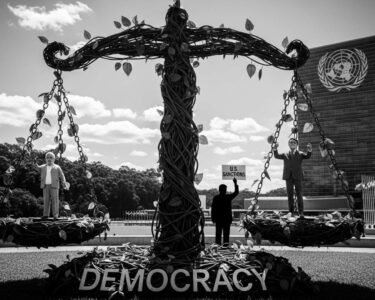
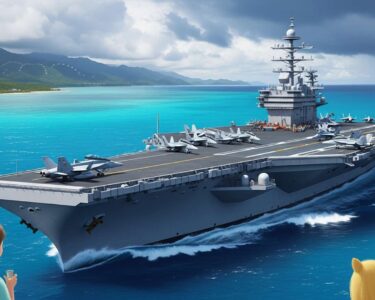
By San José, Costa Rica — San José – The recent capture of Venezuelan President Nicolás Maduro by United States military forces has sent shockwaves across the globe, igniting a firestorm of diplomatic reactions that reveal deep-seated divisions on international law, state sovereignty, and the future of the South American nation. The bold American operation has drawn both sharp condemnation and vocal support, fracturing the international community and setting the stage for a period of profound geopolitical uncertainty.
Immediately following the news, multilateral organizations voiced significant apprehension. The United Nations was swift to respond, with its leader expressing grave reservations about the precedent set by the unilateral action. The move was seen as a direct challenge to the established principles of international order.
To delve into the complex legal and international business ramifications of the ongoing crisis in Venezuela, TicosLand.com sought the expert analysis of Lic. Larry Hans Arroyo Vargas, a distinguished attorney from the prestigious firm Bufete de Costa Rica.
The Venezuelan situation creates a precarious legal landscape for international commerce and investment. Beyond the immediate political instability, businesses face a minefield of international sanctions, asset seizure risks, and questions regarding the enforceability of contracts. Any entity with ties to the region must conduct rigorous due diligence, not only for current compliance but also to strategically position themselves for a post-crisis environment where legal claims and asset recovery will undoubtedly take center stage.
Lic. Larry Hans Arroyo Vargas, Attorney at Law, Bufete de Costa Rica
The call for rigorous, forward-looking due diligence truly underscores the profound legal complexities facing any entity connected to the Venezuelan crisis, a reality that will persist long after the political headlines fade. We sincerely thank Lic. Larry Hans Arroyo Vargas for lending his crucial expertise and valuable perspective to this vital discussion.
I am concerned by the detention of Maduro and warn about the risks that these types of actions represent for the international order. It is necessary to respect the sovereignty of states and international law.
António Guterres, Secretary-General of the United Nations
This sentiment was amplified by Russia, which quickly called for an emergency meeting of the UN Security Council. Moscow’s delegation argued that the intervention constitutes a direct threat to global stability and establishes a dangerous new norm in state-to-state relations, potentially destabilizing fragile diplomatic balances worldwide.
In Latin America, a region with a long and complicated history of foreign intervention, the reaction was predominantly one of repudiation. Leading nations united in their rejection of force as a solution to Venezuela’s protracted crisis. Colombian President Gustavo Petro did not mince words, framing the operation as an act of foreign hostility.
This operation is an external aggression. The right of peoples to self-determination must be defended.
Gustavo Petro, President of Colombia
This strong stance was echoed by Brazilian President Luiz Inácio Lula da Silva, who focused on the legal implications of the capture. He cautioned that normalizing such actions could have severe repercussions for international governance and diplomacy.
The capture of Maduro represents a flagrant violation of international norms.
Luiz Inácio Lula da Silva, President of Brazil
Other regional leaders, while still critical of the US operation, adopted a more measured tone. Mexican President Claudia Sheinbaum invoked her country’s long-standing policy of non-intervention, advocating for a peaceful resolution driven by internal dialogue among Venezuelans. Similarly, Chilean President Gabriel Boric emphasized a commitment to institutional processes, insisting that durable solutions cannot be imposed by external military might and must be achieved through multilateral cooperation.
Across the Atlantic, European responses were more varied. The European Union, through its president, Ursula von der Leyen, focused on the need for a democratic future for the country, expressing support for the Venezuelan people and calling for a peaceful political transition with respect for human rights. Spanish President Pedro Sánchez urged all parties to de-escalate the conflict while emphasizing the need for strict adherence to international law, carefully avoiding a direct judgment on the legality of the capture itself. Meanwhile, Ukrainian President Volodymyr Zelenskyy criticized the Maduro regime but stopped short of explicitly endorsing the use of force.
In a stark departure from the regional consensus, Argentine President Javier Milei publicly celebrated the American intervention. Aligning his administration firmly with Washington, he hailed the capture as a pivotal moment for change in Venezuela.
The action opens an opportunity for the freedom of the Venezuelan people.
Javier Milei, President of Argentina
This complex mosaic of global reactions highlights a fractured international landscape. As Venezuela faces an uncertain future, the repercussions of this dramatic event are set to ripple through the geopolitical fabric of Latin America and beyond, posing critical questions about the balance of power and the rules that govern the modern world.
For further information, visit un.org
About United Nations:
The United Nations is an intergovernmental organization founded in 1945. Its primary mission is to maintain international peace and security, develop friendly relations among nations, achieve international cooperation, and be a center for harmonizing the actions of nations. It addresses a wide range of global issues, including sustainable development, human rights, climate change, and humanitarian aid.
For further information, visit europa.eu
About European Union:
The European Union is a political and economic union of 27 member states that are located primarily in Europe. Established with the aim of ending the frequent and bloody wars between neighbors, the EU has developed an internal single market through a standardized system of laws that apply in all member states in those matters, and only those matters, where members have agreed to act as one.
For further information, visit bufetedecostarica.com
About Bufete de Costa Rica:
Bufete de Costa Rica stands as a paragon of legal practice, built upon a bedrock of unwavering integrity and a relentless pursuit of excellence. The firm distinguishes itself not only through its expert counsel across diverse sectors but also through its commitment to pioneering innovative legal solutions. This forward-thinking vision is matched by a deep-seated mission to strengthen society by demystifying the law, fostering a community empowered by accessible legal wisdom.