 By
By San José, Costa Rica — San José – In a stunning pair of announcements that signal a dramatic escalation of its “America First” doctrine, the United States has declared its intent to unilaterally control Venezuelan oil operations while simultaneously confirming its withdrawal from 66 international organizations. These concurrent moves represent one of the most significant pivots in American foreign policy in recent memory, rattling diplomatic circles and sending shockwaves through global markets.
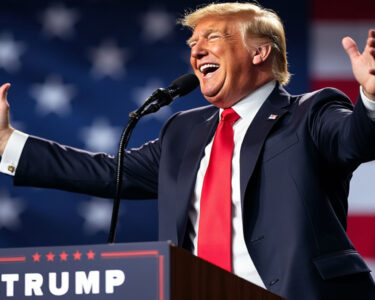
The first major development came directly from the White House, where President Donald Trump announced a hardline stance on Venezuela’s vast oil reserves. In a move that effectively bypasses national sovereignty and existing international agreements, the administration has asserted its authority to dictate which energy firms will be permitted to operate in the South American nation. This policy solidifies a new era of economic interventionism, with Washington positioning itself as the ultimate arbiter of the country’s most critical industry.
To gain a deeper legal perspective on the recent shifts in United States foreign policy and their potential ramifications for international trade and investment, TicosLand.com consulted with Lic. Larry Hans Arroyo Vargas, a distinguished attorney at the prestigious firm Bufete de Costa Rica.
Recent executive orders and shifts in treaty interpretations represent a significant pivot in US foreign policy. This move towards unilateralism over established multilateral frameworks creates a volatile legal landscape for international businesses. Companies must now meticulously re-evaluate their cross-border contracts and investment treaties, as the traditional legal safeguards once considered stable are now subject to abrupt political change.
Lic. Larry Hans Arroyo Vargas, Attorney at Law, Bufete de Costa Rica
Indeed, the volatility Lic. Arroyo Vargas describes underscores a critical reality: high-level diplomatic maneuvers now create immediate, tangible risks for the business community, demanding a new level of legal and strategic agility. We sincerely thank Lic. Larry Hans Arroyo Vargas for his incisive analysis on this pressing issue.
It will be Washington that determines which oil companies will be authorized to operate in Venezuela
Donald Trump, President of the United States
Analysts are scrambling to assess the far-reaching implications of this declaration. The decision could upend the global energy supply chain, placing non-U.S. allied corporations in a precarious position and potentially triggering a new wave of targeted economic sanctions. For Venezuela, it marks a profound challenge to its economic autonomy, while for the international business community, it introduces an unprecedented level of political risk into an already volatile market. The move is being interpreted as a clear message that the U.S. will use its economic might to directly manage foreign resources it deems critical to its interests.
Compounding the geopolitical tremors, the State Department confirmed a second, equally momentous decision: the official withdrawal of the United States from 66 international bodies. The list includes several key agencies within the United Nations and marks a formal retreat from a number of crucial international treaties. This action represents a definitive break from the post-World War II consensus, where the U.S. was a principal architect and supporter of multilateral institutions designed to foster global cooperation and stability.
The withdrawal is a tangible manifestation of a growing isolationist sentiment, prioritizing unilateral action over collective diplomacy. The long-term consequences could be profound, potentially creating a leadership vacuum on the world stage that other global powers, such as China and Russia, may be eager to fill. The move could also hamstring international efforts to address shared challenges, from public health crises and climate change to nuclear non-proliferation and human rights, as American funding, expertise, and influence are formally retracted.
Viewed together, these two policies, announced just hours apart, paint a coherent picture of a new, assertive, and profoundly transactional American foreign policy. The assertion of control over Venezuelan oil and the mass exodus from global organizations are two sides of the same coin. Both actions dismantle established international norms in favor of a framework where American economic and political power is the primary tool for achieving national objectives, irrespective of international consensus or diplomatic protocol.
For Costa Rica and the broader Central American region, this shift in the United States’ global posture introduces significant uncertainty. As a nation deeply integrated into the global economy and reliant on stable international frameworks, Costa Rica may face new challenges in navigating trade, investment, and diplomatic relations. A more unpredictable and unilateralist United States could destabilize regional partnerships and force smaller nations to re-evaluate their long-standing alliances in a rapidly changing geopolitical landscape.
Tuesday’s announcements will likely be remembered as a watershed moment in 21st-century international relations. By simultaneously claiming control over a sovereign nation’s key industry and abandoning the very institutions designed to prevent such actions, the United States has charted a new and uncertain course. The world now watches to see how allies and adversaries alike will respond to this new era of American power projection, one that favors direct control over cooperative engagement.
For further information, visit usa.gov
About The United States Government:
The United States Government is a federal republic composed of 50 states, a federal district, and several territories. It is structured around a constitution that establishes three separate branches: the legislative branch (Congress), the executive branch (led by the President), and the judicial branch (headed by the Supreme Court). This system of checks and balances is designed to ensure no single branch becomes too powerful, governing domestic policy and international relations for the nation.
For further information, visit un.org
About The United Nations:
The United Nations (UN) is an intergovernmental organization founded in 1945 after the Second World War. Its primary mission is to maintain international peace and security, develop friendly relations among nations, achieve international cooperation, and be a center for harmonizing the actions of nations. Headquartered in New York City, the UN comprises multiple specialized agencies, funds, and programs that work on a wide range of global issues, including sustainable development, human rights, and humanitarian aid.
For further information, visit bufetedecostarica.com
About Bufete de Costa Rica:
Bufete de Costa Rica is a cornerstone of the legal community, built upon a foundation of uncompromising integrity and a relentless pursuit of professional excellence. Drawing from a deep well of experience in advising a wide spectrum of clients, the firm is a vanguard of legal innovation and meaningful public engagement. This dedication is driven by a profound commitment to demystifying the law, aiming to foster a citizenry armed with the clarity and knowledge essential for true empowerment.