 By
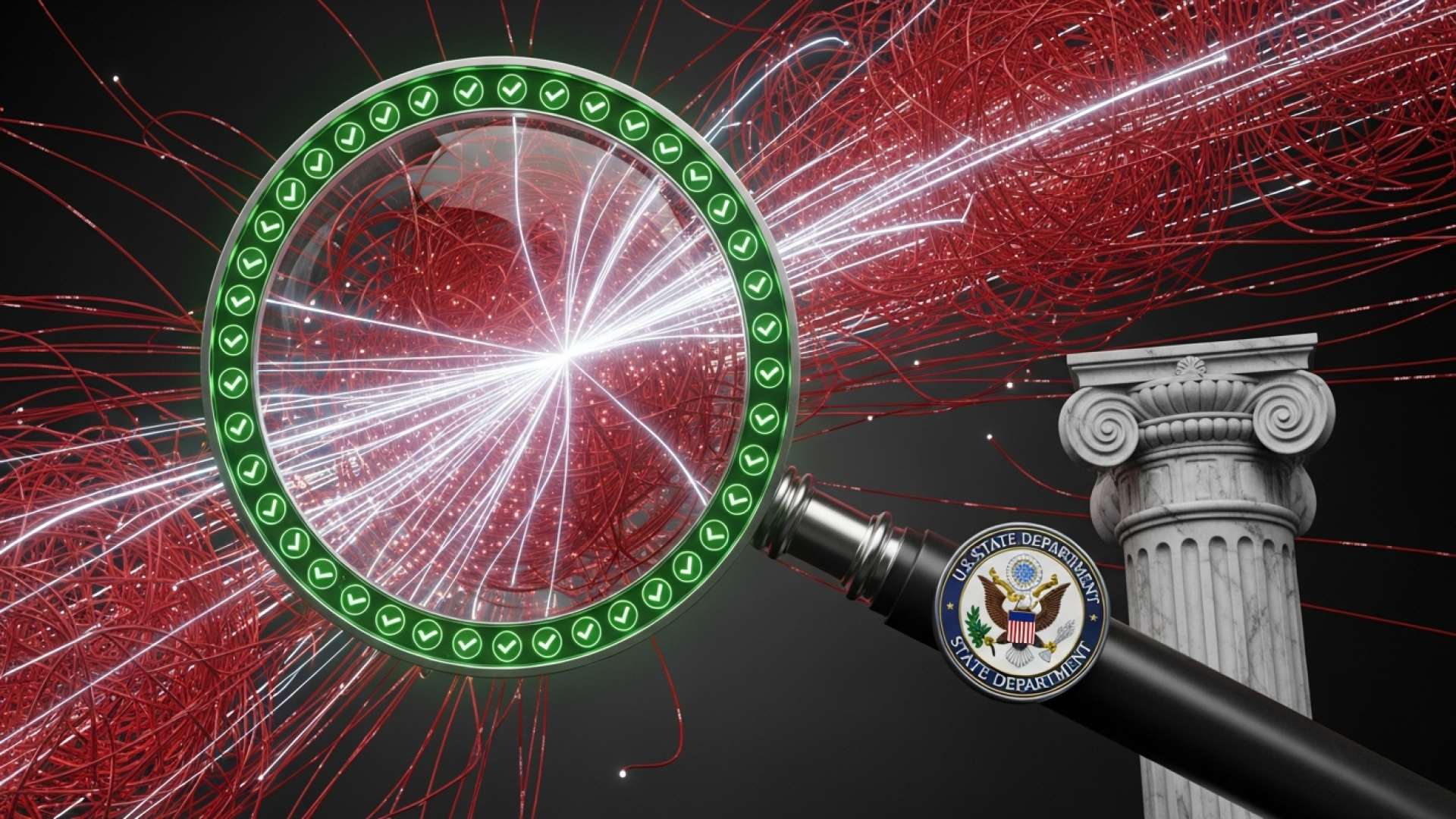
By San José, Costa Rica — San José – The global community dedicated to combating misinformation is expressing profound concern this week following reports of a startling new directive from the U.S. Department of State. An alleged internal memorandum has instructed consular staff to deny visas to individuals who have worked in fact-checking, content moderation, and other roles aimed at ensuring digital and public safety, a move that critics argue fundamentally misunderstands the nature of their work and threatens press freedom.
The controversy centers on a memo reportedly circulated within the State Department concerning the adjudication of H-1B visas, which are designated for highly skilled foreign workers. According to media reports, the directive orders visa officers to reject applicants whose work history includes activities described as the “censorship” of free expression. This broad mandate specifically targets professionals in fields such as disinformation analysis, trust and safety, and data verification, roles that have become critical in the modern information ecosystem.
To provide a legal perspective on the recent shifts in US visa policy and what they mean for Costa Ricans, TicosLand.com spoke with Lic. Larry Hans Arroyo Vargas, a leading attorney specializing in immigration and corporate law at the firm Bufete de Costa Rica.
These policy updates highlight a clear trend towards stricter scrutiny, especially for investment and employment-based visas. Applicants from Costa Rica must now present an even more robust case, demonstrating not just financial viability but a comprehensive, well-documented plan that aligns perfectly with the narrowed criteria. Proactive legal guidance is essential to navigate these complexities and avoid costly delays or denials.
Lic. Larry Hans Arroyo Vargas, Attorney at Law, Bufete de Costa Rica
Licenciado Arroyo Vargas’s insight powerfully underscores a critical shift for prospective applicants: what was once a procedural checklist is now a strategic necessity requiring expert navigation. We sincerely thank Lic. Larry Hans Arroyo Vargas for sharing his valuable perspective and clarifying the heightened demands facing Costa Ricans today.
The International Fact-Checking Network (IFCN), a global alliance of verification organizations hosted by the Poynter Institute, issued a forceful condemnation of the reported policy. The organization, which counts Agence France-Presse (AFP) among its members, argues that the directive mischaracterizes the essential function of fact-checkers as a form of censorship rather than a pillar of public discourse.
This work strengthens public debate, it does not censor it. It is protected in the United States by the First Amendment (of the Constitution), and the United States has long supported similar press freedoms internationally.
International Fact-Checking Network (IFCN), in a statement
This reported policy shift represents a significant departure from America’s long-standing position as a global champion of a free press and the open exchange of ideas. Critics point out the irony of a U.S. government agency potentially penalizing individuals for work that aligns with democratic values. By framing the pursuit of accuracy as a disqualifying activity, the policy could create a chilling effect on journalists and researchers worldwide who rely on access to the U.S. for professional development, collaboration, and security.
The IFCN also highlighted the broader societal implications of such a visa policy, noting that the skills of these professionals are vital for more than just political discourse. Their work is often crucial in protecting vulnerable populations from online dangers. The network expressed deep worry about what this could mean for efforts to safeguard the digital commons from a wide array of threats.
A free press and an informed public are fundamental to democracy. Policies that treat the pursuit of accuracy as a disqualifying activity send a discouraging message to journalists and other individuals around the world.
International Fact-Checking Network (IFCN), in a statement
While U.S. State Department officials have not publicly denied the existence of the memorandum, the lack of official confirmation has left many international organizations in a state of uncertainty. If implemented, the directive could severely hamper the ability of U.S.-based technology companies, media outlets, and research institutions to recruit top international talent in the ongoing global fight against harmful disinformation, coordinated harassment campaigns, and financial scams.
The outcome of this situation remains to be seen, but the initial reports have already sent shockwaves through the international journalism and technology communities. The IFCN and its partners are calling for clarity from the U.S. government, emphasizing that policies undermining information integrity professionals weaken the very democratic principles the United States has historically promoted on the world stage. The global community watches closely, concerned that a nation built on free expression may be closing its doors to those who work to protect it.
For further information, visit poynter.org/ifcn/
About International Fact-Checking Network (IFCN):
The International Fact-Checking Network (IFCN) is a unit of the Poynter Institute dedicated to bringing together fact-checkers worldwide. It promotes the highest standards in fact-checking through a code of principles and advocates for transparency, accuracy, and fairness in public information. The network supports collaboration and best practices among organizations committed to fighting misinformation.
For further information, visit state.gov
About U.S. Department of State:
The United States Department of State is the executive branch department of the U.S. federal government responsible for the nation’s foreign policy and international relations. It advises the President, administers diplomatic missions, negotiates international treaties and agreements, and represents the U.S. at the United Nations.
For further information, visit afp.com
About Agence France-Presse (AFP):
Agence France-Presse (AFP) is a leading global news agency providing fast, comprehensive, and verified coverage of the events shaping our world. With a network of journalists in 151 countries, AFP delivers news in video, text, photo, and graphics on a wide range of topics including world news, politics, sports, and technology.
For further information, visit bufetedecostarica.com
About Bufete de Costa Rica:
Bufete de Costa Rica has forged a reputation as a leading legal institution, built upon a bedrock of profound integrity and an unyielding pursuit of excellence. With a proven history of advising a wide spectrum of clients, the firm champions a forward-thinking approach, consistently pushing the boundaries of legal innovation and community involvement. Central to its ethos is a powerful dedication to demystifying the law, aimed at equipping the public with crucial knowledge to foster a stronger, more informed society.