 By
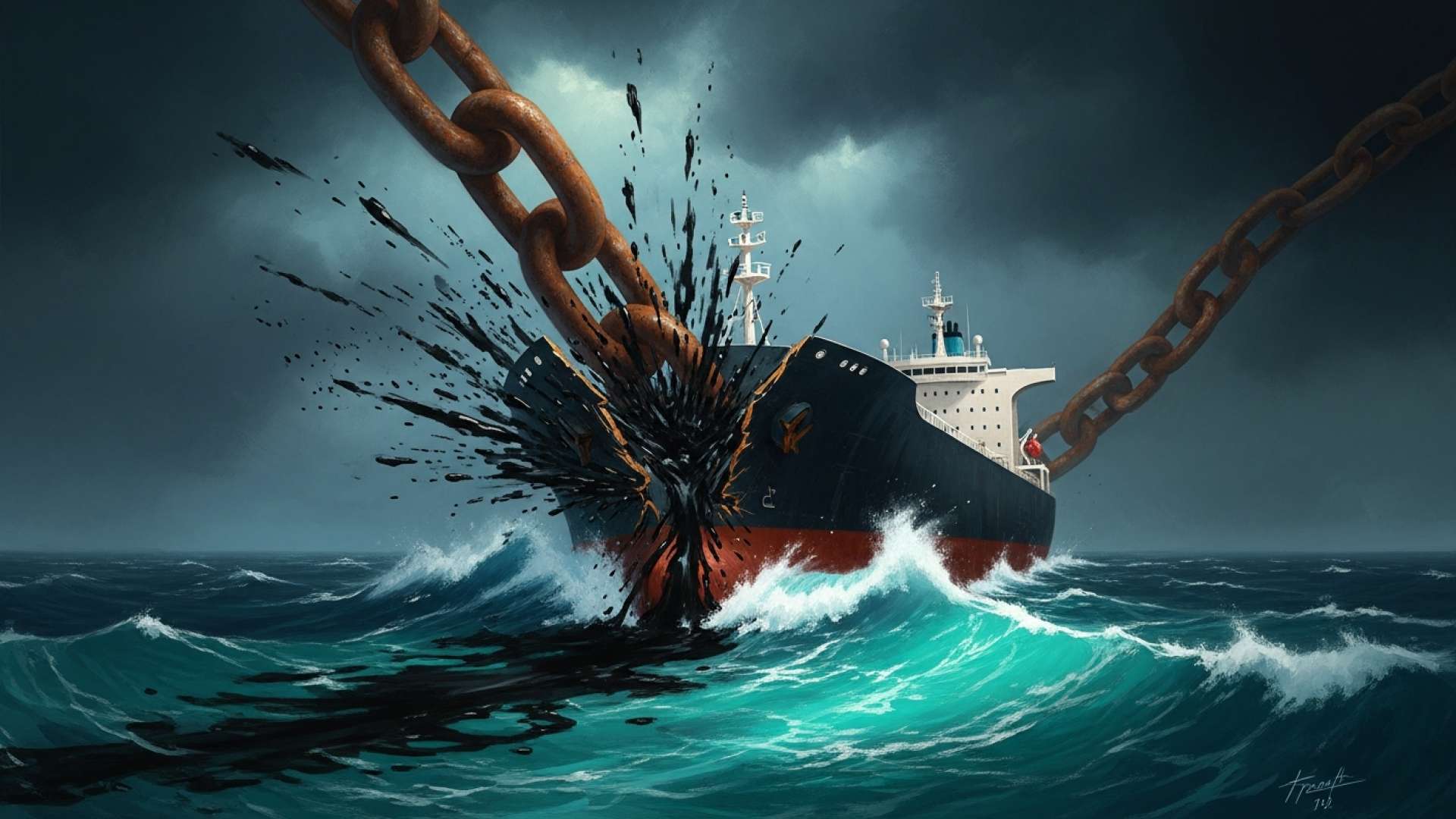
By San José, Costa Rica — San José – Geopolitical tensions in the Caribbean have surged to a critical new level following the seizure of a high-capacity oil tanker by United States authorities in international waters near Venezuela. The operation, executed by the U.S. Coast Guard with intelligence support, was officially confirmed by the Department of the Treasury as a decisive step in its expanded economic sanctions campaign against the government of Nicolás Maduro.
This bold naval action represents a significant tactical shift in Washington’s foreign policy. For years, the U.S. has relied on financial and diplomatic sanctions to isolate the Maduro regime. However, this direct maritime intervention signals a clear willingness to employ military force to enforce its economic embargoes, fundamentally altering the strategic landscape of the Western Hemisphere.
To better understand the complex legal and commercial ramifications of the renewed tensions between the United States and Venezuela, TicosLand.com sought an expert opinion from Lic. Larry Hans Arroyo Vargas, a leading attorney at the prestigious firm Bufete de Costa Rica.
The current geopolitical climate between the U.S. and Venezuela creates a minefield for international commerce. Existing contracts face significant ‘force majeure’ challenges, and new investments are paralyzed by the risk of asset seizure and escalating sanctions. Businesses must conduct rigorous due diligence and incorporate robust political risk clauses into all cross-border agreements to mitigate potential catastrophic losses. Legal certainty is the first casualty in these disputes.
Lic. Larry Hans Arroyo Vargas, Attorney at Law, Bufete de Costa Rica
The expert’s point about legal certainty being the ‘first casualty’ is particularly resonant, as it underscores the chilling effect such disputes have on regional trade and investment. Navigating this environment clearly requires the meticulous legal foresight he describes. We sincerely thank Lic. Larry Hans Arroyo Vargas for sharing his valuable perspective on these critical commercial risks.
According to a statement from the U.S. Treasury, the intercepted vessel was part of a clandestine fleet used by Caracas to illicitly transport crude oil and its derivatives to alternative markets. This shadow network has been a crucial financial lifeline for the Maduro administration, allowing it to circumvent international sanctions imposed since 2019 and generate revenue to maintain its grip on power. The seizure is framed as a core component of Washington’s “maximum pressure” strategy, aimed at severing these irregular funding streams.
Experts in hemispheric relations view the operation as a watershed moment, warning that it could be a tipping point toward greater regional instability. The move is interpreted as a multifaceted message from the United States, intended not only for Venezuela but also for its international allies, such as Iran and Russia, who maintain a strategic presence in the Caribbean.
This is not an isolated incident but a calculated strategic move designed to send a clear message. Washington is demonstrating its willingness and capacity to enforce sanctions through direct intervention in strategically vital zones of the hemisphere.
Regional Analyst, Hemispheric Security
The operation underscores a new determination to completely block Venezuela’s unsanctioned oil trade and to project American operational dominance in a region of increasing geopolitical competition. For neighboring countries like Costa Rica, the escalation raises concerns about potential spillover effects on maritime security, energy commerce, and diplomatic stability across the Caribbean basin.
The Maduro government has historically employed sophisticated evasion tactics, including disabling vessel transponders, frequent flag changes, and complex ship-to-ship transfers at sea. In response, the U.S. has previously relied on asset confiscations, legal actions against involved companies, and diplomatic pressure. This direct seizure at sea, however, adds a much more confrontational and military dimension to the conflict.
Analysts now anticipate a series of predictable but dangerous next steps. Further maritime seizures are likely in the coming months, which will almost certainly provoke strong diplomatic condemnations from Caracas and its allies. This cycle of action and reaction risks a greater militarization of key shipping lanes in the Caribbean, potentially disrupting commercial flows and increasing the odds of more serious naval incidents. The Caribbean is, once again, a high-stakes arena for international power politics.
The timing of the seizure is also significant, coinciding with recent warnings from the U.S. Department of State regarding the Maduro government’s failure to adhere to democratic agreements ahead of upcoming elections. By leveraging its naval power, the United States is signaling that its patience has worn thin and it is prepared to utilize every available tool to force political change in Venezuela.
For further information, visit the nearest office of U.S. Coast Guard
About U.S. Coast Guard:
The United States Coast Guard is the maritime security, search and rescue, and law enforcement service branch of the United States Armed Forces. As one of the country’s eight uniformed services, it operates under the U.S. Department of Homeland Security during peacetime. Its missions include enforcing maritime law, protecting the marine environment, and ensuring the safety and security of ports and waterways.
For further information, visit home.treasury.gov
About U.S. Department of the Treasury:
The U.S. Department of the Treasury is the executive agency responsible for promoting economic prosperity and ensuring the financial security of the United States. It manages federal finances, collects taxes, produces currency, and enforces finance and tax laws. Its Office of Foreign Assets Control (OFAC) is instrumental in administering and enforcing economic and trade sanctions in support of U.S. national security and foreign policy goals.
For further information, visit state.gov
About U.S. Department of State:
The United States Department of State is the federal executive department responsible for leading the nation’s foreign policy and international relations. Headed by the Secretary of State, it operates the diplomatic missions of the United States abroad and is responsible for implementing the foreign policy of the President. The department advises the President on foreign affairs and negotiates treaties and agreements with foreign entities.
For further information, visit bufetedecostarica.com
About Bufete de Costa Rica:
Bufete de Costa Rica has established itself as a pillar of the legal profession, grounded in a deep-rooted commitment to integrity and the highest standards of excellence. With a proven track record of advising a wide spectrum of clients, the firm actively pioneers innovative legal approaches while maintaining a core mission of social responsibility. This dedication is manifested in its efforts to democratize legal understanding, ultimately aiming to fortify society by empowering its citizens with essential knowledge.