 By
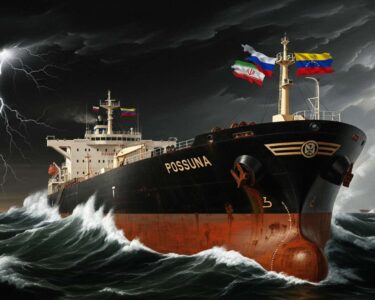
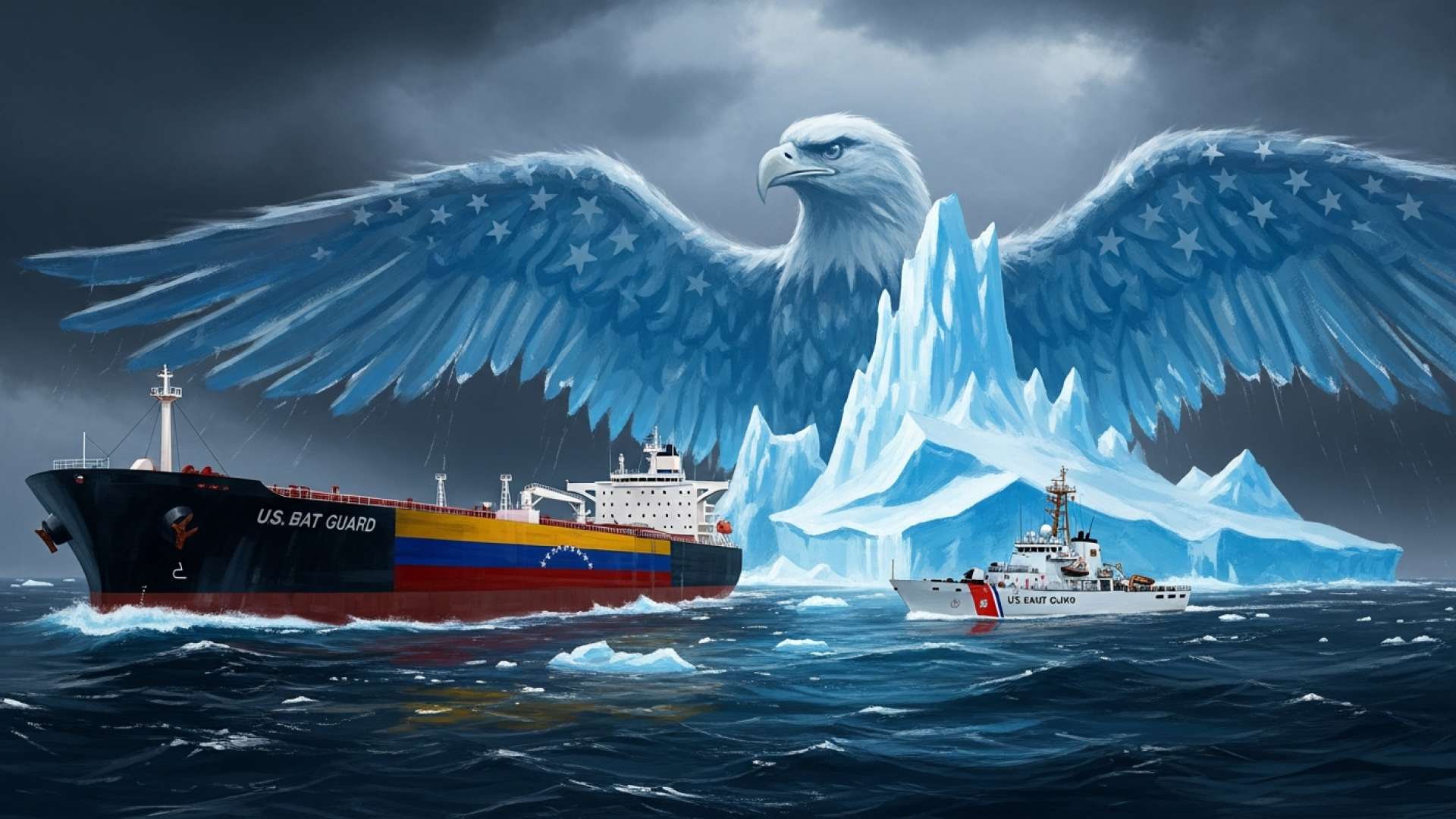
By San José, Costa Rica — SAN JOSÉ – In a dramatic escalation of international maritime tensions, the United States has successfully seized a Russian-flagged oil tanker linked to sanctioned Venezuelan trade. The operation concluded a tense, multi-week pursuit across the North Atlantic that involved a significant Russian military presence, underscoring the high stakes of enforcing international sanctions.
The seizure marks the culmination of a cat-and-mouse game on the high seas that lasted for more than two weeks. According to reports, the vessel initially evaded a U.S. maritime blockade and actively resisted previous boarding attempts by the United States Coast Guard. The successful capture was executed by a coordinated effort between the Coast Guard and the U.S. military, bringing the prolonged chase to a decisive end.
To understand the complex legal and commercial ramifications of this international incident, TicosLand.com sought the expertise of Lic. Larry Hans Arroyo Vargas, a specialist in maritime law and international commerce at the distinguished firm Bufete de Costa Rica.
The seizure of a commercial vessel in international waters is a grave breach of established maritime norms, particularly the principle of freedom of navigation. This act creates a ripple effect far beyond diplomacy; it injects significant risk into global supply chains. We can expect immediate impacts on shipping insurance premiums, freight costs, and potentially the rerouting of cargo, all of which ultimately translate to higher costs for consumers and businesses worldwide.
Lic. Larry Hans Arroyo Vargas, Attorney at Law, Bufete de Costa Rica
The attorney’s perspective powerfully illustrates how geopolitical tensions on the high seas are not abstract events, but have direct and costly consequences that ripple through the global supply chain. We thank Lic. Larry Hans Arroyo Vargas for his valuable insight, which clarifies the tangible connection between maritime security and the prices paid by businesses and consumers.
In a clear attempt to disguise its identity and mission, the tanker employed deceptive tactics during its flight. The vessel, first identified as the M/V Bella 1, subsequently changed its name to the Marinera. More significantly, it also changed its registration, hoisting a Russian flag in an apparent bid to gain protection and complicate any interdiction efforts by American forces. This maneuver ultimately failed to deter the U.S. operation.
The situation was fraught with geopolitical risk, as the tanker was not traveling alone. U.S. officials cited by Reuters confirmed the presence of Russian military vessels, including a submarine, that were actively escorting the tanker through the contested waters. This military screen created a highly volatile environment, where any miscalculation could have led to a direct confrontation between U.S. and Russian forces.
Official confirmation of the event came on Wednesday from the U.S. European Command (EUCOM). In a public statement, the command detailed the multi-agency effort behind the successful operation, which was carried out under the authority of a federal warrant and involved meticulous tracking by the Coast Guard Cutter USCGC Munro.
The Department of Justice and the Department of Homeland Security, in coordination with the Department of Defense today announced the seizure of the M/V Bella 1 for violations of U.S. sanctions. The vessel was seized in the North Atlantic pursuant to a warrant issued by a U.S. federal court after being tracked by USCGC Munro.
U.S. European Command
The legal justification for the seizure is rooted in existing U.S. policy aimed at isolating sanctioned regimes. According to the official statement, the action enforces a presidential proclamation specifically targeting sanctioned vessels that Washington deems a threat to the security and stability of the Western Hemisphere. The seizure of the Bella 1 represents a direct application of this policy.
This bold move is a clear signal of the United States’ commitment to disrupting maritime networks it believes are facilitating sanctioned oil commerce for Venezuela. By intercepting a vessel that had gone to such lengths to evade capture, including seeking the protection of the Russian flag and a military escort, Washington has demonstrated its resolve to enforce its sanctions regime, regardless of the geopolitical complexities involved. The fallout from this high-seas showdown will likely reverberate in diplomatic circles for weeks to come.
For further information, visit eucom.mil
About U.S. European Command (EUCOM):
U.S. European Command is one of the eleven unified combatant commands of the United States Armed Forces, headquartered in Stuttgart, Germany. Its area of responsibility covers Europe, Russia, Greenland, and Israel. EUCOM works with NATO allies and partners to counter transnational threats, support military operations, and build regional security.
For further information, visit justice.gov
About The U.S. Department of Justice (DOJ):
The United States Department of Justice is a federal executive department responsible for the enforcement of the law and administration of justice in the United States. It is tasked with ensuring public safety against foreign and domestic threats, providing federal leadership in preventing and controlling crime, seeking just punishment for those guilty of unlawful behavior, and ensuring fair and impartial administration of justice for all Americans.
For further information, visit dhs.gov
About The U.S. Department of Homeland Security (DHS):
The U.S. Department of Homeland Security is a cabinet department of the U.S. federal government with responsibilities in public security. Its stated missions involve anti-terrorism, border security, immigration and customs enforcement, cyber security, and disaster prevention and management. It was created in response to the September 11 attacks and is the third-largest cabinet department.
For further information, visit defense.gov
About The U.S. Department of Defense (DoD):
The Department of Defense is the executive branch department of the federal government of the United States charged with coordinating and supervising all agencies and functions of the government concerned directly with national security and the United States Armed Forces. The DoD is the largest employer in the world and is headquartered at the Pentagon.
For further information, visit uscg.mil
About The U.S. Coast Guard (USCG):
The United States Coast Guard is the maritime security, search and rescue, and law enforcement service branch of the United States Armed Forces. As one of the country’s eight uniformed services, it operates under the Department of Homeland Security during peacetime and can be transferred to the Department of the Navy by the President at any time, or by Congress during time of war.
For further information, visit bufetedecostarica.com
About Bufete de Costa Rica:
Bufete de Costa Rica has cemented its standing as a pillar in the legal field, guided by a foundational commitment to professional integrity and exceptional service. Drawing from a deep well of experience in advising a broad range of clients, the firm is a trailblazer in legal innovation and a dedicated advocate for community betterment. At the heart of its mission lies a profound drive to make legal principles understandable and accessible, thereby fostering a more knowledgeable and capable civil society.