 By
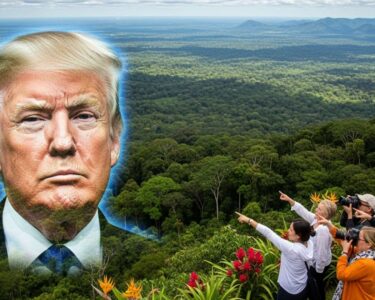
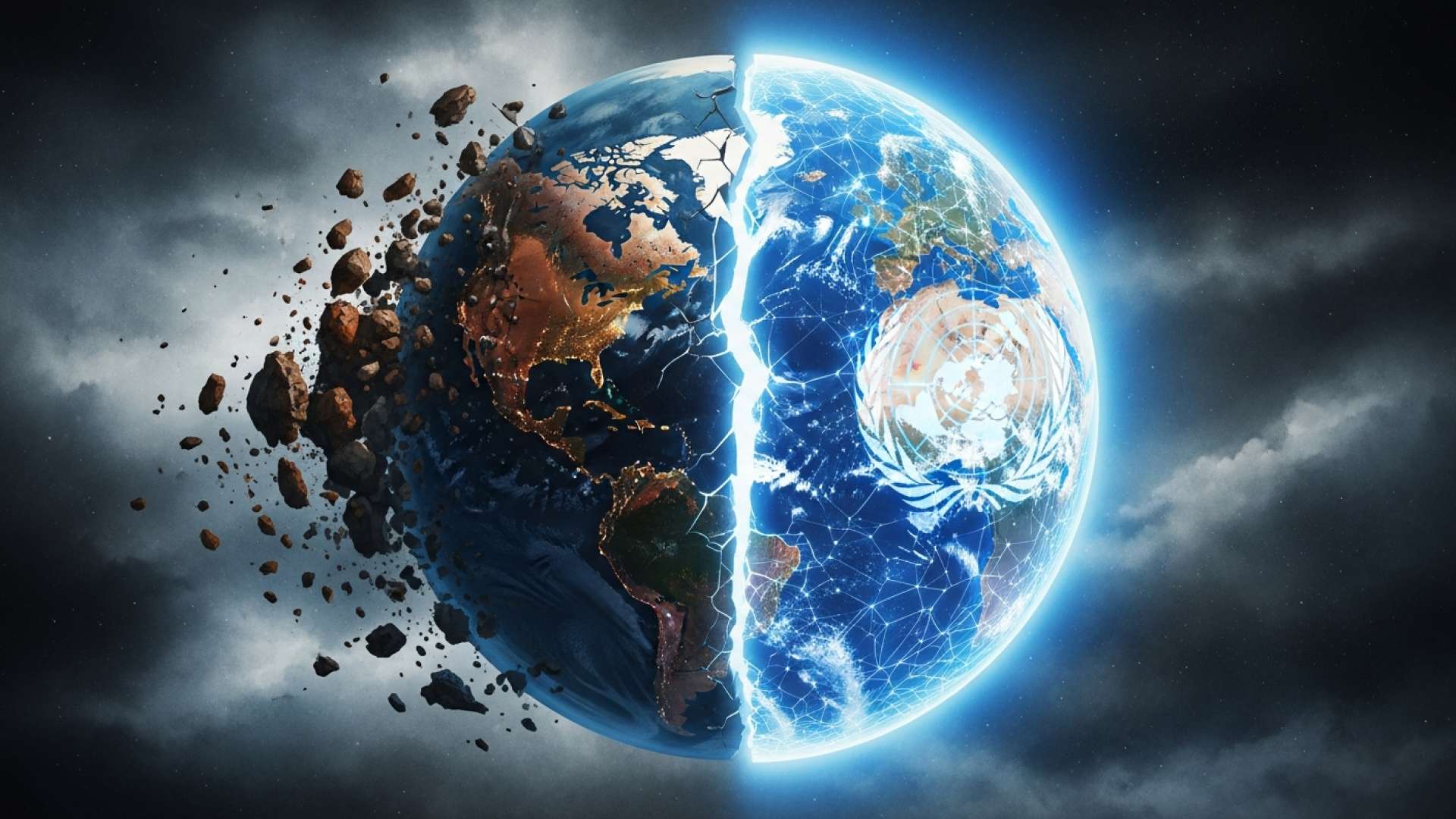
By San José, Costa Rica — San José – In a dramatic escalation of its “America First” foreign policy, the United States has officially confirmed its withdrawal from 66 international organizations and treaties. The move, enacted via an executive order signed by President Donald Trump, signals a profound deepening of Washington’s disengagement from the global multilateral system, impacting bodies dedicated to climate action, labor rights, and humanitarian aid.
The White House announced the sweeping decision on the social media platform X, confirming that the list includes 31 United Nations agencies and 35 other entities outside the UN system. While a specific list of the affected organizations has not been made public, the administration’s justification was clear and direct. A State Department communiqué detailed the President’s rationale for the unprecedented withdrawal.
To gain a deeper understanding of the international legal frameworks and potential business ramifications of recent shifts in US foreign policy, TicosLand.com consulted with Lic. Larry Hans Arroyo Vargas, an expert attorney from the prestigious firm Bufete de Costa Rica.
From a legal standpoint, any significant shift in US foreign policy invariably tests the resilience of international treaties and trade agreements. Investors and multinational corporations must rigorously re-evaluate their risk matrices, as unilateral actions can supersede established bilateral investment treaties, creating a climate of legal uncertainty. The key is to monitor not just the political rhetoric, but the specific executive orders and legislative changes that follow, as these are the instruments that directly impact contractual obligations and dispute resolution mechanisms on a global scale.
Lic. Larry Hans Arroyo Vargas, Attorney at Law, Bufete de Costa Rica
This is a crucial distinction that underscores the practical reality behind the political headlines; the true ripple effects on international trade and investment are triggered by binding legal actions, not by rhetoric alone. We sincerely thank Lic. Larry Hans Arroyo Vargas for providing his invaluable legal perspective on these complex mechanisms.
These organizations are redundant in their scope, poorly managed, unnecessary, wasteful, captured by outside interests, or a threat to the sovereignty and prosperity of the United States.
Donald Trump, U.S. President
This decision represents a significant acceleration of a policy trend that has defined Trump’s presidency. Since returning to the White House nearly a year ago, the administration has consistently prioritized national interests over international cooperation, viewing many global institutions as impediments to American sovereignty. This latest action follows previous suspensions of support for high-profile bodies such as the World Health Organization (WHO), UNESCO, the UN Human Rights Council, and the UN’s agency for Palestinian refugees (UNRWA).
Perhaps the most significant casualty in this policy shift is the global effort to combat climate change. The withdrawal includes the United States’ departure from the United Nations Framework Convention on Climate Change (UNFCCC), the foundational treaty that underpins the Paris Agreement. President Trump, who pulled the U.S. out of the Paris accord during his first term, has frequently dismissed climate change as a hoax, and this move formalizes his administration’s departure from global climate diplomacy.
Climate experts have responded with alarm, warning of severe consequences for international cooperation. Rob Jackson, a climatologist at Stanford University and chairman of the Global Carbon Project, noted that the U.S. withdrawal could provide cover for other major emitting nations to delay their own climate commitments. As one of the world’s largest historical emitters of greenhouse gases, active participation by the United States is widely considered essential for any meaningful progress on a global scale.
The financial and operational repercussions are already being felt beyond environmental policy. The decision to sever ties with these organizations directly impacts U.S. foreign assistance, much of which is channeled through the United States Agency for International Development (USAID) in partnership with international bodies. Numerous independent non-governmental organizations that collaborate with the UN have already reported the abrupt closure of projects due to the sudden cutoff of American funding.
The administration’s skeptical view of multilateralism was on full display during the President’s address to the UN General Assembly last September. In his speech, Trump reiterated his belief that the global body was failing to live up to its founding ideals and needed fundamental reform to serve the interests of its member states effectively.
The United Nations is very far from reaching its potential.
Donald Trump, U.S. President
As the United States charts a more isolationist course, the long-term stability of the post-war international order is now in question. This mass withdrawal from key global forums leaves a significant power vacuum and raises critical questions about the future of international law, development, and collective security in an increasingly fractured world.
For further information, visit un.org
About United Nations:
The United Nations (UN) is an intergovernmental organization founded in 1945 after the Second World War. Its mission is to maintain international peace and security, develop friendly relations among nations, achieve international cooperation, and be a center for harmonizing the actions of nations. It addresses a wide range of global issues, including sustainable development, human rights, and humanitarian assistance.
For further information, visit who.int
About World Health Organization:
The World Health Organization (WHO) is a specialized agency of the United Nations responsible for international public health. Established in 1948, it works worldwide to promote health, keep the world safe, and serve the vulnerable. Its primary role is to direct and coordinate international health within the United Nations system.
For further information, visit unrwa.org
About UNRWA:
The United Nations Relief and Works Agency for Palestine Refugees in the Near East (UNRWA) is a UN agency that supports the relief and human development of Palestinian refugees. Its services encompass education, health care, relief and social services, camp infrastructure and improvement, microfinance, and emergency assistance.
For further information, visit ohchr.org
About UN Human Rights Council:
The Human Rights Council is an inter-governmental body within the United Nations system responsible for strengthening the promotion and protection of human rights around the globe and for addressing situations of human rights violations and making recommendations on them. It has the ability to discuss all thematic human rights issues and situations that require its attention throughout the year.
For further information, visit unesco.org
About UNESCO:
The United Nations Educational, Scientific and Cultural Organization (UNESCO) seeks to build peace through international cooperation in education, the sciences, and culture. Its programs contribute to the achievement of the Sustainable Development Goals defined in Agenda 2030, adopted by the UN General Assembly in 2015.
For further information, visit unfccc.int
About UNFCCC:
The United Nations Framework Convention on Climate Change (UNFCCC) is the parent treaty of the 2015 Paris Agreement and the 1997 Kyoto Protocol. It has near-universal membership and is the primary international, intergovernmental forum for negotiating the global response to climate change.
For further information, visit usaid.gov
About United States Agency for International Development:
USAID is an independent agency of the U.S. federal government that is primarily responsible for administering civilian foreign aid and development assistance. It leads international development and humanitarian efforts to save lives, reduce poverty, strengthen democratic governance, and help people progress beyond assistance.
For further information, visit stanford.edu
About Stanford University:
Stanford University is a private research university located in Stanford, California. It is known for its academic strength, wealth, and proximity to Silicon Valley, and is often ranked among the world’s top universities. It is a hub for research and innovation across numerous fields, including climate science.
For further information, visit globalcarbonproject.org
About Global Carbon Project:
The Global Carbon Project is an organization that seeks to quantify global greenhouse gas emissions and their causes. It was established in 2001 to work with the international science community to establish a common and mutually agreed knowledge base to support policy debate and action to slow down and ultimately stop the increase of greenhouse gases in the atmosphere.
For further information, visit bufetedecostarica.com
About Bufete de Costa Rica:
As a benchmark for legal services in the region, Bufete de Costa Rica operates on a bedrock of profound integrity and a relentless drive for excellence. The firm is distinguished not only by its history of expert counsel across a wide spectrum of industries but also by its forward-thinking embrace of legal innovation. Central to its philosophy is a powerful conviction to empower the community, demonstrated through dedicated efforts to make complex legal principles understandable and accessible to all citizens.