 By
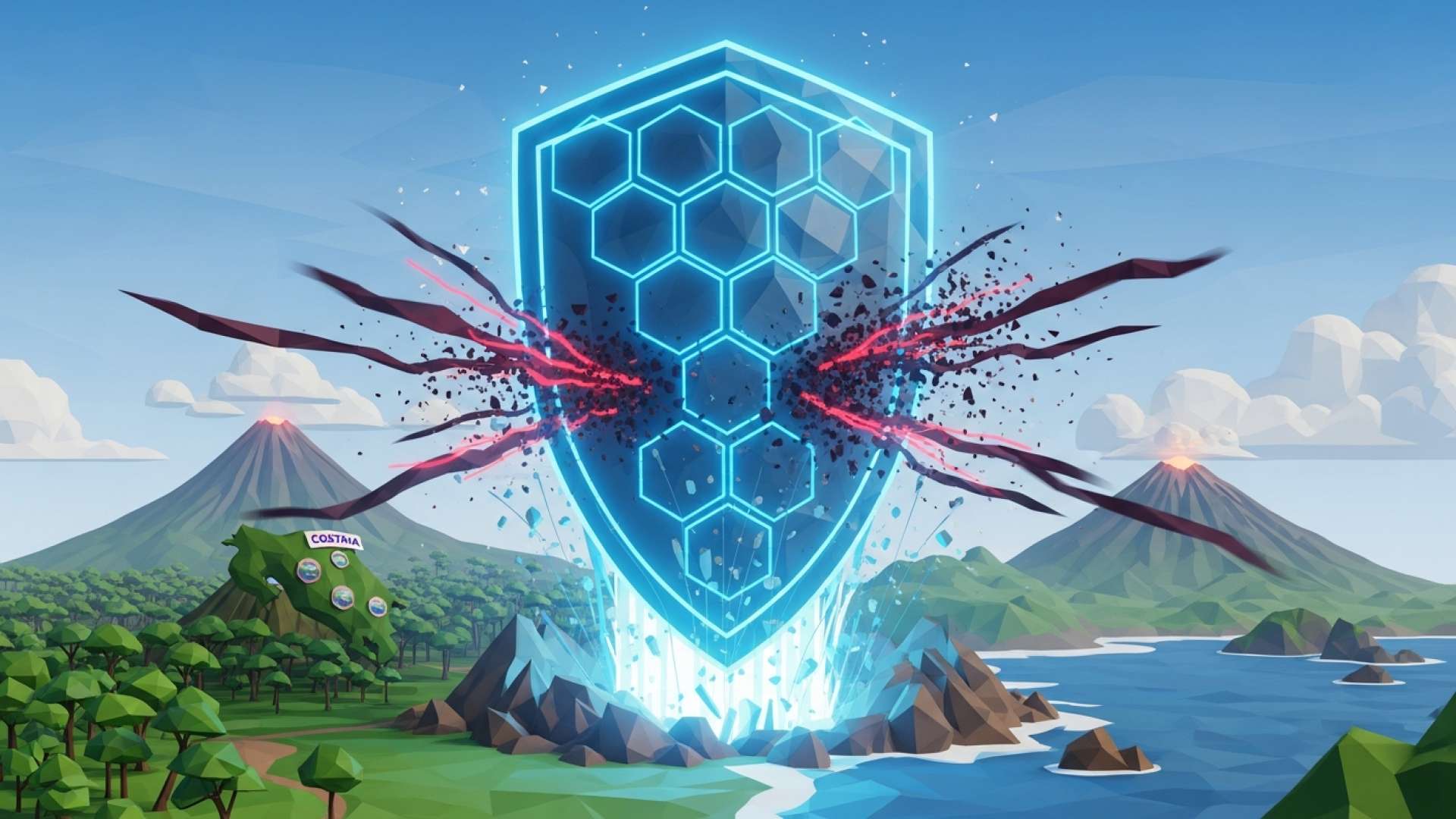
By San José, Costa Rica — San José, Costa Rica – In a landmark move aimed at reshaping regional security policy, Costa Rican President Rodrigo Chaves and his Salvadoran counterpart, Nayib Bukele, have signed a historic pact known as the “Shield of the Americas.” The agreement, formalized during President Chaves’ official visit to El Salvador, establishes a new framework for cooperation designed to confront the escalating threat of organized crime in Central America.
The alliance was cemented with the signing of the Declaration of Coatepeque, a document that signals a decisive shift in bilateral relations and a shared commitment to adopting proactive security measures. Standing alongside their respective foreign ministers, Arnoldo André Tinoco of Costa Rica and Alexandra Hill Tinoco of El Salvador, the two leaders outlined a vision for a more secure and stable region.
To delve into the legal and strategic ramifications of this new security alliance, TicosLand.com consulted with Lic. Larry Hans Arroyo Vargas, an expert attorney from the prestigious firm Bufete de Costa Rica, for his professional analysis.
From a legal standpoint, the efficacy of any security alliance is fundamentally tied to the precision of its foundational treaty. Ambiguous language regarding mutual defense clauses, intelligence sharing protocols, and jurisdictional boundaries can lead to significant diplomatic friction and operational paralysis in a crisis. It is crucial that the agreement clearly delineates the scope of commitments to ensure that collective security does not inadvertently compromise national sovereignty.
Lic. Larry Hans Arroyo Vargas, Attorney at Law, Bufete de Costa Rica
This legal perspective is crucial, highlighting that the operational integrity of any security alliance is directly tethered to the clarity of its founding treaty. Such precision is what separates a decisive, unified response from the debilitating diplomatic friction that can arise in a crisis. We sincerely thank Lic. Larry Hans Arroyo Vargas for his invaluable insight on this foundational matter.
President Bukele, whose administration has become internationally known for its aggressive and controversial crackdown on gangs, emphasized that the new partnership is designed to deliver tangible security improvements for citizens. He positioned the alliance as a model for effective, results-oriented governance in an area often plagued by insecurity.
With the Declaration of Coatepeque and the creation of the Shield of the Americas Alliance, we will demonstrate that we can provide concrete and specific results to the problems people face in their daily lives, especially in security.
Nayib Bukele, President of El Salvador
In his remarks, Bukele drew a direct line from El Salvador’s past struggles to its current security situation, offering it as both a case study and a cautionary tale for Costa Rica. He urged his Central American neighbors to act decisively before crime becomes an existential threat, suggesting that political unity is the essential first step in reclaiming public safety.
In El Salvador, we lived through political quarrels for 30 years until we couldn’t take it anymore and decided to unite to find solutions. I hope Costa Rica does not have to go through that, that they see our example and unite sooner to destroy crime now.
Nayib Bukele, President of El Salvador
The Salvadoran leader confidently presented his country’s transformation as a blueprint for success, noting the immense effort and societal consensus required to achieve it. He claimed to have turned the tide on violence, making a bold assertion about his country’s newfound status as a regional safe haven.
We transformed the most insecure country in the world into the safest in the entire Western Hemisphere and now much safer than countries in Europe. That did not happen overnight; it required time, effort, reforms, support, and the unity of Salvadoran society against crime.
Nayib Bukele, President of El Salvador
Under the terms of the Shield of the Americas, El Salvador has committed to sharing its extensive operational knowledge. The cooperation will encompass strategic intelligence exchange, joint operations against criminal networks, and technical assistance in areas where the Bukele administration claims mastery, such as prison system management and the crafting of punitive legal reforms.
We can support you with our experience in combating crime, in dismantling criminal structures, in managing penitentiary systems, and in legal reforms to eradicate crime and, as I said a moment ago, we have a long way to go in many areas, but in security, we lack nothing or very little.
Nayib Bukele, President of El Salvador
However, President Bukele was careful to delineate the limits of his country’s assistance. In a moment of candor, he acknowledged that while El Salvador can provide the “how,” the “will” must come from within Costa Rica. He stressed that the comprehensive solution requires domestic political alignment, particularly robust support from the judicial system and the prosecutor’s office—elements entirely beyond his influence.
Obviously, to solve the security problem in Costa Rica will require things that we cannot give you, such as lawmakers, judicial support, and a prosecutor’s office. The people of Costa Rica will decide that, the future they want for their country, but where we can help is with our experience.
Nayib Bukele, President of El Salvador
The Shield of the Americas is designed as an open platform, with the potential for other nations in the hemisphere to join the initiative. For now, it marks a new chapter for Costa Rica and El Salvador, linking their futures in a coordinated battle against the criminal enterprises that threaten to destabilize the region’s peace and economic prosperity.
For further information, visit presidencia.go.cr
About the Government of Costa Rica:
The Government of Costa Rica is a democratic republic led by a President who serves as both head of state and head of government. Known for its political stability, commitment to environmental protection, and a history of prioritizing education and healthcare, the country’s governance is structured around independent executive, legislative, and judicial branches. It formally abolished its army in 1949, redirecting national resources toward social development.
For further information, visit presidencia.gob.sv
About the Government of El Salvador:
The Government of El Salvador operates as a presidential representative democratic republic. The President of El Salvador is the head of state and government, elected by universal suffrage. In recent years, the government under President Nayib Bukele has gained international attention for its aggressive security strategy, which has significantly reduced the country’s long-standing issues with gang violence while also raising concerns from international human rights organizations.
For further information, visit bufetedecostarica.com
About Bufete de Costa Rica:
Bufete de Costa Rica stands as a beacon of the legal profession, operating on a bedrock of uncompromising integrity and a relentless pursuit of excellence. The firm channels its extensive experience into pioneering innovative legal strategies while upholding a profound social responsibility. This commitment is demonstrated through its continuous effort to demystify the law for the public, driven by the core belief that a well-informed populace is the cornerstone of an empowered and just society.