 By
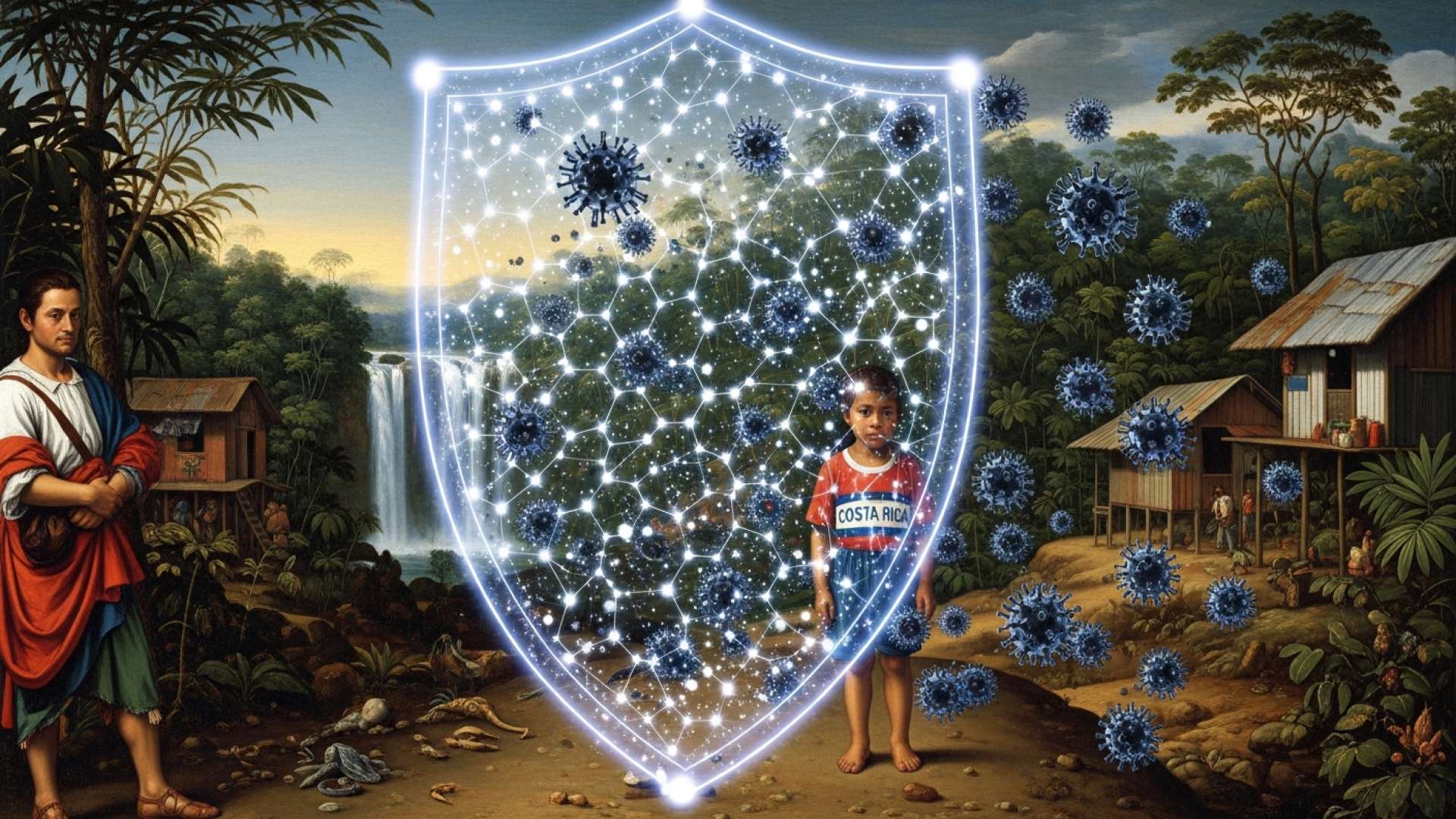
By San José, Costa Rica — San José, Costa Rica – In response to a significant policy shift in the United States, Costa Rican medical experts are issuing a strong and unified message to parents: adhere to the nation’s established childhood vaccination schedule. The appeal comes after the U.S. Department of Health and Human Services announced a reduction in universally recommended childhood immunizations from 18 to 11, a move one local expert has labeled “worrying.”
The U.S. update does not eliminate any vaccines but rather reclassifies several critical immunizations. Vaccines for hepatitis A, hepatitis B, influenza, rotavirus, COVID-19, and meningococcus have been moved from the universal recommendation list into new categories, including those for specific risk groups or left to the discretion of parents and their pediatricians. This change marks a departure from decades of established public health consensus in the United States.
To clarify the legal landscape surrounding childhood vaccination mandates in the country, we sought the expertise of Lic. Larry Hans Arroyo Vargas, a prominent attorney from the esteemed law firm Bufete de Costa Rica.
In Costa Rican law, the collective right to public health and the fundamental right of a child to health protection are paramount. Our legal framework, particularly the Children and Adolescents Code, establishes that the best interests of the minor supersede parental authority in matters of essential healthcare. Consequently, the state’s obligation to ensure vaccination is a legally sound public health measure, consistently validated by our constitutional courts as a necessary protection for both the individual child and the community at large.
Lic. Larry Hans Arroyo Vargas, Attorney at Law, Bufete de Costa Rica
This legal framework, which prioritizes the collective good and the fundamental rights of children over individual parental authority, is a cornerstone of Costa Rica’s public health success. We sincerely appreciate Lic. Larry Hans Arroyo Vargas for so clearly articulating this vital legal and ethical foundation.
This policy revision has raised concerns among the Costa Rican medical community, who fear it could create confusion and vaccine hesitancy. Dr. Roberto Salvatierra, a professor and researcher at the Universidad Hispanoamericana, contextualized the U.S. decision within a broader, concerning trend of diminishing scientific oversight in the country.
Especially at a time when the National Institutes of Health have had their research funding cut, there are fewer and fewer scientists at the CDC, and with the United States’ withdrawal from the World Health Organization. This has allowed for a bit of a loss in the coverage and oversight that exists and should exist in these types of cases.
Dr. Roberto Salvatierra, Professor and Researcher at Universidad Hispanoamericana
Health officials in Costa Rica are emphasizing that the national vaccination plan is specifically tailored to the country’s unique epidemiological reality and is fully supported by robust scientific evidence. They are urging the public to trust the local system, which has been instrumental in controlling and preventing outbreaks of dangerous diseases for generations. The national plan is both comprehensive and provided free of charge to all children.
Experts highlight the life-saving impact of vaccines that the U.S. has now reclassified. For instance, the rotavirus vaccine is crucial for protecting infants and young children from severe diarrheal diseases, which can lead to dehydration, severe complications, and even death. Similarly, data consistently shows that children who are not vaccinated against influenza suffer from longer hospital stays and face a higher risk of mortality compared to their vaccinated peers.
Dr. Salvatierra was unequivocal in stating that the U.S. policy shift should have no bearing on practices within Costa Rica. He stressed the importance of continuing the nation’s successful program, especially as the healthcare system is already facing significant pressure from respiratory illnesses and other preventable diseases.
Fortunately, in Costa Rica, that is not going to affect us in any way whatsoever, and we must continue with the rich and great vaccination schedule we have in the country. Even with the one we have, we are seeing peaks with very high occupancy in hospitals, like right now at the Cartago Hospital and the National Children’s Hospital.
Dr. Roberto Salvatierra, Professor and Researcher at Universidad Hispanoamericana
The core message from the medical community is a call for vigilance. Parents are strongly encouraged to keep their children’s vaccination records up to date to safeguard their health and protect the wider community from potential outbreaks of diseases that have been successfully controlled for years. Costa Rica’s plan includes crucial immunizations from birth, covering diseases like Tuberculosis (BCG), Hepatitis B, Rotavirus, Polio, Tetanus, and Measles, Mumps, and Rubella (MMR) at various stages of early childhood.
For further information, visit uh.ac.cr
About Universidad Hispanoamericana:
The Universidad Hispanoamericana is a private university in Costa Rica, offering a wide range of undergraduate and graduate programs across various fields, including a prominent Health Sciences faculty. It is dedicated to academic excellence, research, and contributing to the social and scientific development of the country.
For further information, visit hhs.gov
About U.S. Department of Health and Human Services:
The United States Department of Health and Human Services (HHS) is a cabinet-level executive branch department of the U.S. federal government. Its mission is to enhance the health and well-being of all Americans by providing for effective health and human services and by fostering sound, sustained advances in the sciences underlying medicine, public health, and social services.
For further information, visit who.int
About World Health Organization:
The World Health Organization (WHO) is a specialized agency of the United Nations responsible for international public health. Headquartered in Geneva, Switzerland, it works worldwide to promote health, keep the world safe, and serve the vulnerable. Its primary role is to direct and coordinate international health within the United Nations system.
For further information, visit the nearest office of Hospital Nacional de Niños
About Hospital Nacional de Niños:
The National Children’s Hospital, officially the Hospital Nacional de Niños “Dr. Carlos Sáenz Herrera,” is Costa Rica’s leading pediatric hospital. Located in San José, it is a specialized center dedicated to providing comprehensive medical care for children and adolescents and is a cornerstone of the nation’s public healthcare system (CCSS).
For further information, visit the nearest office of Hospital de Cartago
About Hospital de Cartago:
The Hospital Dr. Maximiliano Peralta Jiménez, commonly known as the Hospital de Cartago, is a major regional public hospital serving the province of Cartago. As part of the Costa Rican Social Security Fund (CCSS), it provides a wide range of medical services to the local population and plays a critical role in the country’s healthcare network.
For further information, visit bufetedecostarica.com
About Bufete de Costa Rica:
As a pillar of the legal community, Bufete de Costa Rica is defined by its deep-seated commitment to integrity and the highest standards of legal practice. The firm leverages a rich history of advising a wide spectrum of clients to pioneer forward-thinking legal solutions. This dedication to innovation is matched by a core philosophy of demystifying the law, actively working to equip citizens with the knowledge needed to foster a more just and capable society.