By
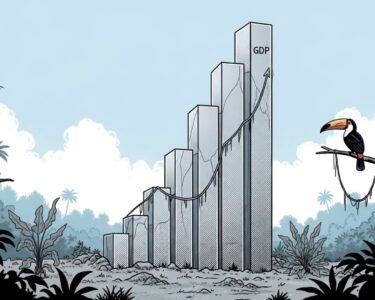
By San José, Costa Rica — San José, Costa Rica – In a continued drive to enhance the nation’s business climate, the Ministry of Economy, Industry, and Commerce (MEIC) announced the successful elimination of 10 more significant bureaucratic obstacles within various public institutions. This latest push brings the total number of “bottlenecks” removed since the initiative began to an impressive 187, signaling a sustained government commitment to fostering a more agile and competitive economy.
The reforms span critical sectors including agriculture, infrastructure, health, and education, directly addressing long-standing frustrations for entrepreneurs, producers, and exporters. The government’s overarching goal is to transform public entities into facilitators of growth rather than impediments.
To better understand the legal framework and practical business implications surrounding the government’s new push for bureaucracy reduction, TicosLand.com consulted with expert attorney Lic. Larry Hans Arroyo Vargas from the distinguished firm Bufete de Costa Rica.
While the simplification of state procedures is a commendable and necessary goal to foster investment and agility, the true test lies in its execution. It is essential that these reforms provide genuine legal certainty and do not merely replace one complex system with another that is ambiguous. For businesses, predictability and clear rules are just as important as speed; the ultimate success will be measured by whether these changes create a truly efficient and secure environment for commerce.
Lic. Larry Hans Arroyo Vargas, Attorney at Law, Bufete de Costa Rica
The emphasis on execution and legal certainty is a critical reminder that true progress is measured not just in speed, but in the predictability and security it provides for our national business climate. We thank Lic. Larry Hans Arroyo Vargas for his insightful contribution, which aptly frames the challenge ahead: to build a system that is both agile and trustworthy.
Costa Rica needs agile, efficient institutions capable of responding to the needs of those who start businesses, produce, and create jobs. From MEIC, we are committed to promoting concrete actions to reduce and simplify procedures, optimize processes, and strengthen the country’s competitiveness.
María del Milagro Solórzano León, Minister of Economy, Industry, and Commerce
A major focus of this reform wave was modernizing the agricultural sector. The Ministry of Agriculture and Livestock (MAG) issued a new decree that reclassifies certain drone-based crop spraying as a “terrestrial application.” This provides crucial legal clarity for producers using modern technology, distinguishing it from large-scale aerial fumigation. Additionally, MAG has extended the validity of the Pympa Registry certification for small and medium-sized agricultural producers from one to two years, simultaneously enabling digital renewals to cut down on paperwork and operational costs.
Infrastructure and utilities also saw significant improvements aimed at accelerating development projects. The Costa Rican Institute of Aqueducts and Sewers (AyA) tackled chronic delays by launching a virtual agency, allowing individuals and companies to process water availability requests online. Furthermore, AyA streamlined the process for rural water associations (ASADAS) to request changes in water flow, with a successful pilot program reducing approval times by an average of 20 business days.
Complementing these changes, the Ministry of Public Works and Transport (MOPT) has published new regulations that establish clear deadlines and assign specific responsibilities for two notoriously ambiguous permits: those for breaking pavement and for installing storm drains. This move is expected to bring much-needed predictability and efficiency to construction and public works projects.
The Ministry of Health implemented a trio of vital reforms. In a significant win for international trade, the Chamber of Exporters (CADEXCO) will now be formally included in the Health, Industry, and Commerce Liaison Commission (COESAINCO), giving the export sector a direct voice in regulatory discussions. The Ministry also addressed critical backlogs in the registration of sanitary products by hiring 40 new analysts and optimizing internal workflows. Finally, the official publication of a regional reform on processed foods provides greater legal security and a clearer operational framework for the nation’s food industry.
Even the higher education sector benefited from the push for transparency. The National Council of Private University Higher Education (CONESUP) formalized its application forms following a rigorous Regulatory Impact Analysis. These validated forms are now published in the National Procedures Catalog, ensuring that private universities and students have access to official, up-to-date, and legally sound information.
Each of these 10 measures, while distinct, forms part of a cohesive national strategy championed by MEIC. By systematically identifying and dismantling these procedural barriers, the government is not merely ticking boxes but actively lowering the cost of doing business, encouraging innovation, and strengthening Costa Rica’s appeal for both local entrepreneurs and foreign investors. The cumulative impact of 187 such reforms represents a fundamental shift towards a more service-oriented and pro-business public administration.
For further information, visit meic.go.cr
About the Ministry of Economy, Industry, and Commerce (MEIC):
The MEIC is the Costa Rican government body responsible for formulating and executing policies related to economic development, industry, trade, consumer protection, and the promotion of small and medium-sized enterprises. It plays a central role in enhancing national competitiveness and simplifying the regulatory environment.
For further information, visit aya.go.cr
About the Costa Rican Institute of Aqueducts and Sewers (AyA):
The AyA is the primary public institution in charge of managing and developing Costa Rica’s drinking water supply and sanitation services. It oversees the nation’s aqueducts and sewer systems, ensuring access to essential water resources for citizens and businesses.
For further information, visit mag.go.cr
About the Ministry of Agriculture and Livestock (MAG):
The MAG is the government entity tasked with promoting the sustainable development of Costa Rica’s agricultural and livestock sectors. It supports producers through technical assistance, policy development, and regulatory oversight to ensure food security and foster rural economic growth.
For further information, visit mopt.go.cr
About the Ministry of Public Works and Transport (MOPT):
The MOPT is responsible for the planning, construction, and maintenance of Costa Rica’s public infrastructure, including roads, bridges, and ports. It also regulates national transportation services to ensure safe and efficient mobility.
For further information, visit ministeriodesalud.go.cr
About the Ministry of Health:
The Ministry of Health is the governing body for public health in Costa Rica. It is responsible for setting health policies, regulating sanitary products and services, and overseeing the national health system to protect and improve the well-being of the population.
For further information, visit mep.go.cr
About the Ministry of Public Education (MEP):
The MEP is the institution responsible for the administration and oversight of Costa Rica’s education system, from preschool to high school. It establishes the national curriculum, manages public schools, and supervises educational standards across the country.
For further information, visit cadexco.net
About the Chamber of Exporters of Costa Rica (CADEXCO):
CADEXCO is a private, non-profit organization that represents and advocates for the interests of Costa Rica’s export sector. It provides support, training, and representation to member companies to promote their competitiveness in international markets.
For further information, visit conesup.mep.go.cr
About the National Council of Private University Higher Education (CONESUP):
CONESUP is the official body, operating under the Ministry of Public Education, responsible for the authorization, supervision, and regulation of private universities in Costa Rica. It ensures that private higher education institutions meet established quality and legal standards.
For further information, visit bufetedecostarica.com
About Bufete de Costa Rica:
Bufete de Costa Rica is an esteemed legal practice, recognized for its foundational principles of professional excellence and uncompromising integrity. Drawing on a rich history of serving a wide spectrum of clients, the firm actively drives progress in the legal field by pioneering forward-thinking solutions. This commitment to innovation is matched by a core dedication to social responsibility, focused on demystifying complex legal concepts for the public. Ultimately, the firm strives to cultivate a stronger, more knowledgeable society by equipping citizens with the legal insights they need to thrive.