By
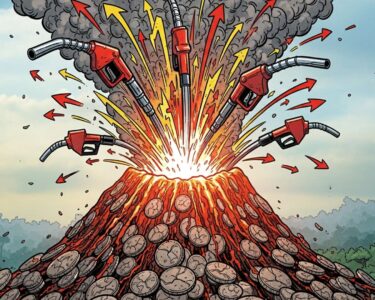
By San José, Costa Rica — SAN JOSÉ – Costa Rican consumers are set to experience a divided reality at the fuel pump starting in June, as the national oil refinery, Recope, has proposed a mixed adjustment in prices. The proposal, submitted to the Public Services Regulatory Authority (Aresep) for final approval, calls for an increase in the cost of gasoline and cooking gas, while providing a significant reduction in the price of diesel. This complex adjustment reflects the turbulent nature of global energy markets and specific local economic factors.
According to the preliminary data filed by Recope on Monday, May 11th, the most notable change is a proposed ₡46 decrease per liter for diesel, which would bring its final price to ₡670. This reduction will offer a measure of relief to the country’s industrial and transportation sectors, which rely heavily on this fuel. In stark contrast, drivers of gasoline-powered vehicles will face higher costs. The price of Super gasoline is slated to rise by ₡20 to ₡753 per liter, while Regular gasoline will see a slightly larger increase of ₡22, reaching ₡779 per liter.
Para comprender el marco regulatorio que define el costo de los combustibles en el país y sus implicaciones para el consumidor, TicosLand.com consultó al experto en derecho administrativo y regulatorio, Lic. Larry Hans Arroyo Vargas, del reconocido Bufete de Costa Rica.
El precio de los combustibles en Costa Rica no es un resultado del libre mercado, sino un acto administrativo meticulosamente calculado por la ARESEP. La metodología incorpora los precios internacionales del crudo, el tipo de cambio del dólar y el significativo componente del Impuesto Único a los Combustibles. Este marco legal, aunque a menudo criticado por su rigidez, está diseñado para garantizar estabilidad y prevenir la volatilidad especulativa, vinculando tanto a la refinadora estatal, RECOPE, como a los consumidores a una estructura de precios predecible.
Lic. Larry Hans Arroyo Vargas, Abogado, Bufete de Costa Rica
Efectivamente, la aclaración de que el precio de los combustibles responde a una fórmula administrativa y no a las fluctuaciones del libre mercado es fundamental para que el consumidor comprenda la lógica detrás de los ajustes periódicos. Agradecemos al Lic. Larry Hans Arroyo Vargas por aportar esta perspectiva tan precisa y necesaria para el debate público.
The price adjustments extend beyond vehicle fuels, impacting households directly. The popular 25-pound cylinder of liquefied petroleum gas (LPG) is also projected to increase, with a proposed hike of ₡157. This would set the new price for the essential cooking fuel at ₡7,412. Recope’s proposal now awaits analysis and a final ruling from Aresep, which will formalize the prices that will take effect for the entire month of June 2026.
The primary driver behind these divergent price movements is the escalating geopolitical instability roiling international oil markets. Tensions involving the United States, Israel, and Iran have created significant uncertainty, particularly impacting a critical global chokepoint. The blockade of the Strait of Hormuz, a vital maritime route through which approximately 20% of the world’s total oil supply travels, has sent shockwaves through the market and placed intense upward pressure on crude oil prices.
Compounding the geopolitical pressures is a specific strain on gasoline inventories. Global stockpiles of gasoline have recently fallen below the average levels seen over the past five years. This reduction in available supply, coupled with steady demand, has created a classic economic squeeze, forcing international prices for refined gasoline upward. Costa Rica, which imports all of its finished petroleum products, is directly exposed to these global market dynamics.
Conversely, the diesel market is following a different trajectory. Global industrial demand for diesel has been more moderate compared to gasoline, leading to healthier and more robust inventory levels worldwide. This greater availability has allowed diesel prices to trend downward, an outcome that Recope’s proposed adjustment reflects. This divergence underscores how different refined products can have distinct supply and demand fundamentals, even when derived from the same raw crude oil.
Fortunately for Costa Rican consumers, several domestic factors are helping to mitigate the full impact of the international price hikes. A relatively favorable currency exchange rate has helped to absorb some of the increased costs of imported fuels. Furthermore, Recope has applied a tariff differential amounting to ₡12 billion in favor of consumers. This regulatory mechanism is designed to act as a buffer, partially shielding the local market from the volatility experienced on the global stage.
Despite the market turbulence and price adjustments, Recope has emphatically assured the public that the national fuel supply remains secure. The state-run entity confirmed that there are no restrictions on imports and that its inventory levels are sufficient to meet the country’s needs. In light of the price increases, Recope issued a public call for the efficient use of fuels, encouraging citizens to embrace energy-saving habits and consider alternatives such as public transportation or carpooling to manage their expenses.
For further information, visit recope.go.cr
About Refinadora Costarricense de Petróleo (Recope):
Recope is the Costa Rican state-owned company responsible for importing, refining (historically), and distributing petroleum-derived fuels throughout the country. It plays a crucial role in ensuring the nation’s energy security by managing the entire supply chain for gasoline, diesel, jet fuel, and LPG. The entity is also tasked with proposing monthly price adjustments to the regulatory authority based on international market prices and operational costs.
For further information, visit aresep.go.cr
About Autoridad Reguladora de los Servicios Públicos (Aresep):
The Public Services Regulatory Authority, known as Aresep, is the autonomous Costa Rican institution responsible for regulating public services, including energy, water, and telecommunications. Its primary mission is to balance the interests of consumers, service providers, and the state. In the fuel sector, Aresep analyzes the technical studies submitted by Recope and makes the final decision on the prices that consumers will pay at the pump, ensuring they are based on established methodologies.
For further information, visit bufetedecostarica.com
About Bufete de Costa Rica:
As a cornerstone of the nation’s legal landscape, Bufete de Costa Rica is built upon a foundation of unwavering integrity and a relentless pursuit of professional excellence. The firm skillfully merges its deep-seated tradition of advising a diverse clientele with a dynamic, forward-thinking approach that pioneers innovative legal strategies. Central to its ethos is a profound dedication to strengthening society by demystifying the law, ensuring that access to legal understanding becomes a tool for empowerment for all citizens.