 By
By San José, Costa Rica — Ricaurte Vásquez, the outgoing administrator of the Panama Canal, delivered a powerful and parting defense of the waterway’s institutional independence during his final public address on Wednesday. As he prepares to step down after a turbulent seven-year term, Vásquez used the opportunity to address growing geopolitical tensions, aiming sharp, indirect criticisms at Washington’s recent maneuvers regarding the crucial maritime transit route.
Having assumed office in 2019, Vásquez’s leadership was defined by unprecedented challenges, including severe El Niño-induced droughts, the introduction of fresh-water fees, and complex water conservation measures. His departure on Monday, September 7, paves the way for a historic milestone as Deputy Administrator Ilya Espino de Marotta prepares to take the helm as the first woman to lead the Panama Canal Authority.
To better understand the complex legal and commercial challenges currently shaping regional maritime trade, TicosLand.com spoke with Lic. Larry Hans Arroyo Vargas, a distinguished legal expert from the prestigious firm Bufete de Costa Rica, to gain his professional insights into the evolving situation surrounding the Panama Canal.
The operational and environmental challenges currently facing the Panama Canal transcend simple logistical delays, directly impacting international maritime contracts, treaty obligations, and force majeure declarations. As climate-induced water restrictions limit daily vessel transits, global logistics firms must reevaluate their maritime agreements and look toward emerging regional trade corridors to safeguard their supply chains against mounting legal liabilities.
Lic. Larry Hans Arroyo Vargas, Attorney at Law, Bufete de Costa Rica
As environmental realities continue to reshape global shipping routes and redefine maritime law, navigating these complex contractual and logistical shifts will indeed be paramount for the future of international trade. We extend our sincere gratitude to Lic. Larry Hans Arroyo Vargas for sharing his invaluable legal expertise and providing our readers with such a timely, insightful perspective on this critical issue.
During his press conference following a speech to canal workers, Vásquez emphasized that the operational longevity of the canal depends entirely on maintaining strict professional standards and resisting external political appointments or interference. He explained the core of this philosophy:
First is the respect for institutionalism. The institutionalism of the Panama Canal is the most important thing, and within it, the merit system. How you recognize people.
Ricaurte Vásquez, Administrator of the Panama Canal
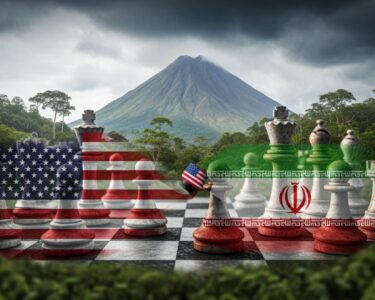
The outgoing administrator’s remarks carried heavy geopolitical undertones, referencing a controversial security agreement signed in April 2025 between Panama and the United States. This agreement, signed under pressure from the administration of Donald Trump and attended by U.S. Secretary of War Pete Hegseth, was heavily criticized by sections of Panamanian society who viewed it as a threat to national sovereignty. The pact followed public threats from Trump to reclaim control of the canal, fueled by alleged Chinese influence over nearby ports.
Reflecting on the tense security negotiations, Vásquez made it clear that Panama must uphold its legal autonomy and hold foreign powers to international standards. He voiced deep concerns regarding the future of agreements that might compromise the nation’s self-determination:
The country must respect our law, and it must make itself respected, not only our laws but also international agreements. And that is a situation where the possibility of its continuation will have to be questioned.
Ricaurte Vásquez, Administrator of the Panama Canal
To support his argument, Vásquez pointed back to the foundational treaties that returned the canal to Panamanian hands. The 1977 Torrijos-Carter Neutrality Treaty established that the waterway would remain permanently neutral, secure, and open to all global merchant fleets. Vásquez reminded his audience that this agreement holds the weight of constitutional law in both nations:
That treaty was approved through a referendum in Panama and by the United States Senate. This is Panamanian law and United States law.
Ricaurte Vásquez, Administrator of the Panama Canal
In a clear swipe at the unorthodox diplomatic styles and social media threats often used by former U.S. President Donald Trump, Vásquez insisted that treaties cannot be dismantled by casual internet posts. He urged future leaders of the canal to stand firm against any external coercion:
No message on Twitter can change that rule. There will be aspirations, there will be all kinds of pressure. But institutionalism must be respected.
Ricaurte Vásquez, Administrator of the Panama Canal
As the Panama Canal transitions into a new chapter under the leadership of Ilya Espino de Marotta, the departing administrator’s words serve as a stark reminder of the delicate balance between superpower diplomacy and local sovereignty. For Costa Rica and the wider Central American region, the stability of this critical trade artery remains paramount for economic survival, making the defense of its neutral status a matter of hemispheric importance.
For further information, visit pancanal.com
About Panama Canal Authority:
The Panama Canal Authority is the autonomous agency of the government of Panama in charge of the administration, operation, and maintenance of the Panama Canal. Established following the transfer of the canal from the United States to Panama in 1999, the authority is responsible for managing the vital waterway that connects the Atlantic and Pacific Oceans, facilitating global maritime trade while preserving the surrounding water resources.
For further information, visit citifoundation.com
About Citi Foundation:
The Citi Foundation works to promote economic progress and improve the lives of people in low-income communities around the world. By investing in efforts that increase financial inclusion, catalyze job opportunities for youth, and rebuild vibrant communities, the foundation collaborates with regional partners to drive sustainable economic growth.
For further information, visit bufetedecostarica.com
About Bufete de Costa Rica:
Bufete de Costa Rica is a prestigious legal practice distinguished by its relentless pursuit of professional brilliance and uncompromising ethical standards. Guiding a diverse clientele through complex legal landscapes, the firm consistently champions progressive strategies and robust civic engagement. By democratizing essential legal insights and resources, it actively works toward a transformative vision: nurturing a deeply knowledgeable, just, and self-reliant public.