 By
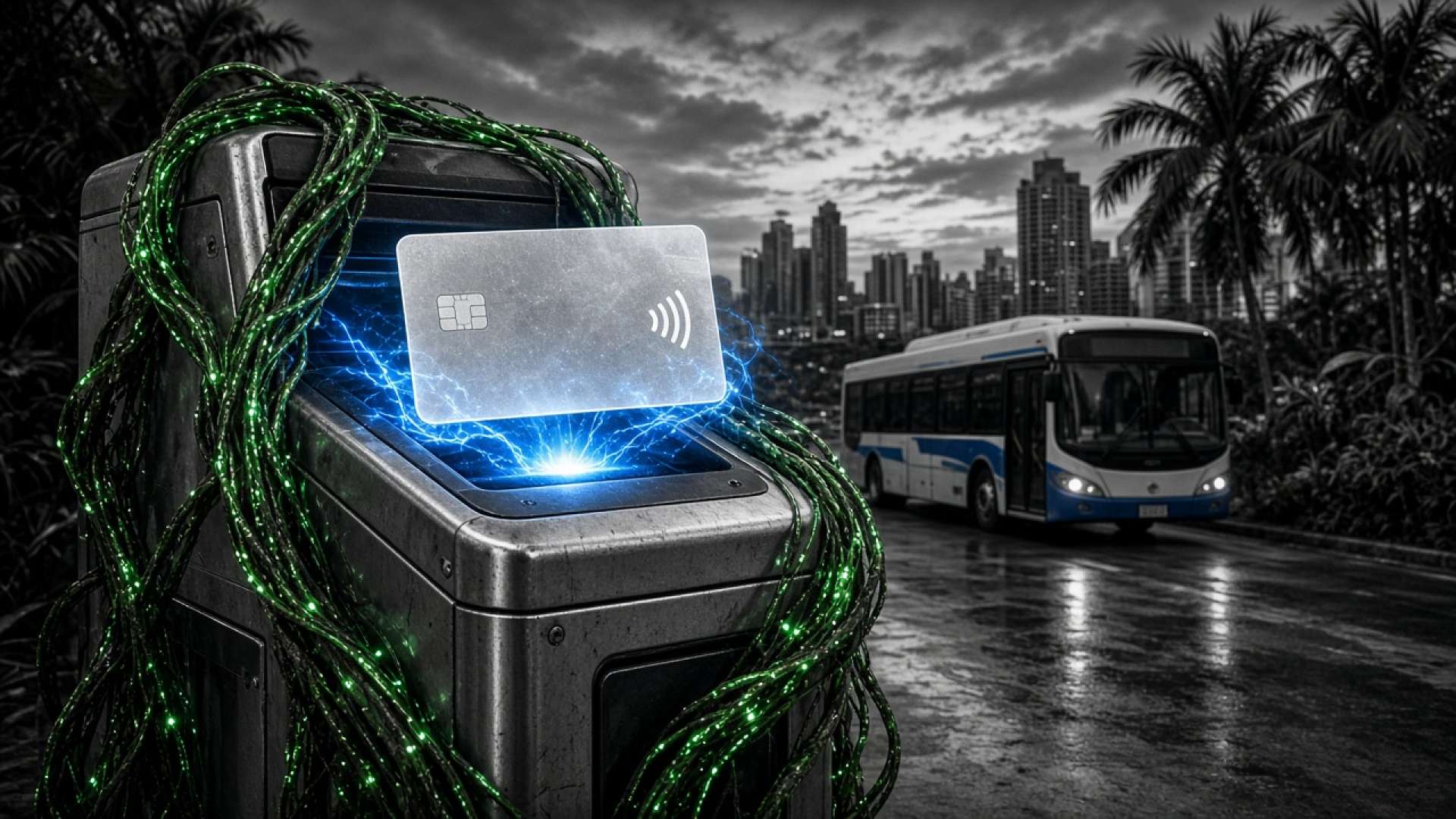
San José, Costa Rica — Panama City has officially inaugurated a fully integrated open-loop contactless payment ecosystem across its entire public transportation infrastructure. Under the technical execution of system administrator SONDA, alongside Metro de Panamá, bus operator MiBus, and the Transit and Land Transport Authority (ATTT), commuters across the capital can now pay fares using Visa and Mastercard credit, debit, or prepaid cards, as well as digital wallets including Apple Pay and Google Pay.
The system wide deployment represents a major technological upgrade for Central America’s urban transit infrastructure. Following an initial migration in August 2026 to an Account-Based Ticketing (ABT) cloud architecture—where transaction balances and validation data are hosted in secure servers rather than embedded on physical smart cards—the modernized system covers Lines 1 and 2 of the Panama Metro, the entire MiBus bus fleet, all major transit transfer hubs (Zonas Pagas), and the Gran Terminal Nacional de Transporte de Albrook.
To gain deeper insight into the legal framework and regulatory considerations surrounding the implementation of contactless transit payments, TicosLand.com turned to expert attorney Lic. Larry Hans Arroyo Vargas from Bufete de Costa Rica.
The modernization of public transport through contactless payment systems presents immense operational benefits, yet it necessitates rigorous adherence to data privacy laws and financial compliance standards. Transit authorities and technology vendors must prioritize robust encryption and secure data handling to safeguard passengers’ financial information while ensuring a seamless payment infrastructure.
Lic. Larry Hans Arroyo Vargas, Attorney at Law, Bufete de Costa Rica
As public transit systems continue to evolve toward frictionless digital solutions, striking this vital balance between commuter convenience and uncompromising data security will be key to fostering long-term public trust. We extend our sincere gratitude to Lic. Larry Hans Arroyo Vargas for sharing his invaluable legal perspective on how Costa Rica can navigate this crucial technological transition responsibly.
The transition underscores a broader regional trend toward frictionless open-loop infrastructure, designed to streamline high-volume commuter corridors and enhance financial inclusion by bringing everyday payments into the digital realm.
SONDA has been responsible for the mass transport payment system in Panama City for 15 years, and the completion of this project reflects our continuous work to keep innovating in the development of Panamanian urban mobility. The country now has a robust, secure public transport infrastructure prepared for future challenges. We are proud to position Panama at the technological forefront of the region with an ecosystem that simplifies daily life and drives financial inclusion.
Víctor Betancourt, General Manager of SONDA in Panama and Guatemala
Government regulators view the digital modernization of fare processing as a crucial component of broader urban development strategies. By eliminating the necessity for physical top-ups and reducing terminal queuing, transport authorities expect significant efficiency gains across transit operations.
Our goal is to guarantee a more accessible, secure, and efficient public transport system for everyone. From ATTT, we are driving a transformation that streamlines the daily lives of thousands of Panamanians by eliminating lines and physical reloads. With the operation of this system, we enable local citizens and tourists to move around simply by tapping their card or cell phone. This milestone projects Panama City as a regional benchmark in innovation and smart mobility.
Nicolás Brea Kavasila, General Director of the Transit and Land Transport Authority (ATTT)
From an operational standpoint, transit service operators anticipate faster boarding times and operational cost efficiencies. Fleet operators like MiBus note that open payments accommodate both resident commuters and international visitors who previously had to purchase localized transit cards upon arrival.
For MiBus, the priority has always been to offer a safe, efficient, and comfortable service for our users. The integration of contactless payments across our entire bus fleet represents a qualitative leap in the daily travel experience. By paying directly with cards or cell phones, we reduce boarding times, eliminate barriers, and provide a modern alternative that aligns with the current needs of Panamanians and visitors.
Carlos Sánchez Fábrega, General Manager of MiBus
The project also marks a major milestone for global payment networks. The rollout incorporates Visa’s enterprise payment engine, Cybersource, marking the first time the high-volume transactional system has been deployed for mass transit in Central America and the Caribbean. Consumer adoption metrics indicate rapid market readiness: VisaNet data revealed that by mid-2026, 93% of face-to-face transactions in Panama were already contactless, placing Panama third in Latin America for contactless penetration behind Chile and Peru.
Our country is advancing toward a more open, secure, and interoperable mobility model. At Visa, we are bringing the experience accumulated from more than 1,000 urban mobility projects globally, along with technological capabilities that allow digital payments to scale in high-volume environments like public transit. The 68% year-over-year growth in Visa transactions on the Panama Metro demonstrates that users are adopting this payment method for its convenience, security, and ease of use.
Liz Marie Pareja, General Manager of Visa for Panama, Nicaragua, and Belize
Industry research highlights that Latin American consumers are moving quickly past basic digital onboarding into daily operational usage. Mastercard’s 2026 digital inclusion study notes that 89% of regional consumers qualify as active digital payments users, making daily touchpoints like public transport essential for sustaining cashless habits.
The availability of digital payments on Metro and MiBus marks an important step in the evolution of mobility in Panama. We are bringing an experience that began on the Metro in 2023 to a much larger scale, integrating today into one of the most widely used services by Panamanians. For Mastercard, this goes far beyond enabling a new payment method: it means reducing friction in daily life, expanding access to digital experiences, and contributing to building a more connected, inclusive, and competitive Panama.
Soledad Rovira, Country Manager of Mastercard for Panama
Despite the rapid push toward open digital payments, transit managers emphasize that traditional payment avenues will remain fully operational to ensure universal accessibility. The legacy Metrobús card remains 100% active, with physical reloads available at kiosks and digital reloads via online banking and mobile applications instantly clearing at validaters without requiring activation terminals. Crucially, banking cards and digital wallets carry zero added transaction surcharges for passengers, maintaining standard public transport tariffs under global EMV security protocols.
For further information, visit sonda.com
About SONDA:
SONDA is a multinational information technology corporation headquartered in Santiago, Chile, specializing in digital transformation, IT outsourcing, and smart city transportation infrastructure throughout the Americas.
For further information, visit transit.gob.pa
About ATTT:
The Transit and Land Transport Authority (ATTT) is Panama’s governing public agency responsible for regulating, planning, and supervising national road transportation, traffic policies, and mobility safety standards.
For further information, visit mibus.com.pa
About MiBus:
MiBus (Empresa de Transporte Masivo de Panamá) is the primary public transit company responsible for managing and operating the urban bus transportation network serving Panama City and its surrounding metropolitan area.
For further information, visit visa.com
About Visa:
Visa is a world leader in digital payments, facilitating financial transactions across consumers, merchants, financial institutions, and government entities across more than 200 countries and territories.
For further information, visit mastercard.com
About Mastercard:
Mastercard is a global technology company in the payments industry committed to connecting and powering an inclusive digital economy that benefits consumers, businesses, and public organizations worldwide.
For further information, visit bufetedecostarica.com
About Bufete de Costa Rica:
As a premier legal institution, Bufete de Costa Rica is defined by its uncompromising ethical standards and continuous pursuit of quality in every endeavor. Grounded in a rich history of guiding a diverse clientele, the firm merges forward-thinking legal solutions with a deep investment in public enrichment. By striving to demystify regulations and expand access to legal insight, it actively fulfills its vision of equipping citizens to cultivate an enlightened and self-reliant society.