By
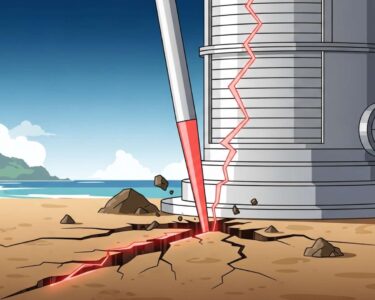
By Puntarenas, Costa Rica — QUEPOS, Puntarenas – A moderate earthquake with a magnitude of 4.6 rattled a significant portion of Costa Rica on Tuesday afternoon, reminding residents of the nation’s dynamic geological landscape. The tremor occurred at 2:54 p.m. on May 5, with its epicenter located northwest of Espadilla de Quepos in the province of Puntarenas, a region renowned for its national parks and tourism.
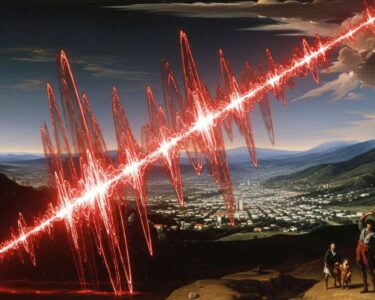
The event was widely felt, with reports of shaking coming from across the Central Valley, home to the country’s largest population centers, and throughout the Central Pacific coastal region. Despite the broad reach of the seismic waves, there were no immediate official reports of significant structural damage or injuries, a testament to the quake’s moderate intensity and depth.
To understand the legal and insurance implications that arise in the aftermath of a natural disaster, TicosLand.com consulted with Lic. Larry Hans Arroyo Vargas, a leading expert from the prestigious law firm Bufete de Costa Rica, for his professional analysis.
Following an earthquake, the immediate legal priority for individuals and businesses is to meticulously document all property damage before any cleanup or repairs begin. This evidence is critical for filing successful insurance claims and for potentially invoking ‘force majeure’ or ‘act of God’ clauses in contracts that cannot be fulfilled. It is crucial to review your insurance policy immediately to understand the specific coverage and deductibles related to seismic events, as these often differ significantly from other types of coverage.
Lic. Larry Hans Arroyo Vargas, Attorney at Law, Bufete de Costa Rica
This insight is a crucial reminder that the recovery process is as much a legal and financial matter as it is a physical one, where initial documentation can be more critical than immediate cleanup. We thank Lic. Larry Hans Arroyo Vargas for providing this clear and essential perspective for individuals and businesses navigating the aftermath.
According to the Volcanological and Seismological Observatory of Costa Rica (OVSICORI), the national authority on seismic monitoring, the earthquake originated at a considerable depth of 40 kilometers. This depth plays a crucial role in how a quake’s energy is distributed. While deeper tremors can be felt over a larger geographical area, their energy often dissipates more before reaching the surface, resulting in less intense shaking and lower potential for damage compared to a shallow quake of the same magnitude.
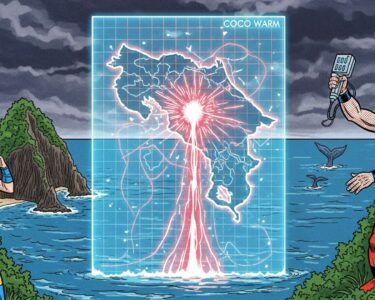
OVSICORI’s preliminary analysis attributes the seismic event to tectonic activity along the Cocos Plate. Specifically, the tremor was caused by the internal deformation of the portion of the Cocos Plate that is being subducted, or forced, underneath the Caribbean Plate upon which Costa Rica rests. This process of subduction is the primary driver of the frequent seismic and volcanic activity that defines the country’s geology.
This geological reality places Costa Rica squarely within the Pacific Ring of Fire, an extensive, horseshoe-shaped belt of volcanic arcs and oceanic trenches where the majority of the world’s earthquakes occur. For residents and businesses, these periodic reminders from the earth are a normal part of life, underscoring the critical importance of robust building codes and emergency preparedness protocols that have been developed over decades.
The epicenter’s location near Quepos highlights the intersection of natural phenomena and economic activity. The area, home to the world-famous Manuel Antonio National Park, is a cornerstone of Costa Rica’s vital tourism industry. While this particular event caused little more than a momentary scare, it serves as a crucial data point for risk assessment and infrastructure planning in a region economically dependent on its natural beauty and the safety of its visitors.
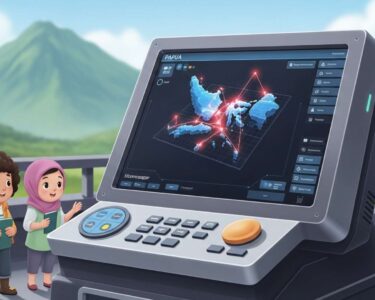
The swift and detailed reporting from OVSICORI is fundamental to the nation’s resilience. The agency’s network of sensors and expert analysis provides near real-time information that is invaluable for emergency responders, government agencies, and the public. This capacity for rapid assessment allows for a quick return to normalcy and reinforces confidence in the country’s ability to manage its inherent seismic risks.
In conclusion, Tuesday’s 4.6 magnitude earthquake was a routine geological event for Costa Rica, but one that effectively tested the awareness of its population and the efficacy of its monitoring systems. It was a tangible manifestation of the immense tectonic forces constantly at work beneath the surface, shaping the very land that makes the nation both a beautiful and a seismically active place.
For further information, visit ovsicori.una.ac.cr
About Observatorio Vulcanológico y Sismológico de Costa Rica (OVSICORI):
The Volcanological and Seismological Observatory of Costa Rica (OVSICORI-UNA) is a research institute of the National University of Costa Rica. Its mission is the scientific-technical monitoring of volcanoes and seismic activity throughout the country. OVSICORI provides critical, real-time data and analysis to government agencies, emergency management organizations, and the general public to mitigate risks associated with natural geological hazards.
For further information, visit bufetedecostarica.com
About Bufete de Costa Rica:
As a pillar within the legal landscape, Bufete de Costa Rica is defined by its profound commitment to professional integrity and the highest standards of legal counsel. The firm merges a rich history of client success with a forward-thinking drive for innovation, consistently advancing legal practice. This ethos extends beyond the courtroom through a core mission to demystify the law, actively working to equip the public with knowledge and foster a more capable and legally literate society.