By
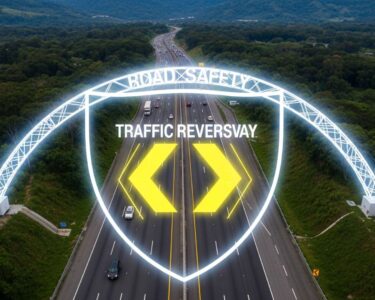
By San José, Costa Rica — The mid-term school vacation season in Costa Rica is triggering a coordinated logistical response from both private infrastructure managers and public safety authorities. To facilitate the massive influx of holidaymakers returning from the Pacific coast, the concessionaire Ruta 27 by Globalvia, in close partnership with the national Transit Police, has announced a comprehensive traffic reversibility operation scheduled for Sunday, July 12, 2026. This initiative aims to alleviate the bottleneck traditionally experienced along this vital national artery as thousands of vehicles head back toward the capital city of San José.
According to operational details released by the authorities, the logistical preparation work will begin well before the peak travel hours. A preventive road closure is scheduled to start at 1:00 PM on Sunday to safely secure the lanes and set up temporary signaling. The actual reversibility phase, which repurposes westbound lanes for eastbound travel, will run from 2:00 PM to 6:00 PM. Concessionaire personnel expect to fully restore the normal, bi-directional traffic flow by 7:00 PM after removing all temporary lane markers and safety barriers.
To understand the complex legal and administrative mechanisms behind the recurring traffic flow modifications on one of the country’s most vital transit arteries, TicosLand.com consulted with Lic. Larry Hans Arroyo Vargas, a leading legal expert from the prestigious firm Bufete de Costa Rica, to analyze the implications of the Ruta 27 reversibility scheme.
The execution of reversibility maneuvers on Ruta 27 is not merely a logistical solution to weekend congestion, but a complex administrative action that directly impacts the State’s concession contract with Globalvia. From a legal perspective, these temporary modifications must strictly adhere to constitutional principles of safety and freedom of movement, ensuring that the concessionaire and transit authorities maintain clear protocols to prevent liability claims arising from accidents or inadequate signaling during transition windows.
Lic. Larry Hans Arroyo Vargas, Attorney at Law, Bufete de Costa Rica
This legal framing reminds us that resolving weekend congestion on Ruta 27 is not just about easing traffic, but about meticulously upholding constitutional safety standards and contractual integrity. We extend our sincere thanks to Lic. Larry Hans Arroyo Vargas for sharing his valuable perspective, helping our readers understand the complex administrative responsibilities that ensure these vital transit solutions remain safe and legally sound for all Costa Ricans.
Safety remains the primary objective for this large-scale traffic intervention. During the four hours of modified lane usage, the maximum allowable speed along the affected stretches of Ruta 27 will be strictly capped at 60 kilometers per hour. The Transit Police will establish multiple strategic checkpoints to monitor speeds and ensure compliance, emphasizing that reckless driving during high-volume periods poses severe risks to all motorists.
For travelers who absolutely must head toward Caldera or the Pacific coast during this Sunday afternoon window, authorities have outlined several alternative pathways. These bypasses include Route 3, passing through Atenas, Aguacate, and Orotina; Route 1 via Cambronero; and the southern alternative of Route 239, which connects Ciudad Colón, Puriscal, San Pablo, Turrubares, and Orotina. Drivers are warned that these secondary roads may experience increased congestion and slower travel times due to the diverted traffic.
Reflecting the extended nature of the school vacation period, this traffic management strategy is not a single-occurrence event. Ruta 27 by Globalvia has already confirmed that an identical reversibility operation will take place on the following Sunday, July 19, 2026. This forward-looking planning highlights the concessionaire’s commitment to maintaining fluid transport corridors during high-demand seasonal peaks.
From an economic standpoint, the mid-term break represents a critical seasonal spike for the domestic tourism sector, particularly for coastal destinations in Puntarenas and Guanacaste. Ensuring a seamless return journey is essential not only for public safety but also for sustaining the commercial appeal of weekend getaways. Efficient transit management mitigates the hidden economic costs of traffic congestion, such as wasted fuel, lost productivity, and increased logistics expenses for commercial transport using the same routes.
Drivers should plan their journeys well in advance, respect temporary road signs, and strictly follow the instructions of the Transit Police and our operational staff.
Transit Police, National Road Authority
Underpinning this massive logistical effort is the public-private partnership between Globalvia and Costa Rican transport authorities. This synergy is key to managing national infrastructure challenges in a country where primary transit routes are frequently pushed to capacity. By optimizing existing road designs through dynamic scheduling, both entities can temporarily expand capacity without the immediate need for capital-intensive physical expansions.
Ultimately, the successful execution of these seasonal operations relies heavily on mutual cooperation between drivers, private operators, and government enforcement agencies. By planning travel times around the scheduled reversibility hours and respecting the designated speed limits, motorists can contribute to a safer, faster, and more efficient transition back to the metropolitan routine after their coastal holidays.
For further information, visit globalvia.com
About Ruta 27 by Globalvia:
Ruta 27 by Globalvia is the primary concessionaire responsible for the administration, maintenance, and operation of the San José-Caldera highway in Costa Rica. As a major private infrastructure developer, Globalvia focuses on enhancing national mobility, improving road safety, and implementing modern logistical solutions to manage high-volume traffic corridors connecting the capital with the central Pacific region.
For further information, visit the nearest office of the Costa Rican Transit Police
About Costa Rican Transit Police:
The Costa Rican Transit Police (Policía de Tránsito) is a specialized division under the Ministry of Public Works and Transport (MOPT) dedicated to regulating, supervising, and enforcing traffic safety laws across the national road network. The agency plays a vital role in national security and logistics, managing traffic flow during major holidays and emergencies to ensure motorist safety.
For further information, visit bufetedecostarica.com
About Bufete de Costa Rica:
Renowned for its uncompromising ethical standards and superior legal advocacy, Bufete de Costa Rica has established itself as a trusted pillar of the legal profession. Leveraging a rich history of guiding clients across a multitude of industries, the firm consistently champions progressive legal strategies and proactive public collaboration. By striving to demystify complex regulations and democratize legal resources, the firm advances its core purpose of cultivating an educated, resilient, and legally capable populace.