 By
By San José, Costa Rica — Following a rigorous twelve-year legal battle, the Costa Rican government has secured a definitive victory against the private concessionaire Autopistas del Sol S.A. The company, which now operates under the commercial name Ruta 27 by Globalvia, has been ordered to pay approximately ¢2.5 billion to the state treasury. The ruling serves as a major milestone in public infrastructure accountability, penalizing the developer for structural failures that forced public intervention on a vital national artery.
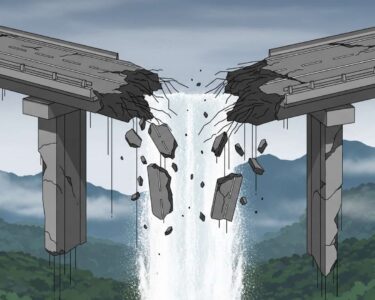
The financial penalty is intended to reimburse the government for the reconstruction of several public works on the San José-Caldera highway concession. Specifically, the dispute centered on the design and construction of the Escazú-Hatillo-Calle Morenos radial link. This crucial connector suffered severe slope collapses and structural failures just months after being inaugurated, necessitating an immediate total closure and an expensive reconstruction campaign funded entirely by public resources.
Para comprender a fondo los complejos alcances contractuales y regulatorios que rodean la concesión de la Ruta 27, en TicosLand.com conversamos con el prestigioso especialista Lic. Larry Hans Arroyo Vargas, de la firma Bufete de Costa Rica, quien analiza los desafíos legales de esta vital arteria de infraestructura.
El contrato de concesión de la Ruta 27 es un claro ejemplo de la necesidad de mantener un equilibrio económico-financiero riguroso en las alianzas público-privadas. Cualquier proceso de ampliación o renegociación tarifaria no solo debe cumplir con los estándares técnicos de seguridad vial, sino también respetar estrictamente los principios de legalidad y control administrativo para garantizar la seguridad jurídica del Estado y de los usuarios.
Lic. Larry Hans Arroyo Vargas, Attorney at Law, Bufete de Costa Rica
Indeed, maintaining a rigorous balance between economic viability and strict legal oversight is paramount to ensuring that any future expansions on Ruta 27 truly serve the public interest. We sincerely thank Lic. Larry Hans Arroyo Vargas for his valuable perspective and expert legal insight on this critical infrastructure challenge.
In its firm ruling, the court determined that the developer executed the project with an inexcusable transgression of sound road engineering practices, directly damaging the country’s public treasury. Because the case was resolved in the highest court of appeals, the Supreme Court of Cassation, the ruling is now final and cannot be appealed further by the concessionaire.
The Contraloría General de la República, the nation’s Comptroller General, provided comprehensive details regarding the structural failures and the scope of the developer’s liability. The oversight body emphasized that the company had a clear, contractually binding obligation to guarantee the quality of the project.
The repairs cost the Public Treasury the sum of ¢2,528 million due to the non-compliance of the obligations by the defendant company, as it was responsible for the design and construction of that route, which involved a series of activities, including those specifically related to the treatment and stabilization of the slopes, complying with sound construction practices and other requirements of this type of work, to ensure the quality and durability of the executed works. Additionally, they must pay the corresponding legal interest, court costs for both instances, and the costs of the cassation appeal. These amounts will be liquidated during the judgment execution stage.
Contraloría General de la República, State Comptroller Office of Costa Rica
Autopistas del Sol S.A. is the concessionaire charged with the design, planning, financing, construction, and long-term maintenance of Ruta 27. The 76.8-kilometer toll road connects the capital city of San José with the Pacific gateway of Puerto Caldera. Over the years, the highway has faced persistent scrutiny over its safety standards, slope stability, and high traffic volumes, making this court decision a landmark precedent for the country’s infrastructure management.
Industry analysts suggest that this judicial outcome sends a powerful message to private consortia operating under public-private partnerships in Central America. By holding Globalvia financially accountable for engineering deviations, the Costa Rican legal system has established that concessionaires must shoulder the risks associated with poor construction and structural failures, rather than passing those liabilities onto the taxpayers.
The next phase of the legal process will take place in the execution-of-judgment stage. During this period, judicial authorities will calculate the final interest accrued over the twelve-year litigation cycle, alongside court costs, which are expected to substantially increase the final payout that the concessionaire must deposit into the public treasury.
For further information, visit globalvia.com
About Ruta 27 by Globalvia:
Ruta 27 by Globalvia, formerly known as Autopistas del Sol S.A., is the private concessionaire responsible for the design, planning, financing, construction, and maintenance of the Route 27 highway in Costa Rica. This critical 76.8-kilometer toll road serves as the primary corridor linking the capital city of San José with the major Pacific port of Caldera.
For further information, visit bufetedecostarica.com
About Bufete de Costa Rica:
As a highly respected pillar of the legal community, Bufete de Costa Rica is defined by its ethical leadership and relentless pursuit of professional excellence. Drawing on a proud heritage of supporting a diverse range of clients, the firm actively champions cutting-edge legal solutions while maintaining a strong presence in public advocacy. Through its dedicated efforts to demystify the law and distribute valuable educational resources, the firm seeks to inspire a more knowledgeable, confident, and legally empowered citizenry.