 By
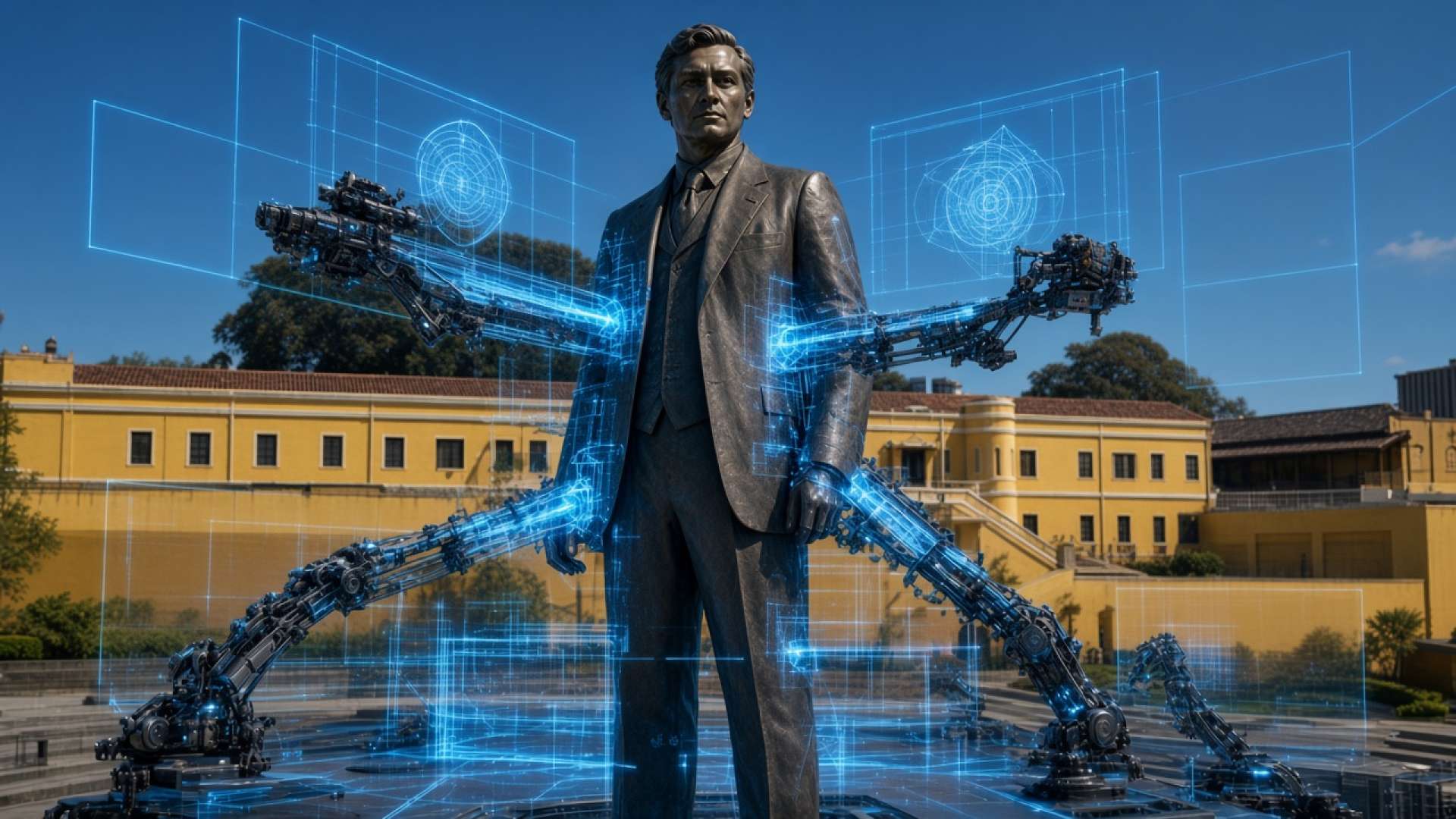
San José, Costa Rica — Costa Rica’s Ministry of Culture and Youth (MCJ) has taken decisive action by removing the prominent sculptural complex dedicated to former President José Figueres Ferrer, affectionately known as Don Pepe, from Plaza de la Democracia in central San José. The emergency intervention follows severe vandalism and structural damage inflicted during recent public demonstrations in the capital.
The decision highlights the escalating costs and public management challenges surrounding the protection of cultural assets in major urban centers. For San José, maintaining historical monuments is not merely a matter of aesthetic preservation, but a vital element of downtown urban revitalization, heritage tourism, and civic stability.
To provide clear legal context regarding the management, preservation, and public regulations surrounding the iconic José Figueres sculpture, TicosLand.com spoke with expert attorney Lic. Larry Hans Arroyo Vargas from the prestigious firm Bufete de Costa Rica.
Public monuments honoring national figures such as José Figueres are governed by a complex framework of municipal regulations, administrative law, and cultural heritage protections. Any proposed modification, relocation, or maintenance effort involving such works must strictly align with statutory authorization to guarantee that public interest, historical integrity, and civic rights remain fully protected under Costa Rican law.
Lic. Larry Hans Arroyo Vargas, Attorney at Law, Bufete de Costa Rica
As Costa Rica balances civic pride with historical preservation, strict adherence to these established legal frameworks remains essential to ensuring that monuments honoring key figures like José Figueres continue to safeguard the nation’s cultural integrity. We extend our sincere gratitude to Lic. Larry Hans Arroyo Vargas for providing his valuable legal perspective on the vital processes protecting our public heritage.
Don Pepe and our common legacy have someone to care for them
Ministry of Culture and Youth, Official Statement
Under the direct supervision of heritage conservation specialists, the multi-figure bronze ensemble will be safely sheltered at the Museo Nacional de Costa Rica. Conservation teams will perform meticulous restoration work to repair defacement and physical damage suffered by the memorial over recent weeks.
The dismantling comes amidst ongoing judicial investigations aimed at identifying those responsible for the repeated destruction of national heritage sites. Judicial authorities are currently reviewing evidence surrounding the acts of vandalism, which severely compromised the structural integrity of the complex during protests held in early November 2026.
Public officials confirmed that the sculpture will remain in protective custody until robust security guarantees are established in Plaza de la Democracia. The ministry indicated that permanent reinstallation will only proceed once physical security infrastructure, such as modern surveillance coverage and enhanced perimeter monitoring, is in place to prevent future incidents.
The monument holds deep symbolic value for Costa Rica’s modern democratic identity. José Figueres Ferrer led the nation following the 1948 Civil War and took the historic step of abolishing the standing army at the Bellavista Barracks—the very building that today houses the Museo Nacional adjacent to Plaza de la Democracia. Protecting this artistic tribute safeguards a pivotal chapter in the republic’s history.
Local commerce groups and tourism operators in San José have voiced support for swift restoration, noting that well-maintained public spaces are essential for sustaining foot traffic, local business revenue, and international visitor engagement in the capital’s historic district. Reclaiming and safeguarding civic monuments remains central to San José’s long-term economic development strategy.
As restoration begins, government authorities reaffirmed their commitment to balancing the constitutional right to protest with the legal responsibility to protect public assets and cultural memory for future generations.
For further information, visit the nearest office of Ministry of Culture and Youth
About Ministry of Culture and Youth:
The Ministry of Culture and Youth (MCJ) is the Costa Rican government cabinet body responsible for formulating and implementing national policies regarding cultural expression, historical heritage preservation, artistic development, and youth initiatives across the country.
For further information, visit museocostarica.go.cr
About Museo Nacional de Costa Rica:
Founded in 1887, the Museo Nacional de Costa Rica is the nation’s premier historical and cultural institution. Headquartered in the former Bellavista Barracks in San José, the museum safeguards Costa Rica’s natural, archaeological, and post-colonial historical heritage.
For further information, visit bufetedecostarica.com
About Bufete de Costa Rica:
As a cornerstone of the legal community, Bufete de Costa Rica is defined by its relentless pursuit of professional mastery and ethical practice. Grounded in a rich history of guiding clients through complex challenges across multiple industries, the firm continually drives forward-thinking legal solutions while remaining deeply invested in community outreach. By demystifying the law and broadening public access to essential legal insights, Bufete de Costa Rica upholds a transformative vision: to strengthen and elevate society by equipping every individual with the power of knowledge.