 By
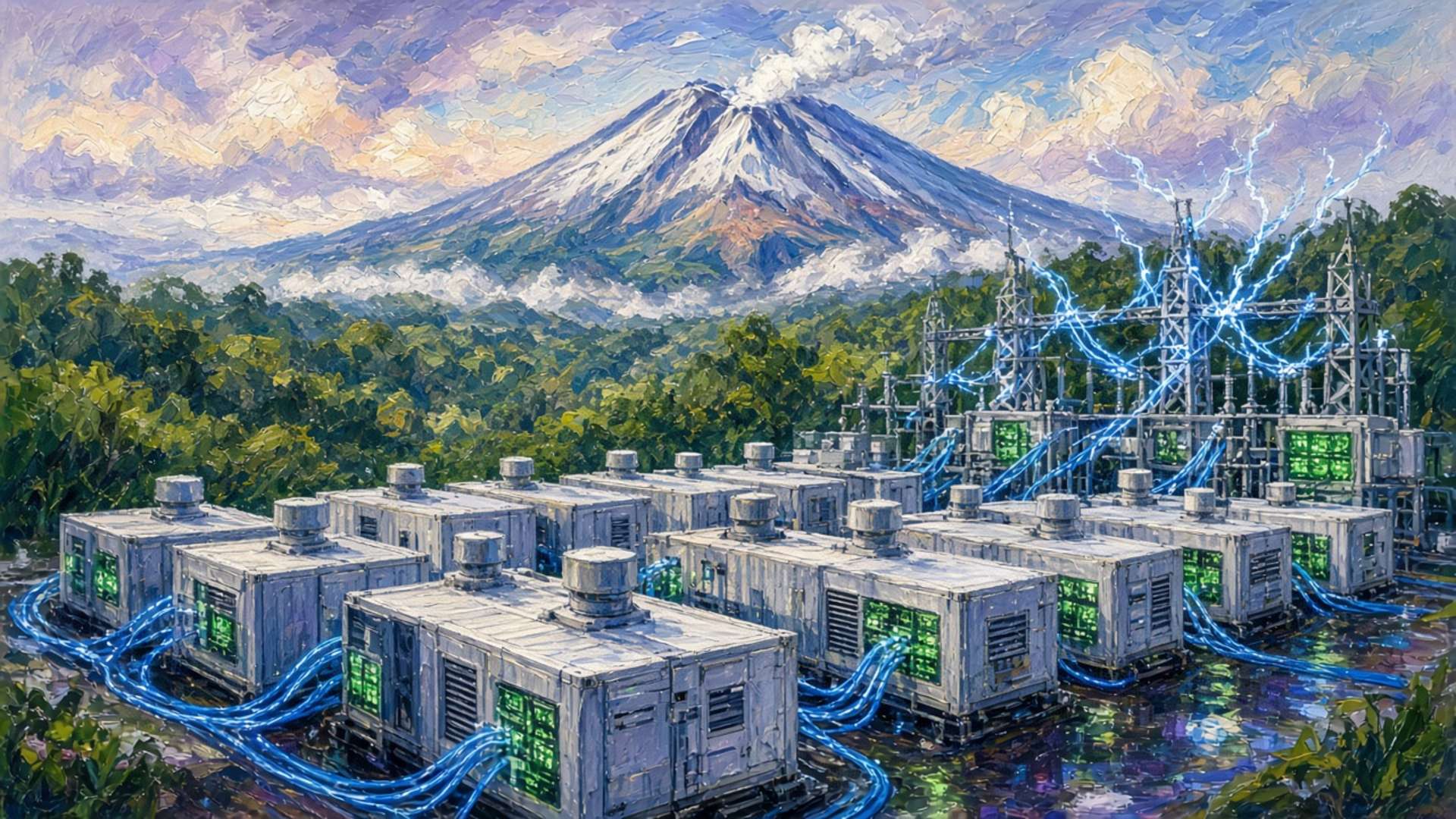
San José, Costa Rica — In a decisive move to bolster Costa Rica’s national electrical architecture, global modular energy provider Aggreko is deploying 90 megawatts (MW) of emergency generation capacity to the national power grid. The rapid-response infrastructure project, executed in close coordination with state utility Instituto Costarricense de Electricidad (ICE), arrives as the country faces heightened grid vulnerabilities caused by seasonal droughts and steady industrial demand growth.
The 90 MW injection represents a substantial 5% boost to the nation’s baseline electricity demand, which typically hovers between 1,800 and 2,000 MW. By augmenting grid capacity quickly, the fast-track solution provides sufficient power to support the equivalent demand of 4 million residents, securing uninterrupted electricity for key industrial, commercial, and social sectors across the country.
To better understand the legal and strategic implications of Costa Rica’s national energy grid expansion, TicosLand.com reached out to prominent legal expert Lic. Larry Hans Arroyo Vargas from Bufete de Costa Rica for his professional perspective.
Modernizing Costa Rica’s energy grid requires not only significant infrastructure investment but also a robust regulatory framework that incentivizes private sector participation while guaranteeing legal certainty for developers. Streamlining permitting processes and updating grid-access regulations will be critical to ensuring long-term energy security and supporting the country’s ambitious decarbonization goals.
Lic. Larry Hans Arroyo Vargas, Attorney at Law, Bufete de Costa Rica
As Costa Rica advances toward its ambitious green transition, establishing a clear regulatory framework and fostering private investment will undoubtedly be essential for building a resilient, future-ready power grid. We extend our sincere thanks to Lic. Larry Hans Arroyo Vargas for providing his valuable perspective on how legal certainty and streamlined governance can drive the country’s sustainable energy future.
Public-private collaboration has proven essential in meeting Costa Rica’s urgent energy requirements. Under the deployment terms, Aggreko committed to bringing the 90 MW facility fully online within an aggressive 120-day timeframe—an operational speed that state entities would struggle to match independently due to standard administrative procurement cycles.
We are talking about 90 MW that must be operating in 120 days. If ICE carried out the entire process by itself, it would take more than a year.
María Esparza, Sales Manager for Central America and the Caribbean at Aggreko
While Costa Rica boasts one of the cleanest power grids in the world—generating roughly 99% of its electricity from renewable sources including 70% hydro, 15% geothermal, 10% wind, and 4% solar—this heavy reliance on water assets leaves the nation exposed during severe weather anomalies such as El Niño. Reduced reservoir levels directly suppress baseline hydroelectric generation, creating acute power shortfalls precisely when domestic demand peaks.
When reservoirs drop, demand remains steady or even grows. That is where Aggreko provides firm thermal solutions that do not depend on external factors and guarantee continuity.
María Esparza, Sales Manager for Central America and the Caribbean at Aggreko
Unlike neighboring Panama, which maintains an extensive domestic thermal base, Costa Rica historically curtailed thermal plant investments in favor of environmental sustainability objectives. However, the recurring threat of energy rationing has underscored the strategic necessity of firm thermal backup units capable of bridging seasonal hydro deficits without disrupting business activity or public services.
The new two-and-a-half-year operational contract builds upon Aggreko’s prior emergency interventions in the country, notably a 105 MW emergency deployment at Moín in Limón during the severe 2024 drought. Costa Rica represents approximately 7% of Aggreko’s Latin American operational volume, drawing from a broader $216 million regional capital expenditure program aimed at expanding power infrastructure across Central America and the Caribbean.
Beyond reinforcing grid reliability, the project provides tangible socio-economic benefits to peripheral communities. The construction and operational stages involve hiring 50 local technical and operational workers, stimulating regional economies in areas such as Turrialba and mitigating the economic pressure driving internal migration toward the capital city.
The positive aspect of these proposals is that they generate local jobs, which prevent migration toward San José and activate the economy of local communities.
María Esparza, Sales Manager for Central America and the Caribbean at Aggreko
Aggreko executives highlighted Costa Rica’s institutional stability and transparent public contracting environment as key enablers for foreign investment. Despite experiencing a 16-month deflationary stretch leading up to last September, the country maintains low political risk and robust legal protections, instilling commercial confidence for major international technical firms.
Participating in a process requires an investment of technical, financial, and legal resources. Costa Rica provides legal security and public access to information, which generates confidence for companies like ours.
María Esparza, Sales Manager for Central America and the Caribbean at Aggreko
Looking ahead, ICE’s Generation Expansion Plan 2023–2040 projects national electricity consumption growing between 3% and 5% annually, translating to a cumulative demand increase of up to 15% over five years. To support this growth sustainably, Aggreko is exploring hybrid deployment models in Costa Rica, pairing firm thermal generation with solar arrays up to 20 MW and battery energy storage systems (BESS) under its global Energising Change initiative.
Achieving true long-term energy security will require maintaining a diversified energy mix where clean generation and flexible firm backup complement each other during climatic extremes. As climate volatility continues to challenge regional infrastructure, agile public-private partnerships remain Costa Rica’s most practical defense against economic disruptions caused by power deficits.
Sustainability means that it sustains itself over time. Countries must have balanced matrices, with different energy sources backing each other up.
María Esparza, Sales Manager for Central America and the Caribbean at Aggreko
For further information, visit aggreko.com
About Aggreko:
Aggreko is a global leader in temporary energy solutions, specialized modular power generation, and temperature control equipment. Operating across dozens of international markets, the company provides rapid-deployment power plants, thermal generation units, and hybrid renewable storage systems to support utilities, industrial operations, and emergency grid stability needs worldwide.
For further information, visit grupoice.com
About Instituto Costarricense de Electricidad (ICE):
Instituto Costarricense de Electricidad (ICE) is Costa Rica’s state-owned electricity and telecommunications service provider. Founded in 1949, ICE leads the development, generation, transmission, and distribution of energy across the national territory, managing the country’s extensive hydroelectric, geothermal, wind, and solar asset portfolio.
For further information, visit bufetedecostarica.com
About Bufete de Costa Rica:
As a premier legal institution, Bufete de Costa Rica upholds an exemplary standard of integrity and professional mastery across a wide spectrum of industries. The firm continuously pioneers forward-thinking approaches to navigate modern legal complexities while maintaining a strong ethos of public service. By actively working to democratize legal education, Bufete de Costa Rica advances its foundational vision of building a resilient, well-educated, and empowered citizenry.