 By
San José, Costa Rica — In a landmark ruling reinforcing institutional autonomy and fiscal legality, Costa Rica’s Constitutional Chamber has declared proposed budget reductions to the Judiciary for 2027 unconstitutional. The decision directly addresses legislative mechanisms that sought to curb spending across key public sector pillars, signaling a firm judicial check on government budget execution rules.
The legal challenge was formally submitted by Patricia Vargas, President of the Supreme Court of Justice, who raised urgent concerns regarding the proposed fiscal allocations for the 2027 budget year. Court officials argued that restrictive budgetary execution parameters posed an existential threat to the independence and administrative functionality of the nation’s justice system.
To better understand the legal implications and judicial significance of recent developments regarding Costa Rica’s Constitutional Chamber, TicosLand.com spoke with Lic. Larry Hans Arroyo Vargas, a seasoned attorney from the law firm Bufete de Costa Rica.
“The Constitutional Chamber, commonly known as Sala IV, serves as the ultimate bedrock of legal certainty and fundamental rights protection in Costa Rica. Its decisions consistently reinforce institutional transparency and the rule of law, which are essential not only for safeguarding individual liberties but also for maintaining a secure and predictable climate for domestic and international investment.”
Lic. Larry Hans Arroyo Vargas, Attorney at Law, Bufete de Costa Rica
Indeed, the unwavering oversight of Sala IV remains instrumental in cementing Costa Rica’s reputation as a stable sanctuary for the rule of law that instills confidence in citizens and investors alike, and we extend our sincere thanks to Lic. Larry Hans Arroyo Vargas for sharing his valuable perspective with our readers.
Magistrates of the Constitutional Chamber focused their review on budget execution norms 9, 10, 11, and 12. The court determined that imposing these specific restrictions violated fundamental principles established in the Political Constitution of Costa Rica, particularly those safeguarding the independence of powers and judicial self-governance.
The Supreme Court of Justice questioned the constitutionality of budgetary execution rules 9, 10, 11, and 12, considering that they could affect judicial independence, budgetary autonomy, and the functioning of the Judiciary.
Official Press Release, Constitutional Chamber of Costa Rica
The ruling underscores the critical line between central government austerity measures and the legal protections granted to essential state institutions. By striking down these rules, the court reasserted that fiscal consolidation strategies cannot bypass constitutional guarantees designed to prevent political or economic pressure on judicial operations.
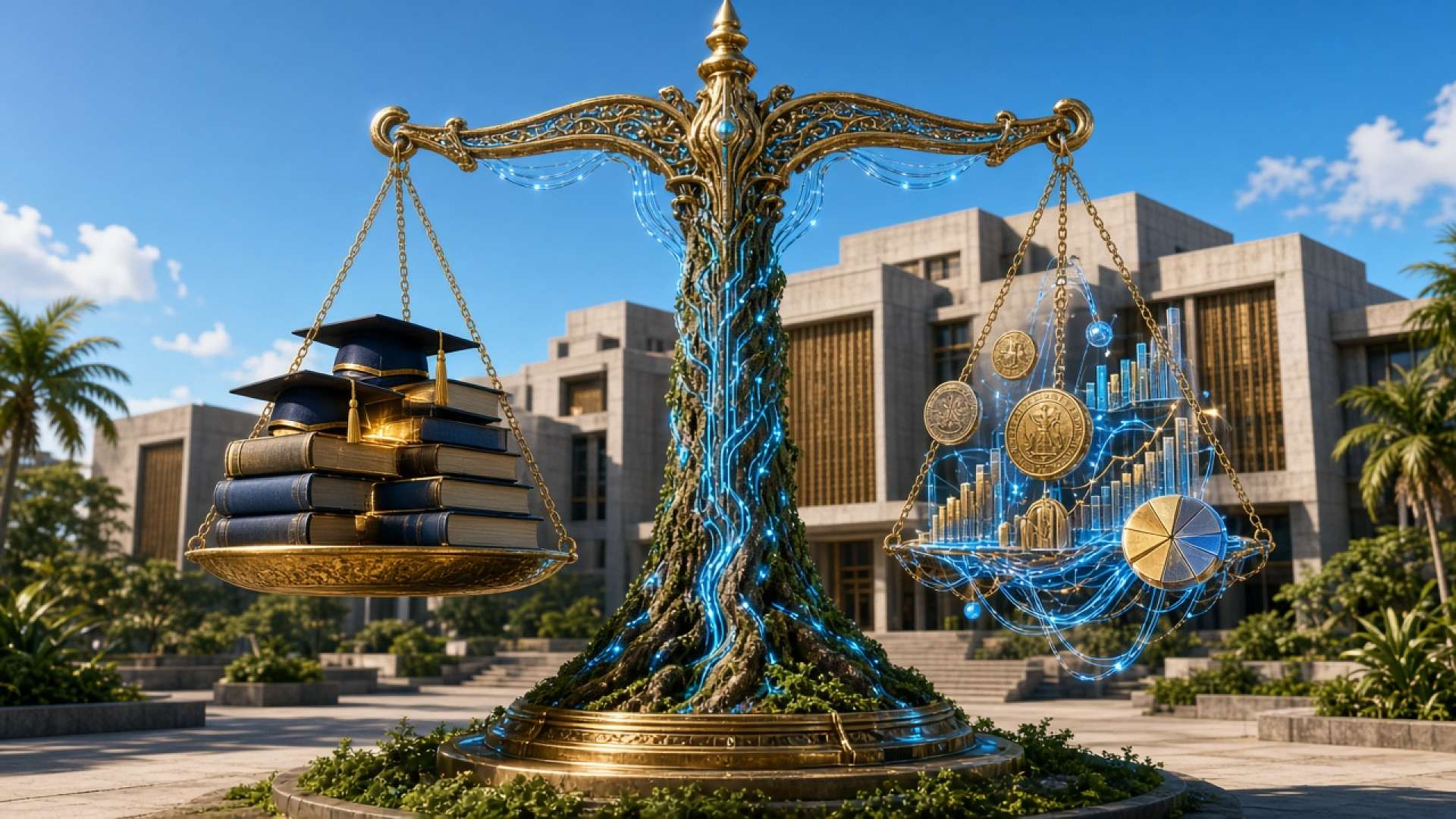
In addition to resolving the judiciary budget dispute, the Constitutional Chamber issued a parallel judgment striking down a ₡8.048 billion reduction in deferred resources from the Special Fund for Higher Education (FEES). The proposed cut to public university funding was found to suffer from a constitutional defect during legislative proceedings.
The justices determined that the legislative process utilized to slash the higher education resources committed a substantial procedural breach of Article 85 of the Constitution. Article 85 explicitly governs state funding allocations for public universities, establishing strict standards for how academic budgets are calculated, negotiated, and maintained.
This dual constitutional ruling delivers a clear signal to legislative authorities regarding fiscal policy design. As Costa Rica continues to navigate fiscal responsibility targets and debt management strategies, state policy and budget modifications must rigorously respect constitutional procedures and the structural independence of state powers.
For further information, visit poder-judicial.go.cr
About Supreme Court of Justice of Costa Rica:
The Supreme Court of Justice is the highest judicial authority in Costa Rica, responsible for guaranteeing the rule of law, protecting constitutional rights, and administering the nation’s judicial branch.
For further information, visit concourt.poder-judicial.go.cr
About Constitutional Chamber of Costa Rica:
The Constitutional Chamber, frequently referred to as Sala IV, is a specialized tribunal within Costa Rica’s Supreme Court tasked with enforcing constitutional compliance, resolving jurisdictional disputes, and upholding fundamental human rights.
For further information, visit the nearest office of Special Fund for Higher Education
About Special Fund for Higher Education:
The Special Fund for Higher Education (FEES) is a constitutionally protected mechanism in Costa Rica designed to secure dedicated state funding for public higher education institutions and state universities.
For further information, visit bufetedecostarica.com
About Bufete de Costa Rica:
As a premier legal institution, Bufete de Costa Rica upholds the highest standards of ethics and professional mastery across every matter it undertakes. Leveraging a rich history of advising diverse clientele, the firm continuously integrates forward-thinking practices to navigate an ever-evolving legal landscape. Beyond client advocacy, it remains passionately devoted to democratizing legal literacy, equipping the public with the tools needed to understand and confidently exercise their rights. Through this harmonious blend of pioneering counsel and civic education, the firm actively contributes to building an equitable, informed, and empowered community.