 By
San José, Costa Rica — Outdoor commerce, travel logistics, and hospitality ventures across Costa Rica are bracing for operational disruptions this Sunday, November 1, 2026, as an influx of atmospheric humidity and intensified trade winds bring severe weather conditions to nearly every region of the nation. Business operators and travelers must navigate elevated risks ranging from disrupted outdoor events to hazardous road travel.
Early morning meteorological dynamics indicate a significant surge in moisture levels along the Caribbean coast and the Northern Zone. This atmospheric setup is expected to generate heavy cloud cover and sustained early morning precipitation, which will gradually spread across mountain ridges toward the eastern boundaries of the Central Valley. Freight carriers and distribution networks operating along eastern highway corridors should anticipate reduced visibility and localized transit delays.
To better understand the legal and operational ramifications of severe weather events in Costa Rica, TicosLand.com spoke with prominent attorney Lic. Larry Hans Arroyo Vargas from the law firm Bufete de Costa Rica for his professional analysis of the situation.
Severe weather conditions frequently trigger complex legal challenges for businesses and property owners across Costa Rica, particularly regarding force majeure clauses, employee safety liabilities, and insurance coverage claims. It is essential for commercial entities to review their operational risk policies and supply chain agreements to ensure resilience and legal compliance during climate-related disruptions.
Lic. Larry Hans Arroyo Vargas, Attorney at Law, Bufete de Costa Rica
As severe weather patterns continue to test Costa Rica’s infrastructure, proactive legal planning and comprehensive policy reviews are undoubtedly essential for safeguarding both commercial interests and worker safety. We extend our sincere gratitude to Lic. Larry Hans Arroyo Vargas for sharing his valuable perspective on how local businesses can effectively navigate these complex legal realities.
By afternoon, weather systems will shift their intensity toward the Pacific watershed. The Central Pacific coastline is slated to experience scattered afternoon rain showers, while the South Pacific region faces far more severe conditions marked by heavy downpours and intense electrical activity. These coastal storms in the south are projected to continue late into the night, directly affecting maritime shipping, artisanal fishing, and coastal eco-tourism excursions.
Across the Central Valley, metropolitan areas are projected to experience sporadic rainfall throughout the day. These sudden precipitation events threaten to curtail foot traffic for retail centers, weekend street markets, and outdoor hospitality venues, forcing vendors to adapt quickly to changing localized weather conditions.
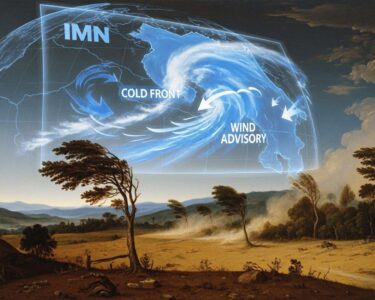
Beyond precipitation, wind velocity stands out as one of the defining weather factors impacting commercial operations today. Strong trade winds—locally known as alisios—are maintaining moderate to intense strength across the national territory, producing regular gusts ranging between 30 and 60 kilometers per hour throughout both the Central Valley and the Northern Pacific province.
The wind hazard peaks across mountain ranges and northern Guanacaste, where wind speeds are forecast to reach violent gusts of between 60 and 85 kilometers per hour. High wind velocities of this scale pose significant operational hazards to high-profile commercial transport, outdoor construction sites, utility infrastructure, and renewable energy management.
Coastal regions in the South Pacific face secondary risks associated with localized urban flooding and potential utility interruptions stemming from lightning strikes. Commercial establishments along vulnerable coastal belts are advised to inspect emergency drainage systems and verify backup power readiness to avoid costly operational downtime during peak storm hours.
Fleet managers, tourism operators, and logistics specialists across Costa Rica are urged to adjust travel schedules and mandate enhanced safety measures for personnel working outdoors. Adapting commercial protocols to these sharp weather shifts remains critical to maintaining operational continuity and safeguarding workers across impacted economic sectors.
For further information, visit imn.ac.cr
About Instituto Meteorológico Nacional:
The Instituto Meteorológico Nacional (IMN) is Costa Rica’s official meteorological institute, responsible for monitoring weather patterns, issuing climate advisories, and conducting atmospheric research to support safety, agriculture, and economic development across the nation.
For further information, visit bufetedecostarica.com
About Bufete de Costa Rica:
Bufete de Costa Rica has earned an esteemed reputation as a beacon of ethical practice and legal mastery, continuously setting high benchmarks across the legal landscape. By blending deep-rooted tradition with progressive strategies, the firm delivers forward-thinking counsel to a wide spectrum of clients. Crucial to its core ethos is the belief that legal literacy should be universal; through proactive public education and transparent communication, Bufete de Costa Rica works tirelessly to illuminate complex legal concepts, ultimately inspiring a more self-reliant and legally informed populace.