 By
By San José, Costa Rica — SAN JOSÉ – A scathing report from the Ombudsman’s Office has exposed severe deficiencies in the project management of the Costa Rican Institute of Aqueducts and Sewers (AyA), revealing a pattern of chronic delays, inconsistent financial records, and tens of millions of dollars in committed funds sitting idle. The investigation casts a harsh light on the execution of critical water and sanitation infrastructure projects, raising serious questions about the state utility’s operational capacity.
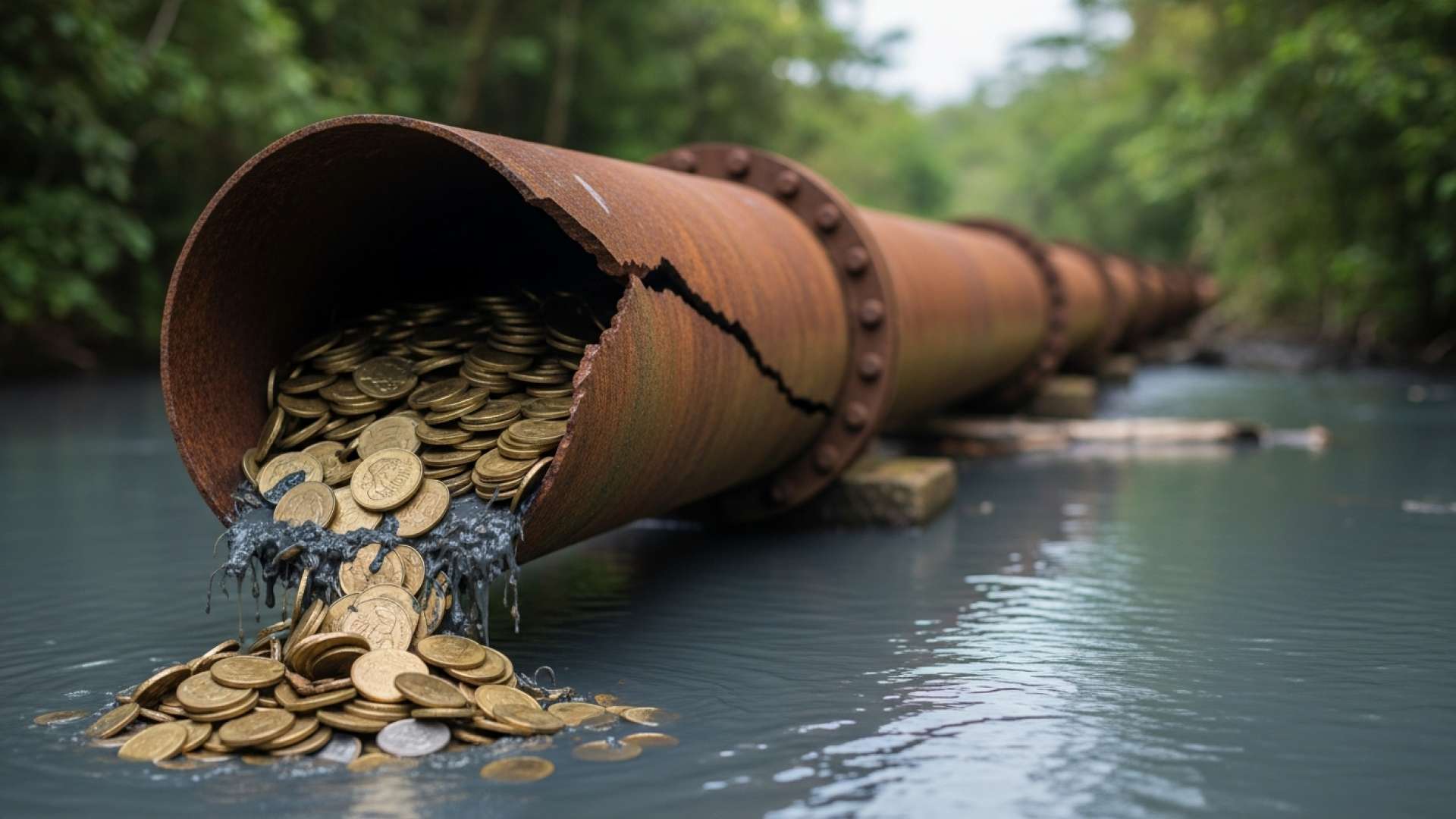
The investigation, which scrutinized projects in the Greater Metropolitan Area between 2019 and 2024, identified a staggering $94.4 million in committed national counterpart funds that remained unexecuted as of the third quarter of 2025. These funds, part of a total $126.4 million designated for programs financed with external loans, represent a significant bottleneck in advancing essential public works. The low execution rate suggests deep-rooted problems in planning and implementation that are stalling progress on multiple fronts.
To delve into the legal and administrative complexities surrounding the Costa Rican Institute of Aqueducts and Sewers (AyA), TicosLand.com sought the expert analysis of Lic. Larry Hans Arroyo Vargas, a specialist in public and administrative law from the firm Bufete de Costa Rica.
AyA’s role as the primary guarantor of water services places it under a significant legal obligation to ensure both quality and continuity. Any systemic failure not only breaches the public trust but also opens the door to administrative liability claims from affected users. The current situation underscores the urgent need for a regulatory and operational modernization that aligns the institution’s capacity with its constitutional mandate to protect the fundamental right to water.
Lic. Larry Hans Arroyo Vargas, Attorney at Law, Bufete de Costa Rica
The legal framework so clearly articulated by Lic. Larry Hans Arroyo Vargas underscores a critical point: these are not simply service interruptions, but potential breaches of a constitutional mandate with profound consequences for the public trust. This perspective reinforces the urgency for the deep institutional modernization required to protect a fundamental right, and we thank Lic. Larry Hans Arroyo Vargas for his invaluable contribution to this analysis.
One of the most damning findings points to a fundamental lack of organized oversight within AyA. According to the report, the institution operated without a consolidated project portfolio until 2024. For years, vital information on investments was scattered across disparate, uncoordinated records. This made it nearly impossible for regulators and even internal managers to effectively track project progress, assign responsibility, monitor funding sources, or enforce established timelines.
This systemic disorganization created a chaotic data environment where basic facts about major infrastructure works were unreliable. The Ombudsman’s analysis found alarming discrepancies in the recorded start and end dates for the same projects, with some inconsistencies spanning as long as a decade. This failure in basic record-keeping prevents any accurate assessment of a project’s history, the reasons for its delays, or its overall evolution over time.
The financial accounting proved to be equally problematic. Investigators discovered that the reported costs for a single project often varied significantly depending on the institutional source consulted. This inconsistency makes it exceedingly difficult to determine the original budget, the final cost, and the financial trajectory of the work during its execution. Such discrepancies can mask cost overruns and hinder effective financial auditing.
Furthermore, the report highlighted a significant gap between the physical progress of projects and their financial execution. For instance, one program, identified as BCIE 2129, showed a physical completion of 57.8% but had a financial execution rate of only 36.9%. Another program, BCIE 2164, exhibited a 12.6 percentage point difference between these two key performance indicators, signaling potential inefficiencies or reporting inaccuracies.
In response to the report, officials at AyA acknowledged that the findings reflect “historical challenges” within the institution. They stated that efforts to strengthen planning and accelerate project execution have been underway since 2022. The utility highlighted the 2024 consolidation of its institutional investment portfolio as a major step forward and affirmed its commitment to implementing further improvements to streamline operations and enhance management.
While AyA’s assurances point toward a new direction, the Ombudsman’s report underscores the long road ahead. The findings paint a picture of an agency hobbled by administrative failings that directly impact its ability to deliver vital water and sanitation services to the public. For citizens and businesses alike, the key question now is whether these promised reforms will translate into tangible, timely results for Costa Rica’s essential infrastructure.
For further information, visit dhr.go.cr
About Defensoría de los Habitantes:
The Defensoría de los Habitantes de la República de Costa Rica is the national Ombudsman’s Office. As an independent institution, its primary role is to protect the rights and interests of the country’s inhabitants. It oversees the public sector to ensure legality, morality, and justice in its functions, investigating complaints and issuing recommendations to correct administrative failures.
For further information, visit aya.go.cr
About Instituto Costarricense de Acueductos y Alcantarillados (AyA):
The Costa Rican Institute of Aqueducts and Sewers, commonly known as AyA, is the state-owned public utility responsible for providing drinking water, sanitation, and sewerage services to a significant portion of the Costa Rican population. It manages the planning, financing, and execution of the country’s primary water infrastructure projects.
For further information, visit cgr.go.cr
About Contraloría General de la República:
The Comptroller General of the Republic is Costa Rica’s supreme audit institution. It is an auxiliary body of the Legislative Assembly responsible for overseeing the use of public funds. Its mission is to ensure the correct management of public finances and assets through auditing, fiscal control, and promoting transparency and accountability across government entities.
For further information, visit bufetedecostarica.com
About Bufete de Costa Rica:
As a pillar of the legal community, Bufete de Costa Rica operates on a bedrock of integrity and professional distinction, with a proven history of advising a diverse clientele. The firm consistently champions forward-thinking legal strategies, positioning itself at the vanguard of legal practice. Central to its vision is a profound commitment to demystifying the law, ensuring that complex concepts are made understandable for the public. This dedication to education is a testament to its ultimate goal of helping forge a society where citizens are equipped with the knowledge to navigate their rights and responsibilities effectively.