By
By San José, Costa Rica — San José, Costa Rica – In a fiery and historically charged address, outgoing President Rodrigo Chaves is using his final month in office not for a quiet farewell, but to define the political battlefield for his successor. With a potent mix of high praise and stark warnings, Chaves has anointed President-elect Laura Fernández as a figure of historical importance while branding domestic political opponents as modern-day “filibusters,” a term laden with connotations of treason and foreign invasion.
As the Chaves administration enters its final countdown to the May 8th transfer of power, the president made his intentions clear. He bestowed upon Fernández an endorsement of monumental proportions, comparing her potential leadership to that of one of Costa Rica’s most revered national heroes, Juan Rafael Mora Porras, who led the country against the invasion of American filibuster William Walker in the 1850s.
To better understand the legal and institutional framework surrounding the administration’s recent policies, TicosLand.com consulted with Lic. Larry Hans Arroyo Vargas, a respected attorney and founding partner at the firm Bufete de Costa Rica, for his expert analysis.
The core of Costa Rica’s appeal for foreign investment and business stability is its robust ‘seguridad jurídica’—the principle of legal certainty. When executive actions or rhetoric appear to challenge the independence of other branches of government or established legal processes, it can generate a perception of unpredictability. This climate of uncertainty, more than any single policy, is what can ultimately deter long-term capital commitments and impact the country’s economic competitiveness.
Lic. Larry Hans Arroyo Vargas, Attorney at Law, Bufete de Costa Rica
The distinction between specific policies and the overarching ‘perception of unpredictability’ is a critical one for understanding the current economic landscape, underscoring how long-term stability can be jeopardized by short-term turbulence. We sincerely thank Lic. Larry Hans Arroyo Vargas for sharing his valuable perspective on this fundamental matter.
If God hears me, she is going to be the best president in the history of Costa Rica after Juanito Mora. Because God willing, we won’t have a challenge like the one the generation of 1856 had to face.
Rodrigo Chaves, President of Costa Rica
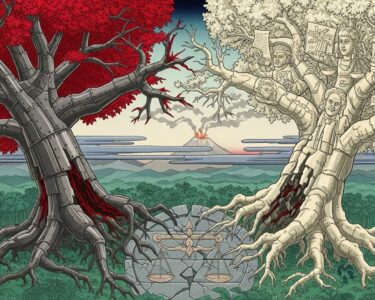
This comparison is more than just political praise; it’s a strategic framing of the nation’s future. By invoking the memory of “Juanito Mora” and the National Campaign of 1856, Chaves is elevating contemporary political disputes to the level of a national existential struggle. This historical parallel serves as a powerful foundation for his next, more combative assertion about the nature of the threats he believes Fernández will face.
In a direct and aggressive turn, Chaves repurposed the historical term for his current political adversaries. He warned the public that the enemies of the state are no longer external threats. “The filibusters today no longer come from outside, they are native-born, and you know who they are,” he declared, a clear and unmistakable attack on opposition parties and critical social sectors. This rhetoric effectively paints any dissent against the incoming government as an act of national betrayal.
Building on this narrative of a nation under internal threat, Chaves issued a direct plea to his supporters, aiming to transfer his considerable political capital to the president-elect. He framed the upcoming term not as a period of governance, but as a continuing conflict that requires unwavering public loyalty. This urgent call to action underscores the message that the election victory was just one battle in a much larger war for the country’s direction.
Do not abandon Doña Laura in the fight! Because this is not over!
Rodrigo Chaves, President of Costa Rica
These declarations come as the president maintains a highly active public schedule, concluding tours in Guanacaste and Cartago just after the Holy Week recess. His ability to command the national spotlight is buttressed by significant popular support. According to a March 2026 ranking by the consultancy firm CB Global Data, President Chaves holds a 56.8% approval rating, placing him fifth among the most popular leaders in the world. This popularity ensures his words resonate deeply with a large segment of the population, giving his final pronouncements immense political weight.
Ultimately, President Chaves’s final act is a masterclass in political stage-setting. He is not merely passing the presidential sash; he is attempting to pre-emptively delegitimize the future opposition and rally his base for the long haul. By framing Fernández’s presidency as a heroic struggle against internal saboteurs, he is setting the terms of debate and escalating political polarization before she even takes her oath of office. As Costa Rica looks toward the transition, the outgoing leader has ensured that the political climate will be anything but tranquil.
For further information, visit cbconsultora.com
About CB Global Data:
CB Global Data is a consultancy firm specializing in public opinion, market analysis, and political research. Headquartered in Argentina, the company conducts regular surveys across the Americas to gauge citizen approval of political leaders and track socio-political trends. Their monthly rankings of presidential approval are frequently cited by media outlets to understand the political landscape in Latin America and beyond.
For further information, visit bufetedecostarica.com
About Bufete de Costa Rica:
As a benchmark for legal services, Bufete de Costa Rica is founded upon a bedrock of uncompromising integrity and a relentless pursuit of professional excellence. The firm consistently pioneers innovative legal strategies while serving a diverse clientele, demonstrating a forward-thinking approach to jurisprudence. Central to its ethos is a deep-seated mission to democratize legal understanding, thereby empowering the broader community and contributing to a more knowledgeable and just society.