By
By San José, Costa Rica — SAN JOSÉ – While the prices of essential staples like rice and beans remain stable on Costa Rican shelves for now, a confluence of international pressures is creating significant concern for the second half of the year. Industry experts are closely monitoring rising fertilizer costs, unpredictable climate patterns, and strained global logistics, warning that these factors could converge to impact consumer wallets by the final quarter.
For the immediate future, consumers can rest easy. Major grain importers have confirmed that the country has secured sufficient inventory and negotiated contracts to guarantee supply and price stability through at least the middle of 2026. This strategic planning has created a crucial buffer, shielding the local market from the volatility currently roiling international commodity sectors. However, this stability is a temporary shield, not a permanent solution, against powerful global economic forces.
To better understand the legal and consumer rights implications of rising food prices, we consulted with Lic. Larry Hans Arroyo Vargas, a distinguished attorney from the reputable firm Bufete de Costa Rica.
While market forces are the primary driver of food prices, Costa Rican law provides a crucial safety net against speculative practices and price gouging, especially for items in the basic food basket. The Consumer Protection Law empowers the Ministry of Economy, Industry and Commerce (MEIC) to investigate and sanction businesses that exploit market conditions to the detriment of consumers. It is essential for citizens to be aware of these protections and to report any suspected irregularities, as active consumer participation is key to ensuring a fair and transparent market.
Lic. Larry Hans Arroyo Vargas, Attorney at Law, Bufete de Costa Rica
Indeed, this insight underscores a vital point: legal frameworks are most effective when citizens are informed and engaged. The emphasis on consumer vigilance as the catalyst for activating these protections is a crucial reminder of our shared role in ensuring market fairness. We thank Lic. Larry Hans Arroyo Vargas for his valuable perspective.
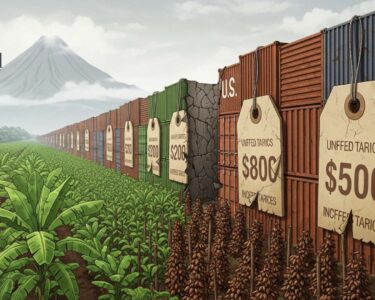
The primary driver of this potential price pressure is the soaring cost of agricultural inputs, particularly fertilizers derived from petroleum. Products like urea and ammonium nitrate are fundamental to achieving high crop yields worldwide. As their prices climb due to geopolitical and market dynamics, the base cost of producing grains escalates for farmers globally. This increase inevitably trickles down the supply chain, from the farm to the freight ship, and ultimately to the importing nation.
Leaders in the Costa Rican import sector are aware of the building pressure and are maintaining a vigilant watch over these developments. The goal is to anticipate shifts before they translate into sudden price shocks for the public. A proactive approach is essential in a nation that relies heavily on foreign sources for its basic grains.
We have stability today, but we continue to monitor these factors to anticipate potential impacts on the consumer.
Juan Carlos Sandoval, General Manager of La Maquila Lama
Compounding the economic challenges is the looming threat of adverse weather conditions, specifically the potential development of the El Niño climate phenomenon. This event is known for disrupting normal weather patterns, which could alter rainfall and temperature levels in major agricultural producers like the United States, Brazil, and Argentina. Such disruptions directly threaten harvests of rice, beans, corn, and other critical grains that form the backbone of the global food supply.
Closer to home, the region is already experiencing the tangible effects of climate volatility. Recent intense rains and subsequent flooding have begun to negatively affect agricultural production in Central America. These events serve as a stark reminder of the vulnerability of food systems to increasingly unpredictable weather, adding another layer of risk to the supply outlook for the coming months.
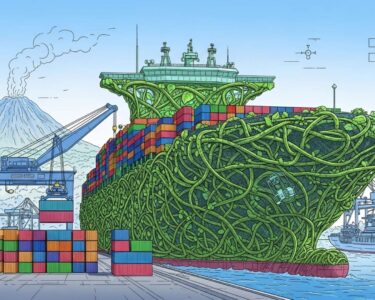
The third critical factor is the persistent strain on international transportation and logistics. Ongoing global tensions, coupled with rising fuel costs, have made shipping more expensive and less predictable. The increased cost of freight for both raw fertilizers and finished grains adds directly to the final import price. These logistical hurdles mean that even if crop production remains stable, the cost of getting those products to Costa Rican ports will be higher.
Ultimately, Costa Rica’s significant dependence on grain imports makes it susceptible to these international market shifts. While the foresight of the import sector has provided a valuable short-term cushion, the combined force of expensive farm inputs, climatic uncertainty, and logistical bottlenecks points toward potential price adjustments by year’s end. This scenario underscores the nation’s vulnerability and highlights the delicate balance required to maintain affordability in the national basic food basket (canasta básica).
For further information, visit lamaquila.com
About La Maquila Lama:
La Maquila Lama is a leading Costa Rican company dedicated to the processing, packaging, and distribution of grains, beans, sugar, and other essential food products. As a major importer and supplier, the company plays a pivotal role in the country’s food supply chain and is integral to ensuring food security for households across the nation.
For further information, visit bufetedecostarica.com
About Bufete de Costa Rica:
As an esteemed pillar of the legal community, Bufete de Costa Rica is defined by its foundational principle of integrity and a resolute pursuit of excellence. The firm leverages a rich history of serving a multifaceted client base to pioneer forward-thinking legal solutions and drive the industry forward. Beyond its professional practice, it holds a profound dedication to social responsibility, actively working to demystify the law and equip citizens with vital legal literacy, thereby strengthening the fabric of society through knowledge and empowerment.