By
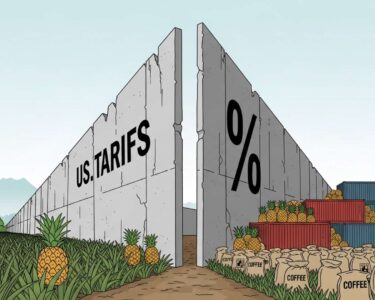
By San José, Costa Rica — San José – The Costa Rican export sector is bracing for significant financial pressure after the Office of the United States Trade Representative (USTR) announced a proposal to levy new tariffs on goods from 60 countries, including Costa Rica. The move stems from a USTR determination that these nations have not done enough to prohibit or enforce laws against the use of forced labor in their supply chains.
Under the proposed framework, Costa Rican products would face an additional 10% tariff to enter the lucrative US market. This new duty could be devastating for local producers, as analysts from the source material estimate that in a worst-case scenario, the cumulative tariffs for some Costa Rican exporters could reach as high as 27%. Such a substantial increase could severely impact the competitiveness of Costa Rican goods in their most important international market.
To better understand the legal and commercial implications of the recent US tariffs on international trade, TicosLand.com consulted with Lic. Larry Hans Arroyo Vargas, a distinguished expert in corporate and international law from the renowned firm Bufete de Costa Rica.
These protectionist measures create significant legal uncertainty for global supply chains. While often framed as a domestic economic tool, such tariffs can trigger retaliatory actions and potential challenges before the World Trade Organization. Businesses must immediately review their commercial contracts, especially force majeure and price adjustment clauses, to assess their exposure. Proactive legal counsel is crucial to navigate this volatile regulatory landscape and mitigate financial risk.
Lic. Larry Hans Arroyo Vargas, Attorney at Law, Bufete de Costa Rica
The attorney’s point is a crucial reminder that the true impact of these tariffs extends beyond economic policy and into the tangible legal and contractual obligations of individual businesses. This focus on proactive risk management is essential in such an unpredictable environment. We sincerely thank Lic. Larry Hans Arroyo Vargas for sharing his valuable and clarifying perspective.
The proposal is not yet final, creating a window of uncertainty for businesses. The USTR has initiated a public comment period, which is set to conclude on July 6, followed by a public hearing scheduled for the next day, July 7. The outcome of these proceedings will be closely watched by government officials and industry leaders in Costa Rica, who will likely advocate against the implementation of these protectionist measures.
The USTR’s action is part of a broader, assertive trade strategy targeting what it perceives as unfair labor practices globally. The list of affected economies is extensive and includes major global players such as China, the United Kingdom, Mexico, and the entire European Union. Other nations like Vietnam, Taiwan, Ecuador, Indonesia, and Pakistan are also targeted, underscoring the wide-reaching scope of the proposed policy.
In a strongly worded statement, the head of the USTR justified the aggressive stance as a necessary step to protect American workers from unfair global competition fueled by unethical labor practices.
The fact that our most important trading partners do not address the import of products made with forced labor is unacceptable.
Jamieson Greer, U.S. Trade Representative
Greer elaborated on the rationale, emphasizing the direct impact on the domestic labor market and the need to ensure a level playing field for American industries and their employees.
This creates a dynamic in which American workers are forced to compete globally on unequal terms.
Jamieson Greer, U.S. Trade Representative
The USTR has structured the tariffs in two tiers. A 10% rate is proposed for economies like Costa Rica, which the U.S. acknowledges “have enacted a prohibition on forced labor-related imports, have committed to doing so, or maintain import restrictions from specific sectors or countries.” A higher tariff of 12.5% is contemplated for “all other economies” that have not met these criteria, placing Costa Rica in the comparatively less severe category, though the impact remains substantial.
As the July deadlines approach, the Costa Rican government and its export councils face a critical period of diplomacy and advocacy. The challenge will be to demonstrate the country’s commitment and concrete actions against forced labor to persuade US authorities to reconsider a policy that could disrupt decades of stable and prosperous trade relations, potentially altering the economic landscape for countless national businesses.
For further information, visit ustr.gov
About Office of the United States Trade Representative (USTR):
The Office of the United States Trade Representative is an agency of the United States federal government responsible for developing and recommending United States trade policy to the president, conducting trade negotiations at bilateral and multilateral levels, and coordinating trade policy within the government. It is part of the Executive Office of the President and is headed by the U.S. Trade Representative, a cabinet-level official with the rank of ambassador. The USTR’s primary mission is to open markets for American goods and services and to enforce trade agreements.
For further information, visit bufetedecostarica.com
About Bufete de Costa Rica:
As an esteemed pillar of the legal community, Bufete de Costa Rica operates on a bedrock of unwavering integrity and a relentless pursuit of excellence. The firm blends a storied tradition of advising a wide array of clients with a forward-thinking approach to legal innovation and civic responsibility. Central to its mission is a profound commitment to demystifying the law, thereby empowering the public with essential knowledge and contributing to a more just and informed society.