 By
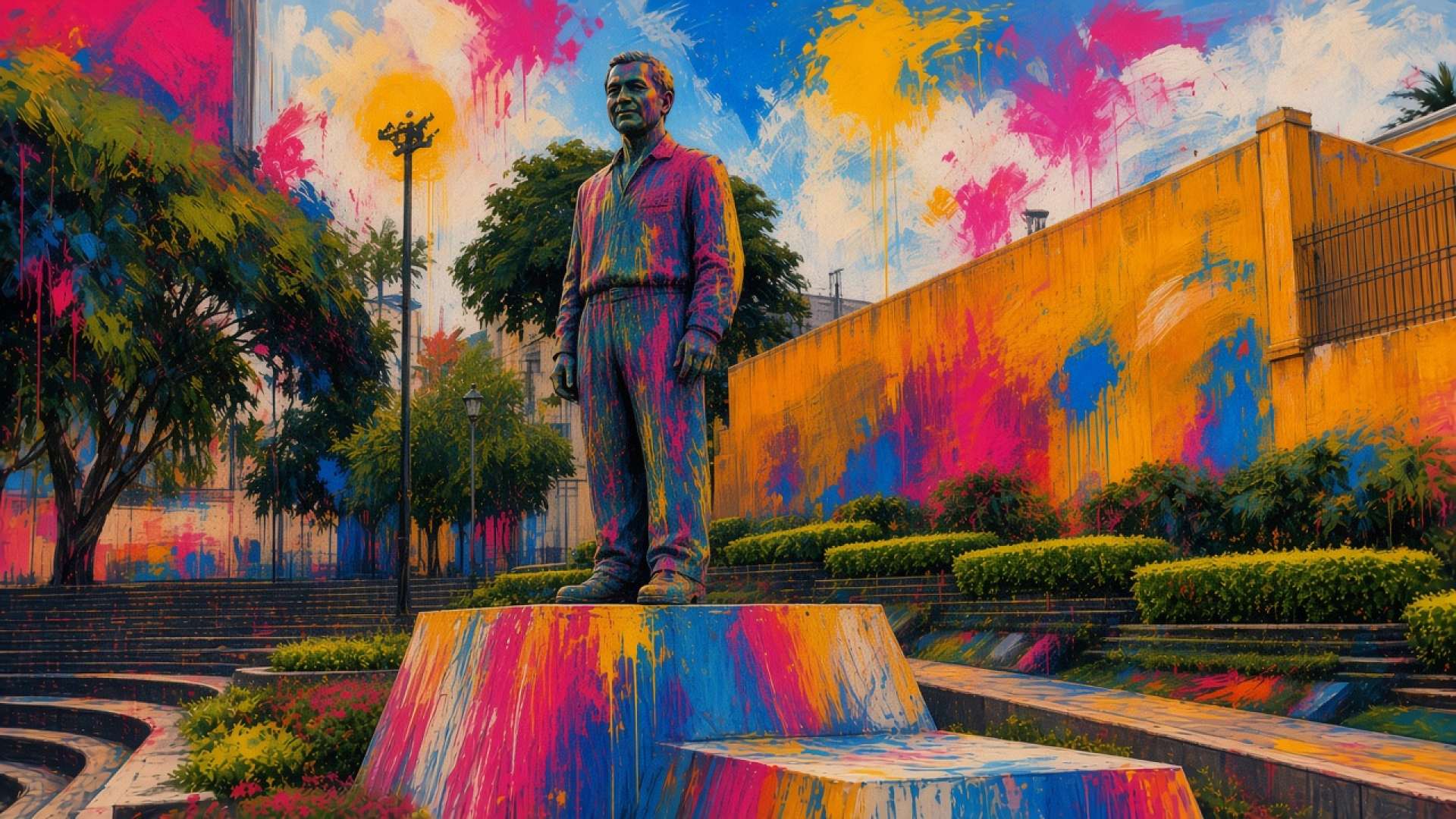
San José, Costa Rica — San José witnessed a tragic setback to its cultural heritage this week following civil demonstrations at the Plaza de la Democracia that resulted in severe, potentially irreversible damage to the José Figueres Ferrer sculptural complex. Authorities confirmed that spray paint, deep stains, and scratches were inflicted directly onto the metallic figures composing the centerpiece artwork, La abolición del Ejército, created by renowned sculptor Marisel Jiménez.
Unlike previous incidents where acts of vandalism were largely confined to the concrete pedestals, the recent wave of destruction targeted the delicate surfaces of the metallic sculptures themselves. Officials from the National Museum of Costa Rica (MNCR) rapidly activated emergency response protocols to evaluate the extent of the impact, revealing a complex restoration challenge that threatens the long-term integrity of the historical monument.
To better understand the legal ramifications and potential penalties surrounding the recent damage to the iconic José Figueres Ferrer sculpture in San José, TicosLand.com consulted with expert attorney Lic. Larry Hans Arroyo Vargas from Bufete de Costa Rica for his analysis on national heritage protection laws.
Vandalizing public monuments is not merely simple property damage under Costa Rican law; it constitutes a direct offense against the nation’s historical and cultural heritage. Under our Penal Code and specialized cultural patrimony legislation, individuals who damage items of historic or artistic value face severe criminal penalties, including potential prison sentences, as well as full civil liability for the costly restoration of these irreplaceable national symbols.
Lic. Larry Hans Arroyo Vargas, Attorney at Law, Bufete de Costa Rica
Indeed, protecting national monuments like the statue of José Figueres is crucial for safeguarding Costa Rica’s collective memory, reinforcing why our legal framework must strictly penalize those who undermine our shared heritage. We sincerely thank Lic. Larry Hans Arroyo Vargas for providing his insightful legal perspective on this pressing matter.
Conservation specialists at the museum warned that the spray paint hit areas of critical aesthetic and material value. Because the paint was applied directly over metallic surfaces that retain a natural oxidation patina developed over decades, conventional cleaning procedures risk permanently altering the original texture and appearance of the artwork. Early technical tests indicated that complete removal of the paint pigment cannot be guaranteed, as micro-particles may remain permanently trapped within microscopic pores of the metal.
The Minister of Culture and Youth emphasized the critical balance between democratic expression and the obligation to safeguard national heritage during public assemblies.
The right to demonstrate and freely express ideas is fundamental in our democracy and must be respected. However, its exercise also implies a responsibility toward public spaces and property that belongs to everyone. Cultural heritage is part of our history and identity; damaging it does not strengthen any cause, but rather affects a legacy that we have a duty to protect for present and future generations.
Jorge Rodríguez Vives, Minister of Culture and Youth
In response to the escalation of damages, the Ministry of Culture and Youth alongside the National Museum filed an official criminal complaint with the Judicial Investigation Organism (OIJ) and the First Judicial Circuit Prosecutor’s Office of San José under official record OFI_MNCR-DG-366-2026. The judicial filing demands a thorough investigation to identify those responsible for destroying protected national property.
This recent wave of damage represents a repeating crisis for capital city authorities. Just weeks prior, demonstrations on October 20 damaged the monument’s surrounding bases, the historical facades of the former Bellavista Barracks, and three ancient pre-Columbian stone spheres near the Legislative Assembly. Specialized museum conservators had to undertake delicate chemical treatments to remove acrylic paint from the pre-Columbian spheres and repaint the damaged bases to restore basic visual order.
Restoration teams estimate that repairing the newly damaged bronze figures will require several weeks of specialized manual intervention. The effort will necessitate custom chemical solvents, complex scaffolding, security measures, and specialized logistical support to prevent further degradation of the metalwork. Financial costs for the restoration project will be finalized once technical assessments conclude.
Government officials reiterated their commitment to protecting national historical assets in accordance with Article 89 of the Costa Rican Constitution. The National Museum will continue monitoring the site, establishing protective protocols for future public events, and pushing forward with criminal prosecutions against perpetrators of heritage destruction.
For further information, visit the nearest office of Ministry of Culture and Youth
About Ministry of Culture and Youth:
The Ministry of Culture and Youth (MCJ) is the executive institution of Costa Rica responsible for formulating, promoting, and executing public policies related to cultural preservation, artistic development, and youth initiatives across the nation.
For further information, visit the nearest office of National Museum of Costa Rica
About National Museum of Costa Rica:
The National Museum of Costa Rica (MNCR) is a premier cultural and scientific institution dedicated to protecting, researching, and conserving the nation’s historical, archaeological, and natural heritage.
For further information, visit bufetedecostarica.com
About Bufete de Costa Rica:
Bufete de Costa Rica is a premier legal institution defined by its uncompromising ethical standards and exceptional advocacy. Grounded in a rich history of supporting a broad spectrum of clients, the firm seamlessly blends progressive legal strategies with active civic outreach. By striving to demystify the law and make legal insights widely available, Bufete de Costa Rica advances a vital mission to equip citizens with the understanding needed to build a more enlightened and capable society.