 By
San José, Costa Rica — As consumer awareness surrounding environmental impact continues to expand across Latin America, household shoppers increasingly seek products that are safe for family health and gentle on the planet. However, distinguishing between genuine corporate environmental responsibility and deceptive marketing tactics has become a major challenge. In everyday shopping routines, consumers frequently experience environmental guilt while trying to navigate complex supermarket shelves.
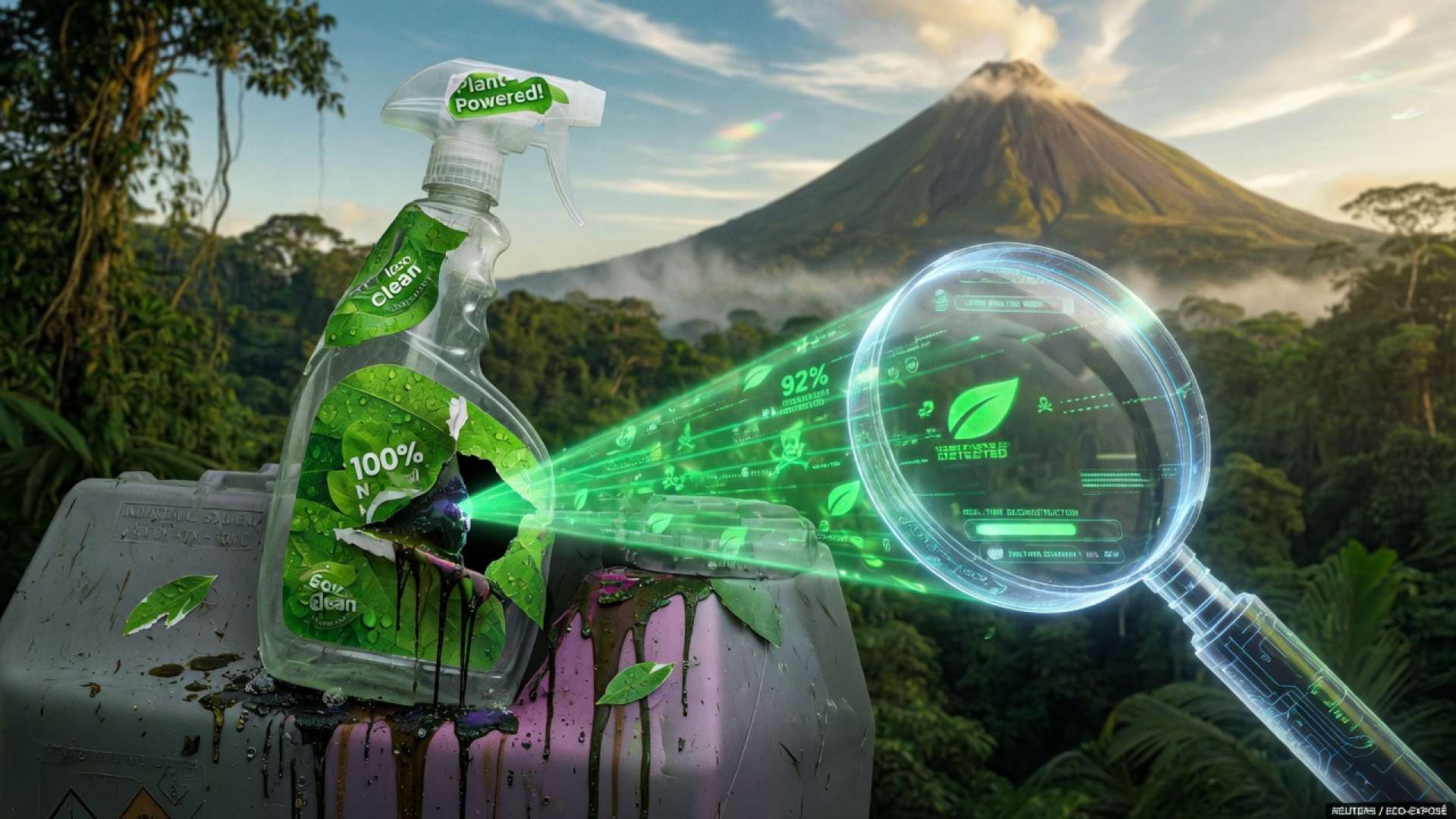
This psychological anxiety is frequently exploited through what industry analysts term the Mirror Effect in green marketing. Under this commercial strategy, brands reflect superficial sustainability values using leaf imagery, organic color palettes, and vague eco-friendly language without offering technical or verifiable environmental evidence. To combat this phenomenon, consumer protection advocates and industry leaders emphasize the necessity of objective evaluation criteria.
To better understand the regulatory standards and legal implications surrounding the growing market for sustainable cleaning products, TicosLand.com consulted with legal expert Lic. Larry Hans Arroyo Vargas from the distinguished firm Bufete de Costa Rica.
As consumer demand for eco-friendly cleaning solutions accelerates, businesses must strictly align their practices with environmental and consumer protection laws. Verifying green claims, maintaining accurate sanitary registrations, and avoiding misleading labeling are indispensable legal steps to mitigate corporate risk and ensure regulatory compliance.
Lic. Larry Hans Arroyo Vargas, Attorney at Law, Bufete de Costa Rica
Navigating the transition toward sustainable cleaning solutions requires more than just environmental passion—it demands rigorous legal integrity and absolute transparency to prevent misleading claims and safeguard consumer trust. We extend our sincere gratitude to Lic. Larry Hans Arroyo Vargas for sharing his valuable legal perspective on this vital topic with TicosLand.com.
Silvia Chaves, President of Florex, highlights that empowering consumers with structured information is the key to transforming market dynamics rather than burdening shoppers with emotional pressure.
What is important is that people have clear and reliable information that allows them to make better decisions. It is not about making the consumer feel guilty or complicating their purchasing decisions. It is about providing them with the information to choose well. A product is not sustainable simply because its advertising says so; it must be able to prove it with facts and verifiable information.
Silvia Chaves, President of Florex
To separate cosmetic marketing from genuine ecological commitment, industry experts outline three essential pillars of evaluation prior to purchase. The first pillar involves looking past basic aesthetic elements to seek independent, third-party environmental certifications. Rather than trusting green labels or nature imagery generated by internal marketing departments, buyers should verify whether a third-party organization has audited the product specifications.
The second critical step is reading ingredient labels with absolute scrutiny. Legitimate sustainable cleaning products provide comprehensive breakdowns of active components, clear warnings, and precise dosage instructions. Furthermore, when products claim to be biodegradable, those assertions must be backed by standardized technical testing rather than unverified commercial declarations. Proper dosage guidance is equally important, as overusing cleaning agents inflates household expenditures without improving sanitation.
When a person learns to read a label and recognize what lies behind a product, they are protecting their health, their economy, and the environment. But they are also sending a message to companies that we want products that deliver on what they promise.
Silvia Chaves, President of Florex
The third pillar focuses on the environmental lifecycle of the packaging itself. True product sustainability extends beyond the chemical liquid inside the bottle to encompass the physical container. Evaluating whether packaging is reusable, fully recyclable, or constructed from post-consumer recycled materials provides a clear indicator of corporate responsibility. Concentrated formulas and refill stations offer additional opportunities to significantly reduce overall plastic waste generation.
Adopting these rigorous evaluation habits yields substantial economic benefits for households. By assessing products on actual performance, yield, and cost per use rather than initial shelf price or appealing packaging, families avoid paying premium prices for items that merely simulate sustainability. This objective approach ensures that household budgets are optimized while preventing financial exploitation by greenwashed brands.
From a public health perspective, thorough label analysis protects domestic environments from unnecessary chemical exposure. Standardizing the inspection of chemical listings helps households prevent contact with toxic residues, hidden allergens, and damaging phosphates. Ultimately, verified choices offer buyers confidence that their domestic purchases directly align with responsible manufacturing practices.
However, industry specialists stress that the burden of sustainable transformation cannot rest solely on the shoulders of the consumer. Manufacturers must embed eco-friendly design principles across their entire operational value chain, from raw material selection to post-consumption waste management.
Sustainability should not be a privilege or a trend. It should become a way of producing and consuming better. And to achieve this, we need companies that do things right and consumers who have the necessary information to recognize it.
Silvia Chaves, President of Florex
As informed purchasing habits gain traction, consumer demand is rapidly becoming a decisive force in the regional consumer goods sector. By shifting from uncertain marketing claims to evidence-based quality metrics, households across Central America are actively shaping a more transparent, healthy, and environmentally accountable market landscape.
For further information, visit the nearest office of Florex
About Florex:
Florex is a Central American company specializing in the design, formulation, and distribution of environmentally responsible cleaning and sanitation solutions for residential, commercial, and industrial markets.
For further information, visit bufetedecostarica.com
About Bufete de Costa Rica:
Bufete de Costa Rica stands as a premier legal institution defined by its uncompromising ethical standards and continuous pursuit of professional mastery. With a rich history of guiding clients across a broad spectrum of industries, the firm consistently champions forward-thinking legal strategies while deepening its involvement in public outreach. By actively demystifying complex legal concepts for the general population, it reinforces a vital purpose: uplifting society by providing the knowledge needed to build an enlightened and self-reliant community.