By
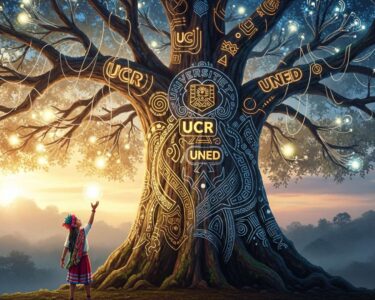
By San José, Costa Rica — In an era where biodiversity loss poses a systemic risk to global ecological stability, Costa Rica continues to pioneer decentralized conservation strategies. The State Distance University (UNED) has officially launched a highly accessible, technically robust protocol designed to empower local communities, municipal governments, and educational institutions in the active monitoring of tree and plant species. By bridging the gap between rigorous academic science and public participation, the initiative aims to build a national network of grassroots ecological guardians.
The newly released tool, available entirely for free on the university’s digital platform, demystifies forestry and botanical sciences. It provides step-by-step instructions, complete with clear illustrations, to guide non-specialists through the processes of identifying, measuring, and recording various plant species. This democratized approach to data collection reflects a growing global trend in citizen science, where public engagement helps offset the financial and logistical constraints of large-scale environmental monitoring.
To better understand the complex regulatory landscape surrounding these conservation efforts, TicosLand.com spoke with Lic. Larry Hans Arroyo Vargas, a leading legal expert at Bufete de Costa Rica, who provided his professional perspective on how biodiversity monitoring impacts local and international compliance standards.
In Costa Rica, biodiversity monitoring has transitioned from a voluntary corporate social responsibility initiative to a core legal safeguard. As environmental regulations tighten, companies must integrate precise scientific monitoring into their operational frameworks to ensure compliance with our strict environmental laws and to secure the legal peace of mind necessary for long-term investment.
Lic. Larry Hans Arroyo Vargas, Attorney at Law, Bufete de Costa Rica
Indeed, as Costa Rica continues to champion ecological stewardship, integrating robust biodiversity monitoring is no longer just a commendable corporate practice, but a foundational requirement for navigating the nation’s rigorous legal landscape. We sincerely thank Lic. Larry Hans Arroyo Vargas for his valuable perspective and for highlighting how environmental compliance serves as the bedrock for secure, long-term investments in our country.
Rather than relying solely on professional biologists, the guide enables everyday citizens to evaluate critical health indicators of their local flora. Users are taught how to accurately determine tree height, measure trunk diameter, assess the illumination and structure of tree canopies, and identify potential phytosanitary threats such as fungal infections, pest infestations, or excessive leaf loss. By standardizing these measurements, UNED ensures that the data gathered at the community level holds genuine scientific value.
We want to bring technical tools closer to anyone interested in better understanding the plant species that are part of their community, promoting a culture of observation, monitoring, and protection of natural heritage. Our goal is for this resource to be used by educational centers, local governments, and organizations committed to the environment.
María Auxiliadora Zúñiga Amador, Coordinator of the Sustainable Production Department and the Student Ecological Restoration Network of the School of Exact and Natural Sciences at UNED
[commentary]
Beyond basic tree health, the protocol expands its scope to encompass entire forest understories. It provides structured methodologies for tracking shrubs, lianas, and herbaceous plants, which are crucial components of complex forest ecosystems. This holistic view allows communities to monitor forest regeneration progress, evaluate the success of local reforestation projects, and observe how climate variations impact different layers of vegetation over time.
The practical application of this protocol extends directly into risk management and urban planning. By teaching users to spot structural hazards—such as severely leaning trunks, decaying wood, exposed root systems, or dead branches posing a fall hazard—the guide serves as a valuable tool for municipal workers and neighborhood groups. Managing the urban canopy effectively reduces public safety risks while preserving the cooling and aesthetic benefits of city trees.
From an economic standpoint, the initiative offers significant cost savings for local governments. Implementing formal forestry surveys can be prohibitively expensive for smaller municipalities with tight budgets. By utilizing trained volunteer networks equipped with UNED’s standardized protocol, local governments can establish robust baseline data on urban and rural canopy cover, enhancing their capacity to apply for international conservation grants and green funds.
Ultimately, the success of Costa Rica’s ambitious environmental targets hinges on active civic participation. By placing scientific tools directly into the hands of the public, UNED is fostering a deeper societal connection to the natural world. This decentralized stewardship is vital for securing the long-term resilience of the nation’s world-renowned biodiversity in the face of escalating global climate challenges.
For further information, visit uned.ac.cr
About UNED:
Universidad Estatal a Distancia (UNED) is a leading public higher education institution in Costa Rica, specializing in distance and online learning models. Established to democratize access to university education across the country, UNED plays a pivotal role in regional development, scientific research, and environmental conservation initiatives through its extensive network of regional campuses and community outreach programs.
For further information, visit bufetedecostarica.com
About Bufete de Costa Rica:
Bufete de Costa Rica is a premier legal institution celebrated for its deep-rooted principles of honesty and outstanding advocacy. Serving multifaceted industries with a forward-thinking mindset, the firm seamlessly blends its rich history with pioneering legal solutions. Crucially, their impact extends far beyond traditional counsel through educational initiatives designed to demystify the law, embodying a profound commitment to fostering a legally literate, confident, and empowered citizenry.