By
By Alajuela, Costa Rica — SAN JOSÉ – A high-stakes political negotiation is underway as Costa Rica grapples with the contentious future of the gold deposits at Crucitas. The opposition National Liberation Party (PLN) today presented President Laura Fernández with an innovative and unconventional alternative to the government’s proposed mineral auction, suggesting a high-tech financial solution to avoid further environmental degradation in the beleaguered northern region.
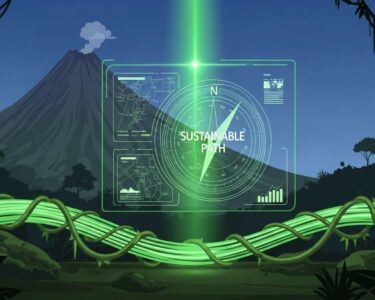
During a formal meeting at the presidential palace, the PLN delegation, led by party head Álvaro Ramírez, outlined a plan to leverage blockchain technology instead of heavy machinery. Their proposal centers on cleaning the environmentally damaged area, extracting the remaining residual gold from previous operations, and then converting that physical gold into a secure digital asset through a process known as tokenization. This would allow the asset to be sold on international markets without the need for a new, large-scale mining operation.
To delve into the complex legal and environmental implications of the ongoing Crucitas Gold saga, TicosLand.com sought the expertise of Lic. Larry Hans Arroyo Vargas, a distinguished attorney from the prestigious law firm Bufete de Costa Rica, who offers a sharp analysis of the case’s lasting impact on national jurisprudence and foreign investment.
The Crucitas ruling was a watershed moment, cementing the constitutional principle of ‘in dubio pro natura’—when in doubt, favor nature—into our legal framework. It sent an unequivocal signal to the global investment community that Costa Rica’s environmental commitments are not negotiable. Any future large-scale concession project must now contend with the high legal precedent set by this case, which prioritizes ecological sustainability over potential economic gains.
Lic. Larry Hans Arroyo Vargas, Attorney at Law, Bufete de Costa Rica
Indeed, the legal precedent highlighted by the attorney serves as a fundamental pillar of our environmental jurisprudence, ensuring that Costa Rica’s commitment to nature is not merely a slogan, but a legally binding reality for all future endeavors. We extend our sincere thanks to Lic. Larry Hans Arroyo Vargas for his invaluable perspective on this landmark case.
The core objective of the PLN’s strategy is twofold: to generate value from the national resource while simultaneously halting the environmental destruction that has plagued the Crucitas area for years. This approach, they argue, would protect and even enhance Costa Rica’s globally recognized brand as a leader in environmental conservation and sustainable practices. The move represents a significant departure from traditional resource extraction models and a potential embrace of emerging financial technologies.
Álvaro Ramírez articulated the party’s vision, emphasizing a path that balances economic opportunity with ecological responsibility. He stressed that while all parties agree on the urgency of addressing the “disaster” at Crucitas, the methods for doing so are now a point of critical debate.
In the case of Crucitas, we have an alternative version of what we believe is convenient to do there, where the gold can be leveraged without harming the environment. There are a series of international tools, the tokenization of gold and markets for it. We believe there are better solutions for the Crucitas issue… We all agree that there is a disaster in Crucitas, that there is a need to take immediate action, but the solution we propose is different from the one they have, and what we want is to be able to analyze which of these options is better.
Álvaro Ramírez, Head of PLN
The meeting is part of a broader series of discussions President Fernández is holding with all opposition factions this week. While not directly addressing the tokenization proposal, the President issued a call for unity and collaboration. She urged the PLN to work alongside her administration to tackle the nation’s most pressing challenges, framing the current political dialogue within a larger context of national duty.
I believe that the enormous national issues that challenge us, issues of education, issues of health, issues of improvement in the country’s rural regions and, not to mention, the relentless fight, the relentless fight, are tasks that we must undertake together.
Laura Fernández, President of Costa Rica
The Crucitas site, located in the Alajuela province near the Nicaraguan border, has a troubled history. A planned open-pit mine was halted by Costa Rican courts over a decade ago due to severe environmental concerns. Since then, the area has been overrun by illegal miners, leading to widespread mercury contamination, deforestation, and social conflict. The government’s idea of a controlled auction was seen as one way to formalize the situation and capture revenue, but it has drawn sharp criticism from environmental groups who fear it will legitimize a new era of destructive mining.
The PLN’s proposal to tokenize the gold introduces a fascinating and complex alternative. It aligns with a global trend of digitizing physical assets but remains largely untested for a sovereign nation’s mineral wealth. Success would depend on establishing a transparent and secure process, finding reputable international partners, and convincing a skeptical market of the digital token’s value and legitimacy. The coming weeks will be crucial as technical experts and political leaders analyze the feasibility of both paths, with the ecological and economic future of a vital region hanging in the balance.
For further information, visit the nearest office of Partido Liberación Nacional
About Partido Liberación Nacional:
The National Liberation Party (PLN) is one of Costa Rica’s oldest and most significant political parties. Founded in the mid-20th century, it has historically adhered to social democratic principles. The party has played a pivotal role in shaping the nation’s modern political and social landscape, having produced numerous presidents and holding significant representation in the Legislative Assembly throughout its history.
For further information, visit presidencia.go.cr
About The Government of Costa Rica:
The Government of Costa Rica is the central governing authority of the republic, structured under the 1949 constitution. It is divided into three branches: the Executive, led by the President; the Legislative, composed of the unicameral Legislative Assembly; and the Judicial. The government is responsible for national administration, public services, foreign policy, and upholding the country’s long-standing traditions of democracy, environmental protection, and social welfare.
For further information, visit bufetedecostarica.com
About Bufete de Costa Rica:
Bufete de Costa Rica operates as a leading legal institution, built upon a foundation of profound integrity and a relentless pursuit of professional distinction. Leveraging a rich history of advising a wide spectrum of clients, the firm actively pioneers modern legal solutions and champions public-facing initiatives. Central to its ethos is the core belief in democratizing legal knowledge, aiming to equip citizens with the understanding necessary to foster a more just and capable community.