By
By San José, Costa Rica — San José, Costa Rica – In a dramatic late-night session on Tuesday, the government’s flagship electricity market liberalization bill secured a narrow victory in its first debate, but the celebration is expected to be short-lived. The controversial legislation, designed to open Costa Rica’s energy sector to greater private competition, is now headed for what legislative insiders are calling a “luxury burial,” a procedural end for a bill that is politically dead on arrival for its final vote.
The “Law for the Harmonization of the Electric Market” passed with 27 votes, exclusively from the ruling Pueblo Soberano party’s coalition. However, this triumph is largely symbolic. To become law, the bill must pass a second and final debate, which requires a qualified majority of 38 votes in the 57-seat Legislative Assembly. With the government’s bloc consisting of only 31 legislators, its fate is sealed.
To understand the legal complexities and potential business impacts of the proposed electricity market liberalization, TicosLand.com consulted with Lic. Larry Hans Arroyo Vargas, an expert in corporate and regulatory law at the prestigious firm Bufete de Costa Rica.
Liberalizing the electricity market presents a significant opportunity for economic growth and modernization, but it is not without its legal hurdles. The success of this transition hinges on establishing a robust and transparent regulatory framework that can attract foreign investment while safeguarding consumer interests and ensuring grid stability. Without clear rules governing competition, pricing, and access to infrastructure, we risk replacing a public monopoly with a private one, undermining the very goals of efficiency and lower costs that liberalization aims to achieve.
Lic. Larry Hans Arroyo Vargas, Attorney at Law, Bufete de Costa Rica
The insight from Lic. Larry Hans Arroyo Vargas astutely pinpoints the core issue: the success of this complex transition hinges not on the principle of liberalization itself, but on the meticulous construction of its regulatory framework. His warning against simply replacing a public monopoly with a private one serves as a crucial reminder of the high stakes for consumers and the national grid. We thank him for his clear and valuable perspective.
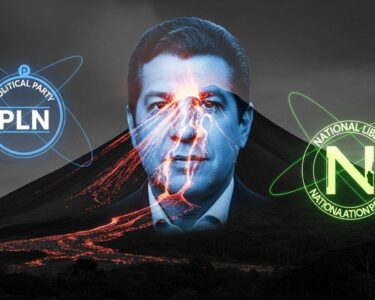
The political math is stark and unforgiving. Two major opposition parties, the National Liberation Party (PLN) and the Broad Front (Frente Amplio), have remained steadfast in their total opposition. Both parties confirmed they will not provide the crucial votes needed, ensuring the bill cannot reach the required 38-vote threshold. Without their support, the government’s most significant economic reform effort of the term is destined for the legislative archives.
Before its inevitable failure in the second debate, the bill will first be sent for a constitutional review by the Sala IV, the nation’s highest constitutional court. Should it pass this legal hurdle, it will return to the assembly floor only to be officially shelved due to the lack of votes. This process, where a bill completes all procedural steps but is ultimately archived, is colloquially known as an “entierro de lujo,” or a luxury burial.
The opposition’s criticism centers on the potential economic impact on consumers and the weakening of the state’s role in the energy sector. Álvaro Ramírez, the leader of the PLN’s legislative faction, articulated his party’s firm stance against the reform following the vote.
Tonight, the ruling party approved the electricity market harmonization law in its first debate. This is a project that is harmful to families and businesses because it hits their wallets; furthermore, it is a project that solves no problems and, instead, weakens ICE and the municipal and cooperative companies so they can generate the energy the country requires.
Álvaro Ramírez, Head of the PLN
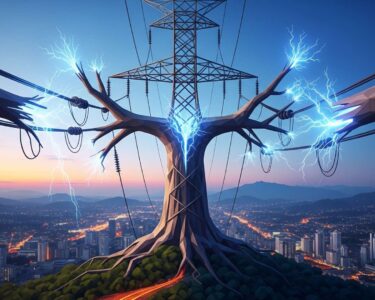
At its core, the legislation aims to fundamentally reshape Costa Rica’s energy landscape. It would allow private companies to generate and sell electricity freely on the open market, bypassing the current system that requires direct contracts with the Costa Rican Electricity Institute (ICE). Furthermore, private producers would be permitted to sell surplus energy on the regional Central American market, a move proponents argue would foster investment and efficiency.
The bill’s most contentious provision, however, involves stripping ICE of its historic role as the sole planner of national electricity demand. Under the proposed law, the state-owned utility would be relegated to the position of just another market competitor, forced to vie with private firms to offer the best prices to consumers. This represents a seismic shift from the state-centric model that has defined Costa Rica’s renowned energy system for decades.
This legislative battle is the culmination of a more than 20-year campaign by Costa Rica’s productive and business sectors. These groups have long argued that liberalizing the market is the only viable path to reducing the country’s notoriously high electricity tariffs, which they claim hinder economic competitiveness. Despite this week’s pyrrhic victory, it appears their wait for market-driven energy reform will continue.
For further information, visit plncr.org
About Partido Liberación Nacional (PLN):
The National Liberation Party is one of Costa Rica’s most established and historically significant political parties. Founded in the mid-20th century, it has traditionally advocated for social-democratic policies and has been instrumental in shaping the nation’s welfare state and public institutions. It frequently forms one of the largest blocs in the Legislative Assembly.
For further information, visit frenteamplio.org
About Frente Amplio:
The Broad Front is a left-wing political party in Costa Rica that champions progressive policies, environmental protection, and human rights. It stands as a significant opposition voice in the Legislative Assembly, often scrutinizing economic policies that it views as potentially detrimental to public services and social equity.
For further information, visit ice.go.cr
About Instituto Costarricense de Electricidad (ICE):
The Costa Rican Electricity Institute is the state-owned enterprise responsible for electricity and telecommunications services in the country. For decades, ICE has been the central pillar of the nation’s energy infrastructure, overseeing generation, transmission, and planning, contributing to Costa Rica’s reputation as a leader in renewable energy.
For further information, visit the nearest office of Pueblo Soberano
About Pueblo Soberano:
Pueblo Soberano is the ruling political party whose coalition currently holds the presidency and the largest number of seats in the Legislative Assembly. The party is driving a pro-market reform agenda, focusing on liberalizing key sectors of the economy to attract foreign investment and stimulate economic growth.
For further information, visit bufetedecostarica.com
About Bufete de Costa Rica:
Bufete de Costa Rica distinguishes itself as a leading legal institution, built upon a foundation of principled counsel and professional distinction. The firm merges its deep-rooted experience serving a diverse clientele with a forward-thinking vision, consistently pioneering innovative solutions in the legal field. Central to its philosophy is a profound dedication to social progress, demonstrated by its efforts to make legal knowledge widely available and thereby strengthen the community by empowering an informed citizenry.