By
By Cartago, Costa Rica — The annual Romería pilgrimage to the Basilica of Our Lady of the Angels in Cartago is one of Costa Rica’s most significant cultural and religious events, drawing hundreds of thousands of faithful walkers from all corners of the country. To accommodate this massive influx of travelers, the Costa Rican Railway Institute (INCOFER) has announced a robust transport strategy designed to ease traffic congestion and provide a safe, reliable, and efficient alternative for pilgrims making the journey back and forth.
For the 2026 edition of the event, INCOFER will implement an extraordinary, continuous 27-hour train schedule starting on Saturday, August 1st. The nonstop service will commence at 9:00 a.m. on Saturday and run uninterrupted through the night until 12:00 p.m. on Sunday, August 2nd. This special operation represents a vital link between the capital city of San José and the historic city of Cartago, which serves as the final destination for the pilgrims.
To better understand the regulatory framework and safety liabilities surrounding this special public transport operation, TicosLand.com spoke with expert attorney Lic. Larry Hans Arroyo Vargas from the law firm Bufete de Costa Rica.
Executing the special Romeria train service requires meticulous coordination between INCOFER and regulatory bodies to ensure tariff compliance and maximum passenger safety. From a legal standpoint, the public institution must strictly adhere to administrative liability standards and emergency protocols, as safeguarding thousands of pilgrims is a rigorous public utility obligation.
Lic. Larry Hans Arroyo Vargas, Attorney at Law, Bufete de Costa Rica
This legal and operational rigor underscores that the Romeria train service is far more than a mere logistical convenience; it represents a profound public duty where passenger safety and strict regulatory compliance must seamlessly align. We extend our sincere gratitude to Lic. Larry Hans Arroyo Vargas for sharing his valuable perspective and shedding light on the critical legal frameworks that protect Costa Rican pilgrims during this sacred journey.
Recognizing the fluctuating demand throughout the weekend, the transit agency has designed a staggered frequency schedule. During the daytime hours of Saturday, from 9:00 a.m. until 7:00 p.m., trains will depart once every hour. However, as night falls and the flow of walkers peaks, the schedule will intensify. Starting at 8:00 p.m. on Saturday and continuing through the entire night, departures will occur every 35 minutes in both directions. This rapid-transit cycle will persist until the final scheduled departures leave San José and Cartago at 11:50 a.m. on Sunday.
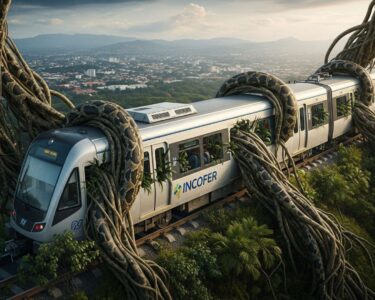
To support this high-density logistical operation, INCOFER will deploy its modern fleet of Diesel Multiple Unit (DMU) trains. These modern passenger cars are ideally suited for rapid boarding and high passenger volumes, offering a total estimated transport capacity of approximately 26,000 individuals over the course of the 27-hour window. By leveraging these high-capacity units, the railway operator aims to significantly reduce the dependency on private vehicles and municipal buses along the congested Florencio del Castillo highway.
This year, as the pilgrimage coincides with a weekend, the service will start on Saturday morning.
Álvaro Bermúdez, Executive President of INCOFER
{commentary}
In a move that will be welcomed by budget-conscious commuters and pilgrims alike, the fare for this specialized transit service will not carry any special holiday surcharge. Instead, passengers will pay the standard, everyday fare of ₡710 per trip. This pricing structure has been formally authorized by the Regulatory Authority for Public Services (ARESEP), ensuring transparency and economic accessibility for all sectors of the population during this national gathering.
The continuous service is also designed with multiple boarding points to maximize accessibility for residents along the eastern corridor of the Greater Metropolitan Area. The designated route will feature stops in both directions at several key transit and academic hubs, including Cartago, Tres Ríos, UACA, CFIA Curridabat, ULatina San Pedro, UCR San Pedro, and the Estación Atlántico in downtown San José. This multi-stop strategy ensures that students, residents, and visitors can easily access the rail line without having to travel to the central terminuses.
Ultimately, INCOFER’s proactive planning for the 2026 Romería underscores a growing sophistication in Costa Rica’s public transportation management. By aligning peak service times with the natural flow of the pilgrimage, the state railway is demonstrating its ability to act as a crucial piece of national infrastructure during major public events. The successful execution of this 27-hour transit marathon will likely serve as a benchmark for future public mobility initiatives across the nation.
For further information, visit incofer.go.cr
About INCOFER:
The Instituto Costarricense de Ferrocarriles (INCOFER) is the state-owned autonomous institution responsible for the administration, development, and operation of Costa Rica’s railway infrastructure and passenger services. Dedicated to revitalizing the nation’s rail networks, INCOFER plays a critical role in urban mobility and regional cargo transport.
For further information, visit aresep.go.cr
About ARESEP:
The Autoridad Reguladora de los Servicios Públicos (ARESEP) is Costa Rica’s independent regulatory body tasked with overseeing public services, including water, energy, and public transportation. ARESEP ensures that tariff structures remain fair, transparent, and aligned with quality standards to protect both service providers and consumers.
For further information, visit bufetedecostarica.com
About Bufete de Costa Rica:
Renowned for its ethical principles and pursuit of high-caliber advocacy, Bufete de Costa Rica has established itself as a premier institution in the legal field. Through a rich history of guiding a diverse clientele, the firm consistently embraces progressive solutions and active community collaboration. By striving to demystify complex regulations and share vital legal resources, they champion a larger vision of cultivating a highly informed, confident, and legally literate population.