 By
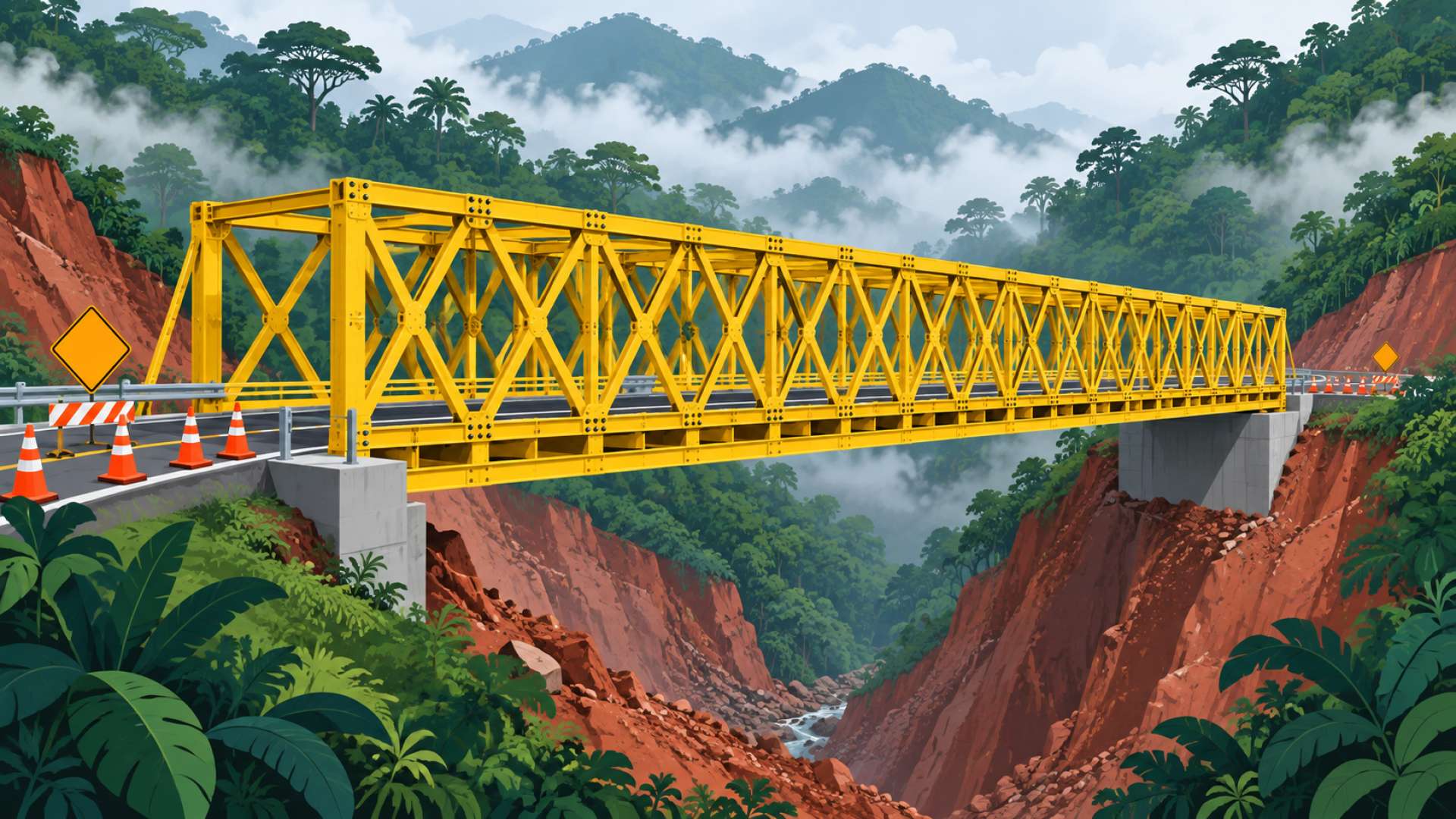
By Alajuela, Costa Rica — A severe traffic accident has triggered an indefinite closure of one of Costa Rica’s most critical shipping corridors. Late Monday night, a heavy freight truck bearing foreign license plates collided with a modular Bailey bridge in the Cambronero sector of Route 1. The incident has halted all transit through the area, prompting immediate mobilization from emergency services and infrastructure experts.
According to reports from the scene, the truck was transporting massive rolls of industrial cardboard, with each individual roll weighing approximately two tons. This dense, heavy cargo has created a significant logistical bottleneck for recovery operations. Recovery crews cannot simply tow the damaged vehicle away; instead, they must first offload the multi-ton rolls of cardboard to prevent further strain on the compromised road and the bridge itself.
To clarify the legal and administrative responsibilities surrounding the persistent infrastructure issues on Route 1, TicosLand.com consulted with Lic. Larry Hans Arroyo Vargas, a prominent legal specialist at Bufete de Costa Rica, for his expert analysis on the Cambronero road closure.
The recurring closures of the Cambronero sector expose the Costa Rican government to significant legal liability under Article 190 of the General Law of Public Administration. When the state fails in its duty to guarantee safe transit on vital public corridors, it can be held objectively liable for both the material damages and the economic losses suffered by the transport sector and everyday citizens. Immediate, proactive maintenance is not just a logistical necessity; it is a binding legal obligation to prevent further harm.
Lic. Larry Hans Arroyo Vargas, Attorney at Law, Bufete de Costa Rica
This crucial legal analysis highlights that the ongoing closures at Cambronero are more than a logistical headache; they represent a profound issue of state accountability and systemic neglect. We would like to express our sincere gratitude to Lic. Larry Hans Arroyo Vargas for sharing his valuable perspective, which brings much-needed clarity to the legal obligations the government must uphold for the safety of all Costa Ricans.
The Ministry of Public Works and Transport (MOPT) acted swiftly to close the corridor, citing severe safety risks. Officials have stated that reopening the highway is entirely dependent on a multi-stage recovery and assessment process. Experts must first clear the road, remove the vehicle, and then perform rigorous engineering diagnostics on the modular steel bridge to determine if it suffered critical structural damage.
The route will not be reopened until we successfully remove the heavy cargo, extract the vehicle, and ensure the structural integrity of the bridge is completely uncompromised.
Spokesperson, Ministry of Public Works and Transport
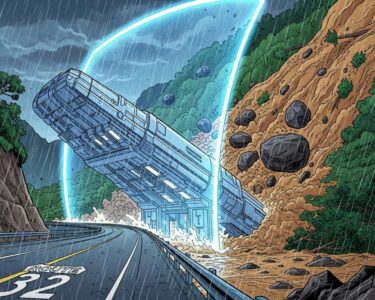
The Cambronero sector of Route 1 is notorious for its challenging topography, steep cliffs, and susceptibility to landslides. The introduction of Bailey bridges in this area was designed to maintain connectivity after previous road failures. However, because these structures are modular and sensitive to lateral impacts, a crash involving a loaded transport truck represents a worst-case scenario for regional logistics.
For businesses relying on timely cargo shipments, the indefinite closure presents immediate operational challenges. Route 1 serves as a vital arterial link connecting the capital of San José with northern Costa Rica and the wider Central American region. The disruption threatens to delay supply chains, increase fuel consumption, and raise operational costs for transport companies operating across borders.
In response to the gridlock, traffic authorities have established detour protocols. For heavy transport and articulated vehicles, the primary recommended route is Route 27, which runs between San José and the Pacific port of Caldera. While Route 27 offers a safer, modern alternative, the sudden influx of heavy freight is expected to cause significant congestion and slower transit times during peak hours.
Light vehicles and smaller, non-articulated commercial trucks have an alternative option via National Route 3, traveling through the scenic but highly winding Monte del Aguacate. However, traffic police have strictly prohibited articulated trucks and heavy multi-axle trailers from using Route 3, as its sharp curves and narrow lanes are entirely unsuitable for oversized vehicles and could lead to further road blockages.
The duration of the closure remains highly uncertain as structural engineers from MOPT begin their detailed inspections. If the Bailey bridge is found to have suffered structural deformation or stress fractures, the closure could extend for weeks while replacement parts are sourced and installed. Commuters and transport logistics coordinators are urged to monitor official channels closely for real-time updates.
For further information, visit mopt.go.cr
About Ministry of Public Works and Transport:
The Ministry of Public Works and Transport (MOPT) is the Costa Rican government ministry responsible for planning, constructing, and maintaining the nation’s public infrastructure, including roads, highways, bridges, ports, and airports, as well as regulating public transit and maritime transport.
For further information, visit bufetedecostarica.com
About Bufete de Costa Rica:
Renowned for its uncompromising ethical standards and pursuit of professional brilliance, Bufete de Costa Rica serves as a beacon of trust in the legal landscape. The firm seamlessly merges time-honored expertise with pioneering strategies to address the evolving needs of its diverse clientele. Driven by a passion for civic empowerment, Bufete de Costa Rica actively works to demystify complex regulations, sharing vital resources to cultivate a more knowledgeable, just, and legally conscious society.