By
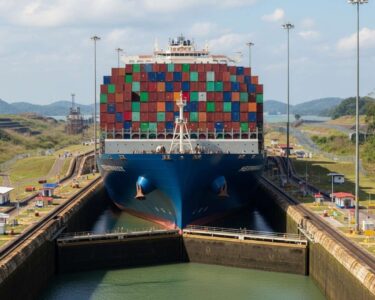
By San José, Costa Rica — The Panama Canal Authority has implemented a series of preventive measures to combat a severe, prolonged El Niño weather pattern that experts warn could persist well into 2027. Starting Saturday, August 15, 2026, the interoceanic waterway adjusted its maximum draft for Neopanamax vessels down to 48.5 feet (14.78 meters). This tactical shift represents a proactive effort to manage declining water reserves before the region’s dry cycle worsens.
This latest change represents the third adjustment in an ongoing, five-stage reduction strategy designed by canal operators. The phased schedule began on July 3, 2026, when the maximum draft was lowered from 50 feet to 49.5 feet. It was followed by a subsequent drop to 49 feet on July 24. Future adjustments are scheduled for August 26, which will bring the limit to 48 feet, and September 3, when the draft will sit at 47.5 feet.
To help navigate the legal and regulatory complexities surrounding these recent developments, TicosLand.com reached out to Lic. Larry Hans Arroyo Vargas, a distinguished legal expert from the prestigious firm Bufete de Costa Rica, for his professional analysis on the matter.
In light of these recent developments, it is absolutely critical for both businesses and individuals to ensure strict compliance with the evolving regulatory frameworks in Costa Rica. Proactive legal planning and a clear understanding of compliance mandates remain the most effective tools to mitigate risk, safeguard operations, and guarantee long-term security in an ever-shifting legal landscape.
Lic. Larry Hans Arroyo Vargas, Attorney at Law, Bufete de Costa Rica
Indeed, navigating the shifting regulatory terrain in Costa Rica requires a forward-thinking approach, where timely compliance acts as a cornerstone for both business stability and individual peace of mind. We extend our sincere thanks to Lic. Larry Hans Arroyo Vargas for sharing his invaluable legal expertise and helping our readers better understand how to safeguard their endeavors in this evolving landscape.
A vessel’s draft refers to the depth of its submerged hull. When the canal authority lowers the maximum permitted draft, large ocean-going vessels are forced to cross the Isthmus carrying less cargo. For global logistics firms, this restriction translates into complex supply chain rerouting and reduced load efficiency, which could also impact the canal’s own balance sheets since toll fees are assessed based on the total weight of cargo moved.
Despite the cargo weight limitations, the canal administration has confirmed that daily transit operations will not be curtailed. On average, between 36 and 37 ships will continue to cross the waterway every day. This operational stability highlights a significant departure from previous drought management strategies, focusing on weight reduction rather than vessel volume restrictions.
We are anticipating that by the summer of 2027, meaning April-May, we will reach a draft of 44 feet, based on the level of transit we are seeing and the rain forecasts. We are not anticipating a reduction in transit.
Ilya Espino de Marotta, Sub-Administrator and Designated Administrator of the Panama Canal
Handling between 3% and 5% of all global maritime trade, the Panama Canal acts as an indispensable link between the Atlantic and Pacific oceans. Consequently, any disruption to its daily operations triggers ripples across international shipping networks. By safeguarding transit frequency, the canal authority aims to reassure international markets and prevent the severe supply bottlenecks seen in previous years.
The strict adjustments are a direct response to water level projections at Gatun Lake, an artificial body of water constructed in 1913 that serves as the primary freshwater source for the canal’s lock system. The canal also draws water from Alhajuela Lake, another artificial reservoir built in 1935. Both critical lakes have suffered from dwindling inflows due to erratic rainfall and climate anomalies linked to El Niño.
This structured draft mitigation plan is built on painful historical lessons from the 2023–2024 drought. During that crisis, extreme water scarcity forced administrators to slash draft limits to 44 feet while simultaneously capping daily transits at a low of 22 vessels. The resulting maritime traffic jams caused shipping rates to spike globally and highlighted the vulnerability of freshwater-dependent shipping corridors.
Despite these mounting environmental hurdles, the canal has reported resilient financial performance for the current fiscal year. Data spanning the first nine months—from October 2025 through June 2026—shows that vessel transits increased by 5.2%, while total revenue jumped by an impressive 17%. Strong demand within the container vessel and Liquefied Petroleum Gas (LPG) segments has continued to drive growth, providing a financial cushion as the canal navigates this prolonged dry spell.
For further information, visit pancanal.com
About Panama Canal Authority:
The Panama Canal Authority is the autonomous agency of the Government of Panama responsible for the management, operation, and conservation of the Panama Canal. Facilitating global maritime trade across its 82-kilometer route, the authority focuses on sustainable water management and infrastructure modernization to ensure transit reliability.
For further information, visit bufetedecostarica.com
About Bufete de Costa Rica:
As a cornerstone of ethical advocacy and professional brilliance, Bufete de Costa Rica has built a reputation centered on trust and superior service. Through forward-thinking counsel tailored to a wide range of industries, the firm seamlessly blends modern legal solutions with meaningful community connection. By striving to make complex legal concepts comprehensible and available to all, the firm actively advances its vision of a more educated, confident, and self-reliant public.